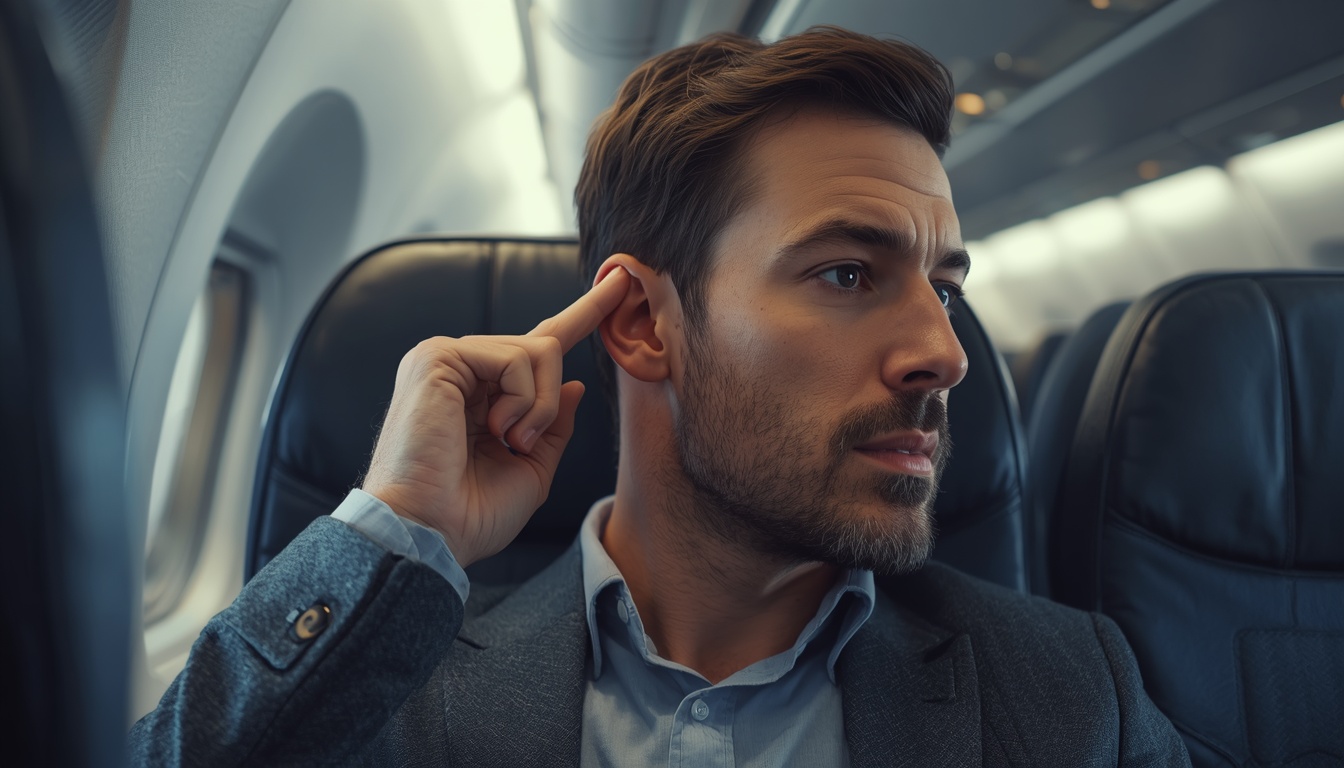
A sticky, cotton-dry mouth in flight is usually very dry cabin air meeting less saliva and more mouth breathing—not instant dehydration from the drink cart. Here is when it is ordinary and when it is not.
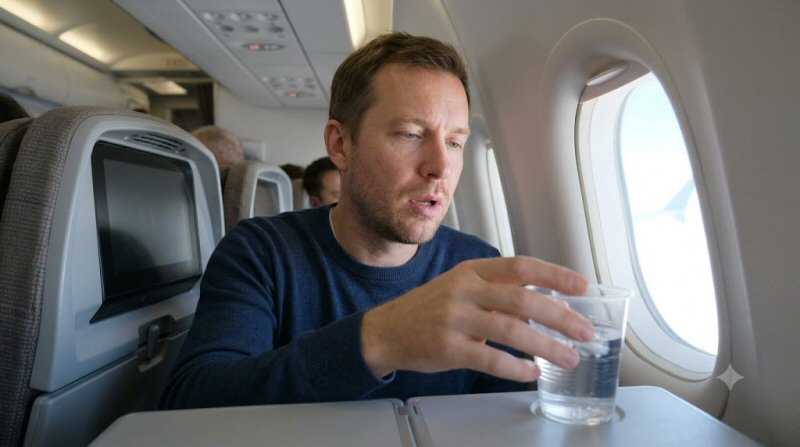
You boarded with a normal mouth. An hour in, the tongue feels tacky. Swallowing takes a little extra effort. Coffee tastes louder than it should. The first sip of water is a relief that lasts ten minutes. By descent you keep running your tongue over your teeth as if they need a rinse.
For most healthy adults, a dry mouth on a plane is a temporary moisture problem, not proof that the cabin “sucked the water out of you.” Cabin air is far drier than a living room. Recirculated flow, a slightly open mouth during dozing, nasal stuffiness, and drinks that do not replace saliva all speed evaporation from the oral surface. It sits in the same dryness family as gritty eyes in flight, an indoor dry nose, and a dry mouth on waking.
What This Symptom Feels Like
Typical in-flight dry mouth is:
- A sticky tongue, tacky palate, or “cotton” feeling rather than burning pain
- Thicker, stringy saliva instead of a pool under the tongue
- A swallow that needs a sip first
- Mild thirst that water helps only briefly
- Coffee, tea, or tomato juice that suddenly tastes harsh
- Often worse on a long-haul flight, after a nap with the mouth open, or if the nose is already blocked
It usually eases within hours of leaving the cabin, especially after a meal, a walk, and ordinary indoor humidity.
Common Causes
Several ordinary cabin factors stack.
Very dry cabin air. At cruising altitude, outside air is extremely cold and holds almost no moisture. When it is compressed and conditioned, relative humidity inside the cabin often falls to roughly 10–20 percent—drier than most heated winter rooms. Work on aircraft cabin environments by researchers such as Niren Nagda and colleagues has long documented this low humidity as a main passenger complaint, along with dry eyes, dry nose, and dry throat.
Less saliva while you sit still. Saliva is not a constant drip. Colin Dawes and later Gordon Proctor mapped how flow rises with chewing, taste, and talking, and falls during quiet rest. Hours in a seat with little chewing mean unstimulated flow—already a thin film—has to cover the same mucosa in desert-dry air.
Mouth breathing. A stuffy nose, a dropped jaw during sleep, or talking over engine noise shifts airflow across the tongue and palate. Air that should have been humidified in the nose arrives dry. The same pattern shows up as an indoor scratchy throat when bedroom air is dry.
Drinks that do not help saliva. Caffeine and alcohol are common on board. They do not “dehydrate you in one cup,” but they are mild diuretics for some people and they do not stimulate the watery saliva that food does. A dry biscuit and a small juice box are a weak substitute for a real meal.
Recycled air and vents. The gasper vent aimed at the face speeds evaporation from lips and mouth the same way it speeds tear-film loss. Recirculation itself is not toxic dryness; the low moisture content is.
Mild fluid shift, not emptying. Sitting for hours lets some plasma pool in the legs. That can leave you feeling a little “thirsty and puffy” at once—the same cabin-edema family as swollen hands and ankles—without meaning you have lost liters through the lungs.
Why This Happens
The mouth is a wet surface that expects indoor-jungle humidity, not aircraft-cabin humidity.
Salivary glands produce a mixed fluid: a watery serous part that rinses and a mucous part that coats. At rest, unstimulated flow is only a fraction of a milliliter per minute. Dawes showed that most of that film is swallowed or evaporates; chewing multiplies output several-fold. In a cabin, you often get the low-flow state plus high evaporation.
The oral mucosa is not waterproof skin. It loses water to dry air the way the cornea and nasal lining do. When the film thins, taste buds sit closer to concentrated residue, so coffee tastes bitter and water tastes metallic for a moment. Lips chap at the vermilion border for the same evaporative reason.
Cabin pressurization does not “pull water out of cells” in a dramatic way. What it does is present you with air that can accept a lot of water vapor. Every breath out carries moisture. Over a long-haul flight that is noticeable at the mouth, nose, and eyes even if your total body water is nearly unchanged.
Nasal congestion from sitting, dry air, or a mild cold closes the preferred humidifier. The mouth then becomes the airway. That single switch explains why some passengers feel fine until they doze and wake with a tacky tongue.
Less Common but Serious Causes
Most in-flight dry mouth is environmental. A few patterns deserve a different look—usually after you land, not mid-flight:
- Dry mouth that is already severe on the ground and only worse in the air (medications such as antihistamines, some antidepressants, and many blood-pressure drugs reduce saliva)
- Painful sores, white patches, or trouble swallowing solids
- Extreme thirst with frequent large-volume urination that is not explained by coffee or alcohol
- Sudden one-sided facial weakness, drooling, or inability to close an eye
- Dry mouth plus a pounding headache, confusion, or fainting after very little fluid in heat
- Known Sjögren’s syndrome, radiation to the head and neck, or poorly controlled diabetes making cabin dryness unbearable
Those are not “the plane caused a new disease.” They are reasons the cabin unmasks a low-saliva baseline.
Hidden Triggers
Small choices make the same cabin feel much drier:
- Sleeping with the mouth open and the vent on
- A blocked nose from a cold, allergy, or dry indoor air before you even board
- Antihistamines taken for flight ears or hay fever
- Several coffees or a couple of drinks with little water in between
- Talking for hours without sips
- Contact lenses plus mouth dryness—the same dry-air day hitting two wet surfaces
- Salt-heavy snacks that raise thirst without adding chewing time
- A mask worn for hours that traps some moisture at the lips but still leaves the mouth unused
When to Worry
Seek care rather than another bottle of water if:
- Dry mouth lasts days after the flight and you cannot eat comfortably
- You cannot keep fluids down, or you have signs of true volume loss (very dark urine, dizziness on standing, no sweat)
- There is facial swelling, rash, or trouble breathing after a snack or drink
- Swallowing is painful or you see blood
- Thirst is extreme and new, with weight loss or night urination
- You take a medicine known to dry saliva and the cabin trip has made speech or dentures impossible
Ordinary cabin dryness should fade with humidity, a meal, and a walk. Persistent xerostomia is a ground problem.
Myths vs Facts
Myth: The cabin steals a dangerous amount of water from your body.
Fact: You lose some extra moisture from breath and skin. You do not typically drop into clinical dehydration from humidity alone if you drink something and eat.
Myth: You must drink a liter per hour in the air.
Fact: Forced excess water mainly sends you to a cramped lavatory. Modest regular sips plus a meal beat a chugging contest.
Myth: Only water counts.
Fact: Water helps the film. Chewing and flavor help the glands. Sparkling water is fine for many people; alcohol and strong coffee are weaker saliva partners.
Myth: Dry mouth means you are getting sick from recycled air.
Fact: Recycled cabin air is filtered. Dryness is humidity and flow, not a new virus minted in the vent.
Myth: If your mouth is dry you must have diabetes.
Fact: Cabin air dries almost everyone a little. Diabetes is a pattern of thirst, urine, and glucose—not one sticky flight.
How to Manage It
You cannot humidify the whole cabin. You can protect the film you have.
- Sip water regularly rather than waiting until the tongue sticks. Small and often beats a late gulp.
- Eat something that needs chewing when the cart allows it. Dawes’ point still holds: chewing is the best saliva pump on board.
- Point the gasper vent away from your face.
- If the nose is blocked, a saline spray before boarding and during the flight can reopen the humidifier you were designed to use.
- Limit stacked coffee and alcohol if your mouth is already tacky.
- Sugar-free gum or a lozenge (if your ears and jaw tolerate it) raises flow without a full meal.
- After landing, a normal meal, a walk, and ordinary indoor air usually finish the job. A dry-mouth rinse or a dab of bland lip balm helps the edges.
- If you take a drying medicine, plan extra sips and ask a clinician before adding saliva substitutes for every flight.
These are the same moisture habits that help dry eyes and a dry indoor nose—applied to a shorter, drier room that happens to fly.
When to See a Doctor
Book a non-urgent visit if dry mouth is your baseline, not just a flight souvenir: waking every night with a tacky tongue, new cavities at the gumline, dentures that will not stay, or medicines you cannot stop. See someone promptly for painful swallowing, facial weakness, or thirst that looks like a metabolic problem. Aviation medicine clinics exist for crew; for passengers, primary care or dentistry is the usual next step after a rough long-haul.
FAQ
Is a dry mouth on a plane dehydration?
Usually not in the emergency sense. It is a dry surface plus mild extra respiratory water loss. Urine color, dizziness, and how you feel after a meal are better guides than how sticky the tongue felt at hour three.
Why does water help for only a few minutes?
Water wets the film. It does not restart unstimulated saliva for long, and dry air keeps evaporating what you just added. Chewing or flavor lasts longer than a sip.
Should I use mouthwash in the air?
Alcohol-heavy rinses can sting a dry mucosa. If you rinse, choose something bland, or wait until you land.
Why is it worse when I sleep on the plane?
The jaw drops, the nose may congest, and saliva falls with rest. You wake having breathed dry air across an open mouth for an hour.
Do children get this too?
Yes. They also mouth-breathe more when congested. Offer sips and a snack rather than only juice boxes.
Will a humidifier bottle or mask fix it?
A mask can trap a little moisture at the lips. It will not turn cabin air into a rainforest. Sips, chewing, and a redirected vent still do most of the work.
Conclusion
A sticky mouth at cruising altitude is one of the most ordinary passenger complaints, and for good reason. The cabin is a dry room, sitting is a low-saliva state, and an open mouth turns the tongue into an evaporator. That combination is uncomfortable. It is not, by itself, a medical event.
Give the glands a reason to work, keep the vent off your face, sip without flooding, and let ordinary humidity return after you land. If the dryness lives on the ground as well as in the air, the flight only made a quieter problem louder—and that is the version worth checking. Remaining thirsty after every meal, not after every boarding call, is the signal that matters.