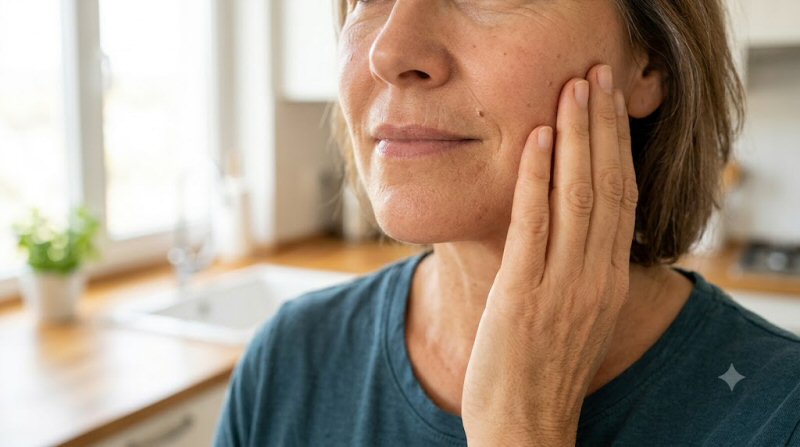
A raw roof of the mouth after hot pizza is usually a brief thermal burn of the palate, not an infection. Cheese holds heat; the lining usually heals in days.
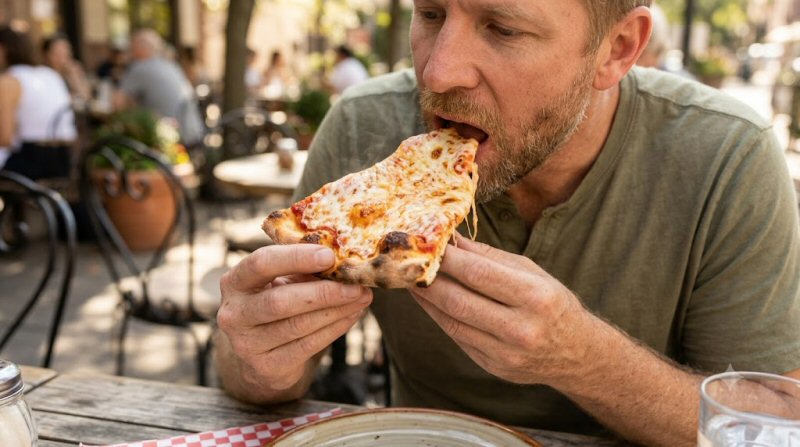
The first bite looks safe. The crust is only warm. Then melted cheese hits the roof of the mouth and the pain arrives a second late, sharp, then raw. By evening the palate feels scraped, a sip of tea stings, and a pale patch may sit right where the cheese landed. That sequence is common. Dentists even have a nickname for it: pizza palate.
It is usually a small thermal burn of the oral lining, not a mysterious sore and not the start of an infection. The mouth was built to notice heat. It was not built to judge the hidden temperature of a pocket of cheese or a microwaved filling.
What This Burn Feels Like
The sore spot is almost always the hard palate, the firm roof behind the front teeth, sometimes the soft palate farther back, the tip of the tongue, or the inside of the lip. Right after the bite it feels scalded. Over the next hour it can turn tender, slightly swollen, or numb at the center with a sting at the edges. A gray-white film or a small peeled area is the damaged surface layer. Hot, salty, acidic, or crunchy food makes it shout. Cool water feels better.
The pain should track the meal. It starts during or just after the hot bite, not days later with no trigger. A matching burn can come from soup, coffee, tea, a toasted sandwich, or a cheese-filled pastry whose middle stayed hotter than the crust.
Why Cheese and Microwaves Do This
Oral lining is thin and richly supplied with heat-sensitive nerves. Capsaicin and heat share some of that warning system. David Julius and Michael J. Caterina’s work on the TRPV1 receptor helps explain why a temperature jump and a chili burn can feel related, even though a pizza burn is physical heat, not a spice. The palate has less of the thick keratin shield that protects gum and less of the mobile escape the tongue uses. Cheese sticks. It holds heat against one spot instead of spreading and cooling the way a thin sip of tea does.
Oded Nahlieli, Eli Eliav, Yarom Shapira, and Abraham M. Baruchin described central palatal burns from microwaved pizza: a whitish or ulcerated patch in the middle third of the hard palate, the same pattern seen with hot jelly or cream fillings. Panagiotis Kafas and Christos Stavrianos reported a similar cheese-pie burn and made the practical point that microwave heating can leave the inside much hotter than the outside. Dirk W. Lachenmeier’s contact-temperature work put a comfortable oral limit near the mid-40s Celsius for longer contact, with solid or melted foods holding that heat far longer than a thin liquid film.
The mouth also cools slowly once sticky food is plastered on. You feel the burn after the damage has started, because pain lags the temperature peak by a fraction of a second, and because the first bite is often taken while you are still judging the crust.
How the Lining Usually Heals
Oral mucosa turns over quickly. Christopher A. Squier and other oral-biology work on epithelial renewal is why a kitchen burn that would linger on skin often quiets in the mouth within a few days. A mild scald, redness and tenderness without a deep ulcer, often eases in one to three days and looks ordinary within about a week. A patch that peels or blisters can take closer to one to two weeks. Scarring on the palate from an ordinary food burn is unusual.
Saliva helps. It rinses debris, buffers acid, and keeps the wound moist. That is one reason a dry mouth, mouth breathing at night, or constant sipping of acidic drinks can make the same spot feel worse. A tongue that rests on the palate, the posture described in why the tongue still expects the roof of the mouth, may also notice the tender spot more until the surface closes.
A Food Burn Versus Other Mouth Pain
Timing is the clue. A pizza burn announces itself with the bite. Other mouth pain does not.
A pineapple tingle is enzymatic and from tiny crystals, and it fades as the fruit is cleared, which is a different story from a mouth that tingles after pineapple. An ice-cold palate can trigger a brief headache, the cold-stimulus pain behind ice cream headache, without leaving a raw patch. Burning mouth syndrome, studied by Miriam Grushka and Joanna M. Zakrzewska, is a chronic burning without a visible burn and without a hot meal as the cause. A canker sore often starts as a small ulcer days after minor trauma, not as a scald during dinner. A cold sore clusters on the lip edge with tingling before the blister. Thrush is more often a wipeable white coat on the tongue or cheeks with soreness that is not tied to one hot bite.
Hidden Triggers That Make It Worse
Microwave reheating is the classic setup, because the filling overshoots while the edge feels fine. Extra cheese, oil, or a stuffed crust holds heat longer than a thin slice. Eating too fast removes the test bite. A numb mouth from a recent dental visit can hide the warning until the anesthetic fades and the burn is already there. Dry indoor air and mouth breathing leave the lining less slick, so hot food sticks. Acidic drinks afterward, citrus, soda, wine, or tomato sauce on the next slice, sting the open surface. Picking at the white film with the tongue or a toothbrush delays the new layer.
Repeated small burns in the same week, a habit of food straight from the oven, matter more than one careless slice. The lining can heal each time and still stay sensitive if it never gets a quiet day.
When to Worry
Most pizza burns are a nuisance. A few patterns are not.
Seek prompt care if the burn involves the lips and face, if swallowing is difficult, if the voice changes, or if breathing feels tight. Those suggest a wider scald, not a small palatal patch. See a dentist or clinician if pain is worsening after two or three days, if the area is not clearly improving by about ten to fourteen days, if there is fever, spreading redness, pus, or a foul taste, or if you cannot drink enough. A white patch that was never linked to a hot meal, or a sore that keeps returning in the same spot with no burn, needs a look. It may be a canker, a frictional ulcer from a sharp tooth, or something that should not be watched at home.
People with diabetes, a very dry mouth, or immune suppression heal oral wounds more slowly. A burn that would be trivial for someone else can linger, and earlier advice is reasonable. Blood thinners do not cause the burn, but a raw spot may ooze a little longer.
Myths vs Facts
Myth: A white patch on the palate after pizza means thrush. Fact: Heat-damaged epithelium often looks gray-white. Thrush is not timed to one hot bite and often coats more than one site.
Myth: You should scrub the dead layer off so it heals. Fact: The film is a bandage. Leave it. Gentle rinsing is enough.
Myth: Only microwaved food burns the mouth. Fact: Oven pizza, soup, coffee, and fried fillings do the same thing. Microwaves are simply good at hiding the hot center.
Myth: If it still hurts tomorrow, it is infected. Fact: Surface burns stay tender for a few days in a clean mouth. Infection is the exception, marked by worsening pain, fever, or spreading swelling.
Myth: Ice pressed hard on the palate is the best treatment. Fact: A brief cool rinse helps. Prolonged ice against thin mucosa can add a cold injury.
How to Manage It
Cool the area soon. Small sips of cool water or a few ice chips are enough. Do not hold a solid ice cube on the spot for minutes. Skip the next hot drink. Soft, cool foods, yogurt, milk, or a ripe banana, are easier than chips, crust, or citrus. A warm salt-water rinse, not hot, once or twice a day keeps the surface clean without sting. Brush the teeth as usual and avoid scrubbing the palate.
Over-the-counter pain relief you already tolerate can take the edge off for a day. Alcohol-based mouthwash usually burns more than it helps. Do not peel the white film. Give the spot a day without tomato sauce, vinegar, and very salty snacks.
Next time, test the middle of the slice, not only the crust. Let microwaved cheese rest a minute and stir soup. A too-hot bite is easier to prevent than to treat, and the mouth’s warning system works better when the first contact is small.
When to See a Doctor
Go in if swallowing or breathing is affected, if the burn is large or on the face, if pain climbs after the first couple of days, or if the palate is not clearly better after about two weeks. Also go in for a sore that appears with no hot food, for numbness that lasts, or for repeated unexplained mouth ulcers. A single pizza burn that fades on schedule does not need a visit.
FAQs
How long does a burned roof of the mouth last?
Mild tenderness often eases within one to three days. A peeled or blistered patch commonly looks normal within a week, sometimes up to two. Pain that is still rising after three days is a reason to get it checked.
Why does cheese burn more than the crust?
Cheese and oily fillings hold heat and stick to one spot on the palate. The crust cools faster in air and is easier to judge with the lips and fingers. Microwaves widen that gap between edge and center.
Is the white patch an infection?
Usually no. It is heat-damaged surface cells. Infection is more likely if pain, swelling, or fever worsens, or if a foul taste and pus appear.
Can this happen with coffee or soup too?
Yes. Any hot liquid or sticky filling can scald the palate or tongue. Thin drinks cool faster on contact than melted cheese, but a large sip of very hot coffee still burns.
Does a pizza burn mean burning mouth syndrome?
No. Burning mouth syndrome is ongoing burning without a visible scald and without a hot meal as the trigger. A pizza burn starts with the bite and has a sore spot you can often see.
Should I avoid brushing until it heals?
No. Keep brushing the teeth gently and skip scrubbing the palate. A mild salt-water rinse is enough for the sore itself.
Conclusion
A raw roof of the mouth after hot pizza is a normal price of sticky heat on thin lining. Nahlieli, Baruchin, Kafas, and Lachenmeier’s observations match what the kitchen already teaches: the center can be hotter than the edge, and the palate pays for the misjudgment. Cool it, leave the white film alone, and expect most of the sting to fade within days. A burn that spreads, blocks swallowing, or refuses to heal is the one that deserves a clinician, not another slice.