
A raw, tingly tongue after fresh pineapple is usually bromelain plus acid and sometimes needle-like raphides working on oral mucosa — enzyme irritation, not automatically an allergy.
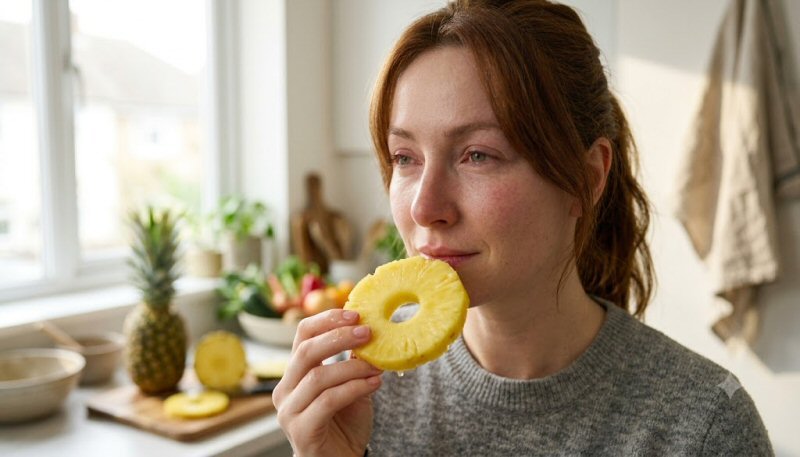
The first few cubes are fine. Then the tongue feels sanded. The insides of the cheeks sting. The lips tingle as if a weak chili had been painted on them, except there is no heat — only a raw, metallic, slightly fizzy scrape that lasts minutes after the last bite. Canned pineapple from the same fruit rarely does this. Cooked pineapple almost never does.
The plant is not “eating you back” in any dramatic sense, but it is doing something real. Fresh Ananas comosus delivers a cysteine-protease cocktail called bromelain, a low pH from citric and malic acids, and, in some tissues, microscopic needle crystals of calcium oxalate. Together they nick the protein-rich film that normally coats the mouth. Most of the time this is chemistry, not immunology. Distinguishing the two is the whole point of the story.
What This Sensation Feels Like
The classic report is local and dose-dependent. After several bites of ripe fresh pineapple — especially the fibrous core or less-ripe flesh — the tongue, inner lips, and buccal mucosa feel raw, tingly, or faintly numb. Some people describe a peppery prickle; others a sandpaper burn. Saliva may increase. The feeling peaks while you are still eating and fades over ten to sixty minutes as the mucosa’s surface proteins are replaced and the remaining enzyme is washed away or inactivated.
It is usually pain rather than itch. That distinction matters. Enzyme-and-acid irritation tends to sting. IgE-driven oral allergy syndrome tends to itch, and may add lip swelling, throat tightness, or a pollen-season pattern. Both can coexist. Neither automatically means the fruit is unsafe for everyone else at the table.
Kiwi, papaya, and fig can produce a cousin of the same feeling. Those fruits carry related papain-like cysteine proteases — actinidin in kiwi, papain in papaya, ficin in fig — and kiwi is also rich in raphides. A mouth that “fights back” after tropical fruit is often meeting the same enzyme family.
Common Causes
Bromelain on oral proteins. Bromelain is not one enzyme. It is a mixture of thiol endopeptidases concentrated especially in the pineapple stem, with fruit bromelain, ananain, and comosain among the named members. Vicente Marcano isolated the activity in 1891. The enzymes belong to the papain family: a catalytic cysteine attacks peptide bonds in proteins. The lining of the mouth is protein. So is the mucin film in saliva that normally buffers and lubricates it. When you chew fresh pineapple, bromelain begins to nick that film. Pharmacologist Alessandro Colletti and food engineer Paul Takhistov have both pointed to this mucolytic first step as the reason the same acid that was tolerable in the first bite becomes sharper in the fifth.
Acid on a thinned barrier. Ripe pineapple typically sits near pH 3–4. Citric and malic acids sting more once the mucin shield is thinner. The combination — protease then acid — is more irritating than either alone. Heat denatures bromelain, which is why grilled, canned, or baked pineapple is kinder to the mouth even when the fruit is still tart.
Raphides as microscopic needles. Many plants store calcium oxalate as needle-shaped crystals called raphides. In a 2014 study at Japan’s National Institute of Agrobiological Sciences, Kotaro Konno and colleagues showed that raphides and cysteine proteases work as a team in herbivore defense: the needles puncture oral tissue and give the protease a path into deeper protein. Kiwi was the model fruit in that work, but pineapple carries the same logic. The “prickle” some people feel is not only chemical. It can be physical at a scale too small to see.
Core versus flesh. Stem and core tissue are richer in stem bromelain than the sweet outer flesh. People who eat the fibrous center often report a stronger scrape. Less-ripe fruit can feel worse as well, because enzyme activity and acidity are not perfectly aligned with sweetness.
True allergy, a minority track. Bromelain has an official allergen name, Ana c 2. Actinidin is Act d 1. A smaller group of people have IgE against these proteases or against other pineapple proteins, sometimes as part of pollen-food syndrome or latex-fruit cross-reactivity. Claudio Ortolani and colleagues defined oral allergy syndrome as a localized, usually pollen-linked reaction to raw plant foods. A 2019 letter in Annals of Allergy, Asthma & Immunology laid out the practical split for pineapple: mucosal irritation from acid plus bromelain versus oral allergy syndrome versus, rarely, anaphylaxis. Itch, hives beyond the mouth, wheeze, or swelling that progresses after the fruit is gone belong on the immune side of that line.
Why This Happens
Plants cannot run. Many of them weaponize digestion itself. Cysteine proteases help the plant recycle its own proteins and deter insects and mammals that try to eat living tissue. Raphides add a mechanical insult. The human mouth is an accidental battlefield: we prize the sugar and the scent while the fruit’s defense chemistry is still intact.
Your mucosa is not helpless. Saliva contains protease inhibitors, bicarbonate, and a constantly renewed mucin layer. Swallowing moves the remaining enzyme into an acid stomach that denatures most of it. That is why the tingle stays in the mouth and does not continue as a burning trail down the esophagus in ordinary eaters. The “pineapple is eating you” line is a useful metaphor only for the first few centimeters.
Cooking, canning, and pairing with dairy all reduce the effect for the same biochemical reasons. Heat unfolds the enzyme. Milk proteins give bromelain something else to digest besides your cheeks. A brief salt-water soak of cut fruit — a kitchen habit in many pineapple-growing regions — can leach some surface enzyme and crystals and slightly blunt the sting.
The same enzyme family is used on purpose elsewhere. Stem bromelain tenderizes meat, debrides burns, and has been studied as an anti-inflammatory. Steven Taussig’s classic safety work found very high oral LD50 values in animals, which is reassuring for the amount you meet in a fruit bowl and irrelevant to the local scrape on the tongue.
Less Common but Serious Causes
Most post-pineapple tingling is self-limited irritation. A few patterns are not.
True IgE-mediated pineapple allergy can produce progressive lip or tongue swelling, throat tightness, hives, wheeze, vomiting, or lightheadedness. That is not a stronger version of the sandpaper tongue. It is a different mechanism and needs a different response.
Pollen-food syndrome can make raw pineapple, kiwi, or related fruits itch in people already sensitized to birch, grass, or ragweed pollens. Cooked fruit is often tolerated because the relevant proteins unfold. Latex-fruit syndrome can link kiwi, banana, avocado, and sometimes pineapple in people with latex allergy.
If the mouth stays raw for hours after a modest serving, if ulcers appear, or if the same sting happens with many acidic foods, consider other mucosal problems: geographic tongue, oral lichen planus, a developing canker-sore patch, or reflux-related irritation that acid fruit unmasks. A metallic or persistently altered taste after many foods belongs in a different conversation than a single-fruit tingle, including the patterns described in metallic taste.
Hidden Triggers
Freshness and cut surface. Enzyme activity is highest in raw tissue that has just been cut. A pineapple that sat cubed in acid juice for hours may sting less than one eaten at the board.
The core. Chewing the tough center raises the bromelain dose.
Other cysteine-protease fruits in the same bowl. Kiwi plus pineapple is a double hit of protease and, in kiwi, abundant raphides.
Chapped lips, recent dental work, or a mouth already peeled by acidic drinks. A damaged barrier needs less enzyme to feel raw.
Expecting the tingle to mean allergy and then avoiding the fruit forever. For most people the fix is heat, ripeness, smaller bites, or dairy — not a lifetime ban.
Confusing this sting with the capsaicin drip of spicy-food rhinorrhea. Chili is a TRPV1 burn. Pineapple is proteolysis plus acid. They can coexist in a salsa. They are not the same receptor story.
When to Worry
Seek urgent care for swelling of lips, tongue, or throat, difficulty breathing, widespread hives, dizziness, or symptoms that worsen after the fruit is gone.
See a clinician soon if the same fruit causes itch and swelling every time, if cooked pineapple is also a problem, if other raw fruits join the list in pollen season, or if you have a latex allergy and a new oral reaction to tropical fruit.
A one-off raw tongue after a large plate of fresh pineapple, fading within an hour, with no itch and no breathing change, is the common, enzyme-and-acid pattern.
Myths vs Facts
Myth: Pineapple is dissolving your tongue. Fact: Bromelain nicks surface proteins and mucin. The mucosa renews. Stomach acid finishes most of the enzyme you swallow.
Myth: If it tingles, you are allergic. Fact: Irritation is pain-forward and dose-dependent. Allergy is more often itch, swelling, and reproducibility at small doses, sometimes with pollen or latex links.
Myth: Canned pineapple is a different fruit. Fact: Heat and processing denature bromelain. The sugars remain. The sting usually does not.
Myth: Salt water “kills the poison.” Fact: A soak can reduce surface enzyme and some crystals and is a reasonable kitchen trick. It is not neutralizing a toxin.
Myth: Only unripe pineapple does this. Fact: Ripeness helps sweetness and can change texture, but ripe fresh fruit still carries active bromelain.
How to Manage the Ordinary Tingle
Choose riper fruit and favor the outer flesh over the core.
Pair fresh pineapple with yogurt, cottage cheese, or a meal that includes protein. Give the enzyme another substrate.
Cook, grill, or bake the fruit when you want flavor without the scrape.
A short soak of cut pieces in lightly salted water is traditional and modestly effective for some people.
Rinse the mouth with water after a large serving. Do not brush hard on a just-stung tongue; enamel and mucosa are both happier if you wait.
If kiwi does the same thing, treat actinidin as the cousin of bromelain and use the same heat-or-dairy logic unless an allergist has named a true food allergy.
Cold fruit can add a separate dentin twinge in people with cold-sensitive teeth. That is a tooth problem, not a bromelain problem.
When to See a Doctor
An allergist is the right next step for itch, swelling, or systemic symptoms, especially with a pollen or latex history. Testing can separate Ana c 2 / Act d 1 sensitization from simple irritation.
A dentist or oral-medicine clinician is the right next step for ulcers, a persistently peeled tongue, or pain that outlasts any one fruit.
Emergency care is for airway or circulatory symptoms. Do not test “a little more fruit” in that setting.
FAQs
Why does canned pineapple not tingle? Heat during canning denatures bromelain. Acidity remains, but the enzyme-plus-acid combination is what usually stings.
Is the tingle dangerous if it happens every time I eat fresh pineapple? If it is a brief raw scrape without itch, swelling, or breathing change, it is usually irritation and you can reduce it with ripeness, cooking, or dairy. If it is itchy swelling, get evaluated.
Does pineapple damage tooth enamel? The acid can soften enamel the way other tart fruit does. The enzyme story is about mucosa, not enamel. Rinse with water; delay brushing.
Why do kiwi and papaya feel similar? They carry related cysteine proteases — actinidin and papain — and kiwi adds raphides. The plant family of defenses is shared even when the fruits are not.
Can I take bromelain supplements if fruit makes my mouth sting? Supplements are a different dose and route. Do not assume fruit tolerance predicts supplement tolerance, and do not start them to “get used to” the tingle.
Will I grow out of it? Enzyme irritation does not follow the childhood-allergy script. You can change the fruit’s form. The mouth does not need to “outgrow” a protease.
Conclusion
A tingly mouth after fresh pineapple is usually a short meeting between a plant’s cysteine proteases, its acid, and sometimes its crystals, and a mucosa that wears a protein coat. Marcano named the enzyme more than a century ago. Later work on mucin, raphides, and oral allergy syndrome gave the tingle a differential diagnosis instead of a single folk explanation. Most plates of pineapple are chemistry. A minority are immunology. Knowing which one you have is what lets you keep the fruit — cooked, paired, or fresh and brief — without treating a sandpaper tongue as a verdict.