Yes—cool office air often makes hands cold through normal vasoconstriction that protects your core temperature. Learn the physiology, when it is ordinary, and when color changes or pain suggest something more.
You step from a warm sidewalk into an air-conditioned office and within minutes your fingers feel icy. Your core still feels fine, yet typing becomes awkward and you keep rubbing your hands together. This is one of the most ordinary temperature responses the body makes, and it happens to many people who otherwise have perfectly normal circulation.
What This Feels Like
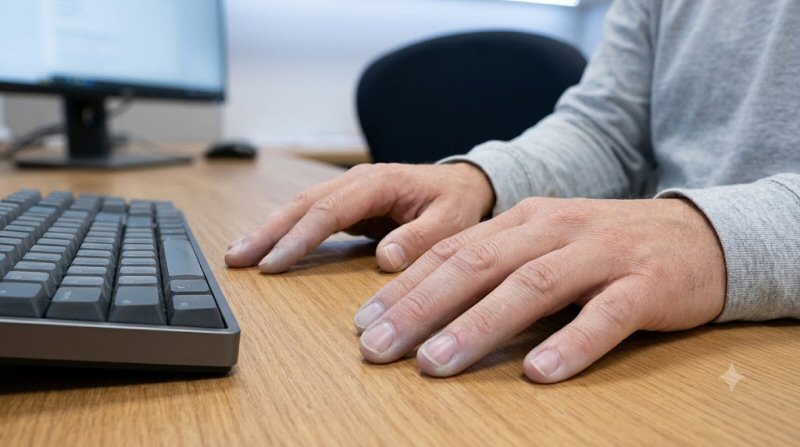
The sensation is usually a steady coolness or chill confined to the fingers and sometimes the whole hand. The skin may look a little paler than usual, but it does not turn stark white, blue, or deep red. You can still move the fingers, though they may feel slightly clumsy or slow. The feeling is worse if you are sitting still under a vent or if you came in from a much warmer outdoor temperature. It often eases once you move around, hold a warm mug, or step outside again.
Why This Happens
Your body keeps its internal temperature near 37 °C even when the room is set to 20–22 °C. The first and fastest way it does this is by narrowing the small blood vessels in the skin, especially in the hands and feet. This is called cutaneous vasoconstriction and is driven by the sympathetic nervous system. When those vessels tighten, less warm blood reaches the surface, so less heat is lost to the cooler air. The hands are particularly sensitive because they have a large surface area relative to their volume and because they contain many arteriovenous anastomoses—tiny shunts that can open or close quickly to adjust blood flow.
Classic work by Thomas Lewis described how these vessels behave in the cold, including the intermittent “hunting reaction” (cold-induced vasodilation) that periodically reopens them to protect the tissues. In a typical office the reaction is milder: the vessels simply stay narrower so your core stays warm. Women often notice it more readily than men because of a lower resting metabolic rate and the influence of estrogen on vessel responsiveness. Sitting still under moving air from a vent makes the effect stronger, since airflow strips away the thin warm layer next to the skin. The same physiology explains why many people also notice cooler fingers while typing or while driving with the air-conditioning on.
Common Everyday Triggers
- Entering a cooler building after being outdoors in the heat
- Sitting still for long periods under an air vent
- Low office humidity that makes the air feel cooler on the skin
- Light clothing or short sleeves that leave the forearms exposed
- Lower overall activity level during the workday
When the Feeling Is Still Ordinary
For most people the cold hands remain a minor annoyance. Circulation returns promptly once you warm the hands, move around, or leave the cool room. There is no lingering numbness, no sharp pain, and no dramatic color change. If you have noticed the same pattern for years and it only appears in cool indoor air, it is almost always this normal protective response rather than a disease.
When to Pay Closer Attention
See a clinician if the cold sensation is accompanied by any of the following:
- Fingers that turn stark white, then blue, then bright red when they rewarm (classic Raynaud pattern)
- Pain, prolonged numbness, or color changes that last after you leave the cool room
- Only one hand or a few fingers affected in a fixed pattern
- Associated symptoms such as unexplained weight loss, joint swelling, or skin tightening
These features can point to primary Raynaud phenomenon or, less often, to secondary causes related to autoimmune conditions, certain medications, or vascular issues. Simple cold hands without color change or pain are far more common and do not require medical evaluation.
Myths vs Facts
Myth: Cold hands in an air-conditioned room always mean poor circulation.
Fact: They usually mean your vessels are doing exactly what they are designed to do—protect core temperature. True circulatory disease is uncommon in otherwise healthy younger adults.
Myth: You should force your hands to stay warm at all times.
Fact: Brief coolness is harmless. Constantly overheating the hands is unnecessary and can make the vessels more reactive later.
Myth: Only people with Raynaud’s feel this.
Fact: Most office workers experience cooler fingers in air-conditioning; Raynaud’s is defined by the specific color sequence and often by pain.
How to Manage It
Small practical steps usually solve the problem:
- Keep a light cardigan or fingerless gloves at your desk for vent-heavy hours
- Move your hands and arms every 20–30 minutes to encourage blood flow
- Hold a warm drink or run warm (not hot) water over your hands for a minute
- Ask whether the thermostat can be raised a degree or two—many offices are set cooler than modern comfort guidelines suggest
- If you come from outdoors, give your body a few minutes to adjust before sitting still under a vent
These measures work with the same physiology that caused the chill rather than fighting it. Related everyday sensations such as cold hands while typing or fingers turning white in the cold share the same underlying vessel response.
When to See a Doctor
Most people never need to. Book a visit only if color changes, pain, or prolonged numbness appear, or if the cold hands are new and accompanied by other systemic symptoms. A simple history and examination are usually enough to distinguish ordinary temperature regulation from Raynaud phenomenon or other causes.
FAQs
Why do my hands get cold in the office but not outside on a mild day?
Moving air and the sudden drop from outdoor warmth both increase heat loss from the skin. Outside, sunlight and activity usually keep the vessels more open.
Are women more likely to notice this?
Yes. Lower average metabolic rate and hormonal effects on blood vessels make the same room temperature feel cooler to many women.
Can stress make office cold hands worse?
Yes. Sympathetic activation from stress can add a little extra vasoconstriction, similar to the cold hands that appear when you are anxious.
Should I worry if only my fingertips feel cold?
No. The fingertips have the highest surface-to-volume ratio and the densest arteriovenous anastomoses, so they cool first in almost everyone.
Will wearing gloves all day help or hurt?
Light gloves or fingerless gloves during the coolest hours are fine. Constant heavy insulation is unnecessary and can make the vessels more reactive when the gloves come off.
Conclusion
Feeling cold hands in an air-conditioned room is a normal, protective reflex that keeps your core temperature stable. The vessels in your fingers simply narrow so less heat escapes into the cooler air. For the great majority of people this is harmless and easily managed with light layers, occasional movement, and a warmer drink. Only when color changes or pain appear does the pattern move beyond ordinary temperature regulation and deserve a closer look.