Mild morning finger puffiness is often normal fluid shift from overnight rest. Learn common causes, when it signals something more, and simple ways to ease it.
You wake up, reach for your phone or a glass of water, and notice your rings feel tighter than they did the night before. Your fingers look a little fuller, maybe even a bit shiny. For many people this is a quiet, everyday occurrence that fades once they start moving around. It is common enough that most of us treat it as unremarkable—until we start wondering whether it should be.
Mild morning finger puffiness is frequently a normal result of how fluid moves through the body during hours of stillness. Research that measured hand volume in healthy adults found a clear overnight increase, followed by a decrease once people were up and active. Understanding the ordinary pattern helps separate it from the less common situations that deserve a closer look.
What This Symptom Feels Like
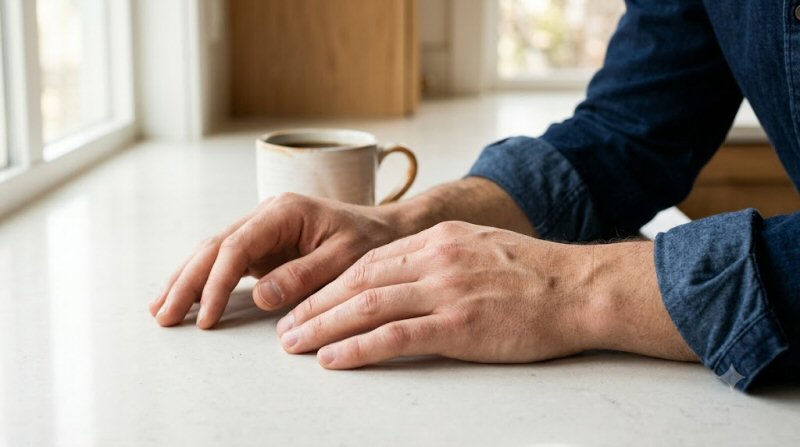
The sensation is usually subtle. Fingers feel snug inside rings. Knuckles may look slightly rounded. The skin can appear smoother or faintly shiny. Most people notice it more in the morning than later in the day. There is rarely sharp pain or redness with the ordinary version. The fullness tends to be present in both hands and eases within an hour or so of getting up, using the hands, and walking around.
Some describe it as a mild stiffness that improves with movement rather than true joint pain. Others only notice it because jewelry that fit comfortably at bedtime feels tight at dawn. The change is often small enough that a casual glance in the mirror does not reveal it; it becomes obvious only when trying to remove or put on a ring.
Common Causes
The most frequent explanation is simple fluid redistribution. During the day, gravity pulls some fluid toward the legs and feet. When you lie flat for several hours, that fluid redistributes more evenly. Hands, with their dense network of small blood vessels, can collect a measurable amount. A prospective study of healthy volunteers without hand problems found that hand volume increased by roughly 4.5 percent overnight and then declined through the day, with the biggest drop occurring between morning and early afternoon (Warrender and colleagues).
Salt intake the evening before can amplify the effect. Extra sodium encourages the body to hold onto water, and some of that water ends up in the soft tissues of the hands. Hormonal shifts—particularly in the days before a menstrual period or during pregnancy—also promote temporary fluid retention that shows up in fingers and feet. Sleeping with one arm under the body or hanging off the side of the bed can make that hand fuller than the other. Even a night of less movement than usual (for example, after a long day of sitting) can leave the lymphatic system with a little more fluid to clear in the morning.
These everyday factors usually produce symmetric, mild, and short-lived puffiness. They do not require treatment beyond ordinary movement and attention to salt and hydration.
Why This Happens
The body is not designed to stay completely still for eight hours. Capillaries continuously exchange fluid with the surrounding tissue. When muscle activity and lymphatic pumping slow down overnight, that exchange tilts slightly toward accumulation. Once you stand up, walk, and use your hands, the calf muscles and arm muscles act as pumps, and the extra fluid is reabsorbed. This is why the same fingers that feel puffy at 7 a.m. often look normal by mid-morning.
Temperature can play a supporting role. Cooler night air or a cool bedroom may cause mild vasoconstriction, while the warmth of a blanket or a hot room can dilate vessels and allow more fluid to leave the bloodstream. Neither extreme is harmful on its own, but both can make the morning change more noticeable.
Less Common but Serious Causes
Persistent or progressive morning swelling deserves attention. Inflammatory arthritis—most often rheumatoid arthritis—classically produces stiffness and swelling in the small joints of the hands that lasts longer than an hour and is accompanied by warmth or pain. The swelling of rheumatoid arthritis tends to be more pronounced around the knuckles and is not simply fluid that disappears with a short walk.
Heart or kidney conditions can also cause fluid retention, but they usually produce additional clues: swelling in the ankles or face, shortness of breath, unusual fatigue, foamy urine, or a rapid weight gain over days. Medications such as certain calcium-channel blockers, steroids, or hormonal therapies can contribute to hand swelling as a side effect. Unilateral swelling that is new, painful, or associated with color change is less likely to be ordinary fluid shift and should be evaluated.
Hidden Triggers
A high-salt dinner, alcohol the night before, or inadequate fluid intake during the day can all increase morning fullness. Some people notice it more after evenings spent sitting or after long flights, when the calf pump has been underused. Tight rings left on overnight can create a temporary tourniquet effect that makes the distal finger look puffier. Even the position of the hands under a pillow can restrict venous return enough to leave one hand fuller than the other.
Air-conditioned or very dry indoor environments do not directly cause finger swelling, but they can make the skin feel tighter, which amplifies the sensation of fullness. For related patterns involving temperature or prolonged sitting, see how the body handles finger swelling in the heat or foot swelling after sitting.
When to Worry
Ordinary morning puffiness fades with movement and is roughly equal in both hands. Consider a medical review if any of the following appear:
- Swelling that lasts well beyond an hour of being upright and active
- Pain, warmth, redness, or true joint stiffness lasting more than 30–60 minutes
- One hand or a few fingers markedly more affected than the other
- Swelling accompanied by shortness of breath, chest discomfort, facial puffiness, or reduced urine output
- New swelling that coincides with starting a medication
- Difficulty making a fist or progressive loss of motion
These features move the picture away from simple overnight fluid shift and toward inflammation, circulatory issues, or other conditions that benefit from earlier evaluation.
Myths vs Facts
Myth: Morning finger puffiness always means you are retaining too much salt or have a heart problem.
Fact: Healthy people show a measurable overnight increase in hand volume that resolves with ordinary activity. Salt can contribute, but it is not required for the normal pattern to occur.
Myth: If your rings feel tight in the morning you should stop wearing them permanently.
Fact: Temporary tightness from fluid is common. If the same rings fit easily later in the day and there is no pain, the change is usually physiologic. Persistent tightness that does not improve warrants checking the underlying cause rather than simply abandoning jewelry.
Myth: Drinking more water will always reduce morning swelling.
Fact: Adequate hydration supports normal fluid balance, but excess water on top of high salt intake does not automatically flush the extra fluid out of the hands. The more reliable steps are reducing evening sodium and using the muscles in the morning.
How to Manage It
Most people need only small adjustments. A few minutes of gentle hand opening and closing, or simply washing dishes or walking around the kitchen, is often enough to reduce the fullness. Elevating the hands briefly above heart level while seated can encourage drainage. Keeping evening salt moderate and avoiding heavy alcohol before bed reduces the amount of fluid available to redistribute.
Sleep position matters more than many realize. If one hand is consistently fuller, try not to sleep on that arm or let it hang off the mattress. A small pillow under the forearm can keep the hand at roughly the same level as the heart. For people who also experience morning joint stiffness elsewhere, light movement shortly after waking supports both fluid return and synovial fluid distribution—similar to the pattern described in discussions of why joints expect motion rather than prolonged rest.
If hormonal cycles clearly worsen the pattern, tracking the timing can be useful when speaking with a clinician, but no special treatment is required for ordinary premenstrual or pregnancy-related hand fullness that resolves with movement.
When to See a Doctor
See a clinician if the puffiness is new, progressive, painful, or accompanied by other symptoms such as prolonged morning stiffness, unexplained fatigue, shortness of breath, or changes in urination. A primary care visit can usually distinguish ordinary fluid shift from inflammatory arthritis or systemic fluid retention with a history, examination, and, when indicated, simple blood or urine tests. Early attention is particularly worthwhile if the swelling is mainly in the small joints and lasts more than an hour after waking.
FAQs
Is it normal for only one hand to feel puffy in the morning?
Mild asymmetry can occur if you sleep on one arm or if one hand hangs lower than the other. Marked one-sided swelling that is new or painful is less typical of ordinary fluid shift and is worth checking.
Why do my rings fit at night but not in the morning?
Overnight fluid redistribution increases hand volume slightly in healthy people. Once you are up and moving, the volume decreases and the rings fit again. This pattern was documented in volumetric studies of healthy volunteers.
Can typing or phone use the day before cause morning finger fullness?
Repetitive gripping can produce minor soft-tissue irritation that feels fuller the next morning, but the dominant mechanism for bilateral, short-lived puffiness remains overnight fluid redistribution rather than the previous day’s keyboard work.
Does drinking less water help?
Mild restriction is not helpful and can backfire by prompting the body to hold onto fluid. Consistent, moderate hydration paired with lower evening sodium is more effective.
How long should morning finger puffiness last?
In the ordinary pattern it improves substantially within an hour of being upright and using the hands. If it persists for several hours, is painful, or worsens over days, it is reasonable to seek evaluation.
Conclusion
Feeling a little puffiness in the fingers when you first wake up is a common and usually harmless reflection of how fluid moves during sleep. Healthy adults show a measurable overnight increase in hand volume that recedes with ordinary morning activity. Salt, hormones, and sleep position can make the change more noticeable, but they do not turn a normal pattern into a problem. When the fullness is mild, symmetric, and short-lived, simple movement and modest attention to evening salt are usually enough. Persistent pain, prolonged stiffness, or swelling accompanied by other symptoms is the signal to look further—not the ordinary morning tightness of a ring.