Yes, red and warm cheeks after a workout are usually normal. Learn why blood flow to the face increases during exercise, when flushing is harmless, and simple cooling steps that help.
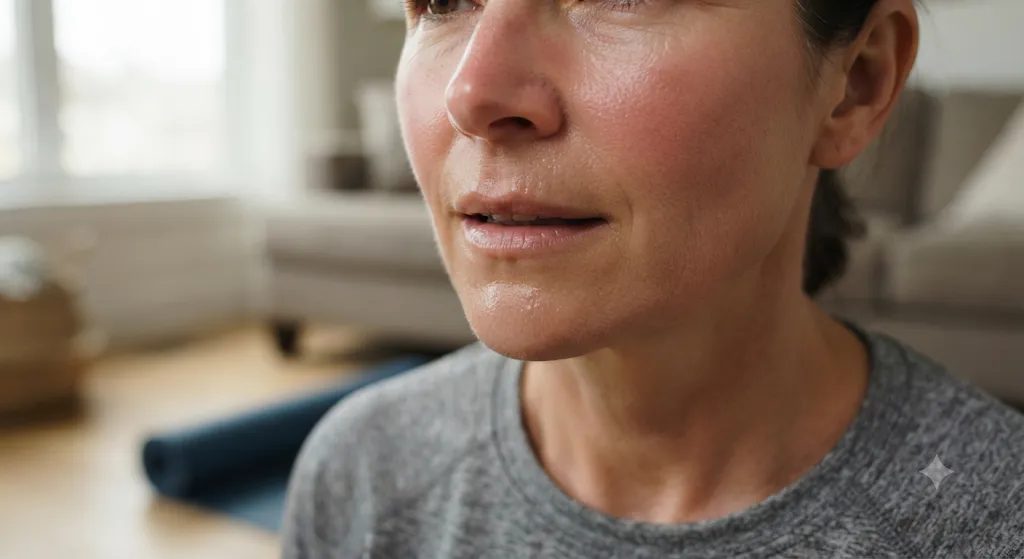
You finish a brisk walk, a short run, or a set of stairs and notice your cheeks feel hot and look distinctly pink or red. The warmth often spreads toward the forehead or ears and fades within twenty to forty minutes once you stop moving. For most people this is an ordinary response, not a sign that something is wrong.
What This Flushing Feels Like
The sensation is mostly heat and color. Skin on the cheeks becomes warmer to the touch, may look blotchy or evenly flushed, and sometimes tingles lightly. It is almost always bilateral (both sides) and temporary. Sweating may or may not accompany it. Once circulation returns to resting levels the color fades without leaving marks or lasting irritation in people without underlying skin conditions.
Common Reasons Cheeks Flush During and After Activity
During exercise cardiac output rises and blood is redirected. A large share of that extra flow goes to the skin so heat generated by working muscles can leave the body. The face has a dense network of vessels and is efficient at releasing heat, so it often shows the change first.
- Rising core temperature triggers cutaneous vasodilation.
- Adrenaline and other circulating catecholamines widen vessels in the face.
- Increased heart rate and blood pressure deliver more volume to the skin.
- In cooler rooms the contrast between warm blood and cooler air makes the redness more visible.
Classic work by exercise physiologist Loring B. Rowell and later studies on skin blood flow confirm that cutaneous circulation can increase several-fold during moderate activity to support thermoregulation.
Why the Face Responds This Way
Human skin, especially on the head and face, is well supplied with vessels that can open wide when heat needs to be shed. In ancestral settings people moved outdoors for hours; facial flushing was a useful cooling signal and a normal part of sustained activity. Modern indoor workouts or short bursts still activate the same pathways even when the environment is milder. The system has not yet adapted to air-conditioned gyms or brief sessions that never fully heat the body the way long outdoor travel once did. Related patterns appear in why circulation still expects temperature contrast and in the opposite reaction sometimes seen in the hands.
Less Common Contributors
Certain conditions can make exercise flushing more noticeable or longer-lasting:
- Rosacea or sensitive skin that already reacts to heat and blood-flow changes.
- Medications that affect blood vessels or the autonomic nervous system.
- Hormonal shifts (for example around menopause) that lower the threshold for flushing.
- Very high-intensity efforts or hot, humid conditions that push heat storage higher.
These factors amplify a normal response rather than create an entirely different one in most healthy adults.
Hidden Triggers That Make It Stronger
A few everyday details can exaggerate the color:
- Dehydration reduces the efficiency of heat loss, so vessels stay open longer.
- Alcohol earlier in the day or a recent spicy meal adds another vasodilating stimulus (see also facial flushing after one drink).
- Working out in a warm room or immediately after a hot shower.
- Fair skin that shows blood flow more readily.
- Holding breath or high-intensity intervals that briefly raise blood pressure further.
When Flushing After Exercise Deserves Attention
Most post-exercise facial redness is harmless and self-limited. Seek medical advice if any of the following occur:
- The flush is accompanied by chest pain, severe shortness of breath, dizziness, or fainting.
- Redness lasts many hours or appears without any physical effort.
- Only one side of the face is involved, or the color is purple or associated with swelling.
- You also notice new headaches, vision changes, or irregular heartbeat that did not exist before.
- Flushing is paired with hives, itching, or breathing difficulty (possible allergic or mast-cell related reaction).
These patterns are uncommon but worth evaluating rather than assuming they are simply “from the workout.”
Myths Versus Facts
- Myth: Flushed cheeks mean you are out of shape.
Fact: Fitter people often dissipate heat more efficiently, yet almost everyone shows some facial color during hard effort. The presence of a flush does not measure fitness. - Myth: It signals high blood pressure.
Fact: Temporary rises in pressure and flow during exercise are expected. Resting blood pressure is measured separately; a post-workout flush alone does not diagnose hypertension. - Myth: You should stop exercising if your face turns red.
Fact: For most people the color is a normal cooling response. Stopping is appropriate only if other warning symptoms appear.
Practical Ways to Keep the Flush Milder
You cannot and need not eliminate the response entirely, but a few adjustments reduce how intense or prolonged it feels:
- Cool down gradually rather than stopping abruptly; keep walking or moving lightly for a few minutes.
- Drink water before, during, and after the session so blood volume stays adequate for heat transfer.
- Work out in a cooler room or use a fan; even modest air movement speeds heat loss from the face.
- Choose lighter clothing and remove layers as soon as you finish.
- If you are heat-sensitive, begin with shorter or lower-intensity efforts and build up over weeks so the vascular response adapts.
- Avoid combining the workout with alcohol, heavy spice, or a very hot environment on the same day if the flush bothers you.
Interestingly, the opposite pattern—cold hands after a workout—reflects blood being preferentially sent to the muscles and skin of the core and face. That contrast is covered in why hands can feel cold after exercise.
When to See a Doctor
A routine post-exercise cheek flush that fades within an hour rarely needs medical review. Make an appointment if the flushing is new, markedly stronger than your usual response, lasts much longer, or arrives with any of the warning signs listed earlier. A clinician can check blood pressure, review medications, and rule out less common vascular or dermatologic conditions if needed. Most people leave with simple reassurance and the same cooling tips already outlined.
Frequently Asked Questions
Does facial flushing after exercise mean I am unfit?
No. Nearly everyone experiences some degree of facial redness during or right after moderate-to-hard activity. Better-conditioned individuals may clear heat faster, yet the presence of a flush is not a reliable marker of fitness level.
Is this the same as the flush people get from alcohol?
The visual result looks similar, but the mechanisms differ. Alcohol-related flushing often involves acetaldehyde and genetic differences in aldehyde dehydrogenase. Exercise flushing is driven mainly by the need to lose heat and by circulating catecholamines. The two can overlap if someone drinks and then exercises.
Why do my cheeks stay red longer on some days?
Higher ambient temperature, higher humidity, dehydration, a recent spicy meal, or simply a harder effort all extend the period of elevated skin blood flow. Once those factors are removed the color usually returns to baseline.
Can certain exercises make the flush stronger?
Continuous aerobic work (running, cycling, brisk walking) tends to raise core temperature more steadily than short strength sets, so the facial response is often more obvious with cardio. High-intensity intervals can also produce brief, vivid flushes.
Should I worry if only my cheeks flush and not the rest of my body?
The face frequently shows the change first because of its rich vascular supply and thin skin. As long as the redness is bilateral, temporary, and free of other symptoms, isolated cheek flushing is common and expected.
Will the flushing decrease if I exercise more regularly?
Many people notice that the same workout produces less dramatic color after several weeks of consistent training. Improved plasma volume, better sweat response, and more efficient heat dissipation all contribute. The basic vascular reaction remains, but it becomes less striking.
Conclusion
Warm, pink cheeks after a walk, run, or gym session are usually the visible sign that your circulation is doing its job of shedding heat. The response is rooted in ordinary physiology and appears in people of every fitness level. Simple steps—gradual cool-downs, steady hydration, cooler air, and avoiding extra vasodilators—keep the effect mild for most. Only when the flush arrives with chest pain, severe breathlessness, prolonged duration, or other new symptoms does it warrant a medical look. For everyday workouts the color is temporary, harmless, and a reminder that the body still knows how to cool itself.