
Mild calf soreness after a day in new shoes is common as your muscles adapt to a different heel drop or sole. Learn the usual causes, when it settles, and when to check further.
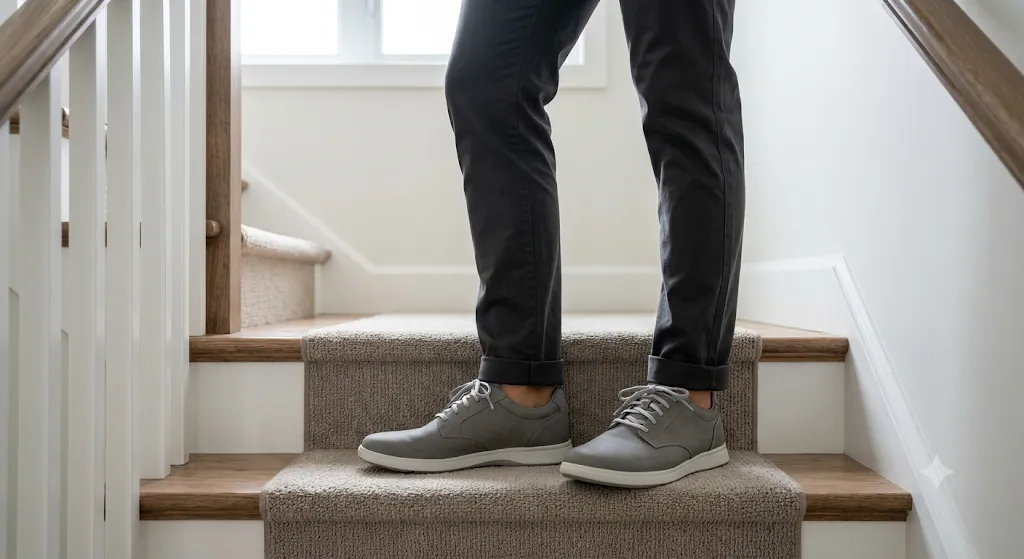
You buy a fresh pair of shoes, wear them for a full day of errands or a longer walk than usual, and by evening your calves feel tight, achy, or mildly sore. It can feel surprising—especially if the shoes fit well and you did not notice any rubbing. For most people this is a short-lived adaptation response rather than a sign of damage.
The calves (gastrocnemius and soleus) and the Achilles tendon work on every step. A new shoe changes the exact position of the ankle, the amount of cushioning, and how force travels through the foot. When those details shift, the same walking distance can suddenly ask more of the lower-leg muscles. The result is ordinary muscle soreness that usually fades as the tissues adjust.
What This Soreness Usually Feels Like
People typically describe a dull ache or stiffness in the belly of the calf, sometimes higher near the knee or lower toward the Achilles. It is often worse the next morning or after sitting still, then eases once you start moving again. Mild tightness when you point or flex the foot is common. Sharp, localized pain, swelling, or a sudden “pop” is different and needs attention.
Common Reasons New Shoes Make Calves Sore
Several ordinary features of new footwear raise calf demand:
- Different heel-to-toe drop. Many everyday and running shoes have a raised heel. A lower or zero-drop shoe lets the ankle bend farther on each step, so the calf and Achilles work through a larger range. Researchers studying load management (including work by Cook and Purdam on tendon adaptation and Gabbett on sudden increases in tissue load) note that this kind of change can produce temporary soreness while the muscle-tendon unit gets used to the new demand.
- Stiffer sole or different cushioning. A brand-new sole that has not broken in, or a much firmer or softer midsole than your old pair, alters how the foot lands and pushes off. The calves often compensate for the change.
- Altered gait or posture. Even a small difference in arch support or stack height can shift where your weight sits. Muscles that previously did less work suddenly do more.
- Longer time on your feet. New shoes sometimes coincide with a longer outing. The combination of novelty plus extra steps is enough to create delayed-onset muscle soreness.
If you have recently switched from higher-heeled everyday shoes to flatter ones, or from heavily cushioned trainers to something more minimal, the calf response is especially common. Related everyday experiences such as calves aching after hard floors share the same theme: a sudden change in how the lower leg is loaded.
Why the Body Responds This Way
Muscle and tendon tissue adapt to the loads they regularly meet. When a shoe raises or lowers the heel, changes the timing of push-off, or reduces cushioning, the calf-Achilles unit experiences a new pattern of stretch and force. For a few days the muscle fibers and connective tissue respond with mild inflammation and stiffness—the same process that produces ordinary workout soreness. Once the tissues have seen the new pattern repeatedly, the sensation usually quiets.
Your calves are also built for occasional hills and varied terrain rather than perfectly flat, identical steps. Articles on why calves still expect uphill walking and the Achilles expecting a springy step explore that mismatch; new shoes simply make the difference more noticeable for a short time.
Less Common but More Serious Causes
Most calf soreness after new shoes is benign. Less often it can signal something that needs checking:
- Achilles tendinopathy that is aggravated by a lower drop
- Calf strain or partial tear (usually after a sudden push or sprint)
- Deep-vein thrombosis (rare, but possible if there is one-sided swelling, warmth, or pain after prolonged sitting)
- Compartment syndrome or nerve irritation (uncommon with ordinary walking)
These are far less likely when the only change was a new pair of shoes and the soreness is mild and bilateral.
Hidden Triggers That Make It Worse
Several everyday factors amplify the effect:
- Jumping straight into a full day instead of alternating with old shoes
- Wearing the new pair on concrete or hard floors all day
- Existing calf tightness or limited ankle dorsiflexion
- Dehydration or a recent increase in overall walking volume
- Shoes that are slightly too small or too wide, forcing extra muscle work for stability
When to Worry
See a clinician if you notice any of the following:
- Pain that is sharp, getting worse day by day, or wakes you at night
- Visible swelling, redness, or warmth in one calf
- A sudden pop or inability to push off on the toes
- Soreness that continues beyond two weeks despite rest and gradual reintroduction
- Shortness of breath, chest pain, or one-sided leg swelling (seek urgent care)
Mild stiffness that improves with gentle movement and settles within several days is the usual pattern.
Myths vs Facts
Myth: New shoes should never cause any discomfort if they are the right size.
Fact: Size is only part of the story. Heel drop, sole stiffness, and cushioning change muscle demand even when the length and width are correct.
Myth: Calf soreness means the shoes are “bad” and must be returned immediately.
Fact: Many pairs need a short break-in period. Alternating with older shoes often lets the calves adapt without forcing a full-day test.
Myth: Stretching hard right away will fix it.
Fact: Gentle movement and light calf raises help more than aggressive static stretching on already sore tissue.
How to Manage It
Most people settle the feeling with simple steps:
- Alternate new and old shoes for the first week so the calves are not overloaded every day.
- Keep the first few outings shorter; add distance gradually.
- Walk on softer surfaces when possible while the muscles adjust.
- Do gentle calf raises (both straight-knee and bent-knee versions) and ankle circles once the acute ache eases.
- Stay hydrated and keep normal daily movement rather than complete rest.
- If the shoes have a much lower drop than you are used to, consider a temporary thin heel lift while you transition.
Paying attention to the calf muscle pump also helps circulation after long periods on your feet; the same mechanism is discussed in pieces about why veins still expect the calf pump.
When to See a Doctor
Book a routine visit if the soreness lasts more than 10–14 days, limits your walking, or keeps returning every time you wear the new pair. A physical therapist or sports-medicine clinician can check ankle mobility, gait, and whether the shoe’s drop or support matches your current capacity. Urgent care is appropriate for sudden severe pain, inability to bear weight, or signs of a blood clot.
FAQs
How long does calf soreness from new shoes usually last?
Most people notice improvement within 3–7 days if they ease the load. Full comfort often returns by the end of the second week.
Should I stop wearing the shoes completely?
Not necessarily. Switching back to your old pair for part of the day, then gradually increasing time in the new ones, usually works better than abandoning them.
Can lower-drop or “barefoot-style” shoes cause more calf ache?
Yes. A smaller heel-to-toe drop increases the range the calf and Achilles must control. Transitioning slowly is especially useful with these styles.
Is it normal for only one calf to be sore?
Mild asymmetry can occur if one leg takes more load or if an old injury is present. Persistent one-sided pain or swelling should be checked.
Will the soreness come back every time I buy new shoes?
Only if the new pair differs a lot from what your calves are used to. Choosing a similar drop and cushioning level, or rotating pairs, reduces the chance.
Conclusion
Mild calf soreness after a day in new shoes is a common adaptation response. The muscles and Achilles simply meet a slightly different demand from the altered heel height, sole feel, or gait. Ease the transition, keep moving gently, and the feeling usually fades. If the pain is sharp, one-sided, or still present after a couple of weeks, a quick professional check rules out anything that needs more than time and gradual loading.


