
Your gastrocnemius still expects the occasional uphill push of real terrain. Desk days and flat floors leave it under-used and stiff.
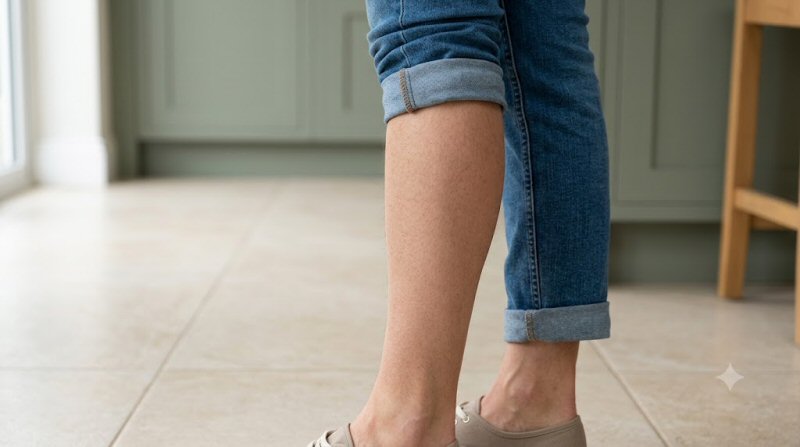
Your calves can feel tight, heavy, or restless after a day of flat walking and sitting, even when you have not run or climbed anything hard. The sensation is familiar: a mild ache behind the knee or a need to stretch the back of the lower leg once you finally stand up. This is not random. The gastrocnemius, the larger calf muscle that crosses both the knee and the ankle, evolved for the repeated springy push of walking on uneven ground and gentle slopes. Modern floors and elevators remove that demand for long stretches of the day.
What This Expectation Feels Like
You notice it most at the end of a desk day or after standing on hard, level surfaces. The calves feel shorter, the Achilles area a little tender, and the first few steps after sitting can feel stiff until the muscle warms. Some people describe a low-level crampiness that eases once they walk a short distance outdoors. Others simply feel the need to rise onto their toes or stretch against a wall. These are the quiet signs that the muscle has not performed the uphill-style work it still expects.
Why This Happens
The gastrocnemius is a biarticular muscle. It produces strong plantarflexion when the knee is relatively straight, exactly the position used in the push-off phase of walking and especially when the ground rises in front of you. On a gentle incline the muscle works harder and through a slightly longer range, loading both the contractile tissue and the Achilles tendon. Electromyography studies by researchers such as John Basmajian and later gait analysts have shown clear increases in gastrocnemius activity as slope steepens within ordinary walking speeds.
For most of human history that loading was ordinary. Trails, fields, and village paths contained frequent short rises. The muscle therefore developed a capacity for repeated moderate uphill work rather than pure flat-ground endurance or occasional high-intensity gym sets. When that stimulus disappears for weeks at a time, the muscle shortens slightly, blood flow during the day drops, and the familiar tightness appears. This is the same mismatch pattern seen in other lower-limb tissues that still expect varied terrain.
Common Modern Triggers
Flat concrete, indoor flooring, and escalators remove the small uphill pulses the calves once received dozens of times per day. Prolonged sitting keeps the knee bent, so the gastrocnemius stays in a shortened position for hours. Even regular walking on perfectly level sidewalks provides less peak load than the same distance with occasional gentle slopes. High heels or shoes with thick, rigid soles further reduce the natural ankle motion that normally accompanies uphill push-off. The combination leaves the muscle under-stimulated and mechanically shortened.
Less Common but Serious Causes
Persistent calf tightness that arrives with swelling, redness, or warmth can signal a clot or significant vascular issue and needs prompt medical review. Sudden sharp pain during activity may indicate a muscle strain or Achilles involvement. Night cramps that wake you repeatedly, or tightness that does not ease with ordinary movement, can sometimes relate to electrolyte shifts, circulation problems, or medication side effects. These are less common than simple under-use, but they are the reasons a new or worsening pattern should not be ignored.
Hidden Triggers
Dehydration and low daily step counts amplify the feeling of tightness even on mild days. Cold indoor air can increase muscle viscosity so the first movements feel stiffer. Stress-related bracing sometimes keeps the lower leg slightly contracted without awareness. Shoes that force a permanently plantarflexed ankle (high heels or certain fashion flats) quietly maintain the shortened position the gastrocnemius dislikes. Even the habit of standing with knees locked removes the small dynamic loading the muscle expects.
When to Worry
See a clinician if calf tightness is accompanied by one-sided swelling, skin color change, chest pain, or shortness of breath. Sudden severe pain after a pop sensation, inability to rise onto the toes, or progressive weakness also warrants evaluation. Occasional end-of-day stiffness that improves with walking and gentle stretching is the ordinary mismatch pattern and does not require urgent care.
Myths vs Facts
Myth: Calf tightness only happens if you are out of shape or do not stretch enough.
Fact: Even fit people develop it when their daily terrain is almost entirely flat. The muscle needs the specific loading of occasional incline, not just general fitness or static stretching.
Myth: Rolling or stretching alone will permanently fix the problem.
Fact: Temporary relief is common, but the tissue re-shortens if the uphill-style stimulus stays missing. Loading is more effective than passive lengthening alone.
Myth: You need steep hills or running to satisfy the calves.
Fact: Gentle, repeated inclines at ordinary walking pace are sufficient. The evolutionary demand was frequent moderate work, not rare maximal efforts.
How to Manage It
Reintroduce small amounts of uphill walking most days. A short residential slope, a multi-story staircase used at a natural pace, or even a treadmill set to a mild incline for ten minutes supplies the missing stimulus. Keep the knee relatively straight during the push so the gastrocnemius, rather than only the soleus, participates. Pair this with brief calf raises on a step or floor, focusing on a controlled lowering phase.
During desk days, stand and walk for two or three minutes every hour, and include a few slow toe raises. Choose shoes that allow a natural heel-to-toe roll rather than locking the ankle. If tightness is already present, a gentle wall stretch held for twenty to thirty seconds after the uphill walk is more useful than aggressive stretching on a cold muscle. Consistency matters more than intensity; the tissue responds to the return of ordinary varied loading.
Related patterns appear in other lower-limb systems that also expect terrain variation. The Achilles tendon still expects a springy step, the veins still expect the calf muscle pump, and the feet still expect uneven ground. Addressing the calves often improves the feel of these neighboring structures as well.
When to See a Doctor
Book a visit if the tightness lasts more than a few weeks despite regular uphill walking and simple movement breaks, or if it is joined by swelling, skin changes, night pain that wakes you, or any neurological symptoms such as numbness. A clinician can rule out vascular, neurologic, or structural causes and, if needed, guide a graded loading program. Most everyday calf tightness from flat living resolves once the missing incline stimulus returns.
FAQs
Is it normal for calves to feel tight only at the end of a workday?
Yes. Prolonged sitting and flat surfaces leave the gastrocnemius under-loaded. The end-of-day stiffness is a common signal that the muscle has not received its expected uphill-style work.
Do I need actual hills, or will stairs work?
Stairs used at a normal walking pace are an excellent substitute. They provide the same knee-extended plantarflexion demand. Even a few flights spread through the day help.
Why does stretching feel good but the tightness returns?
Stretching lengthens the muscle temporarily, but without the active loading of incline walking the tissue tends to re-shorten. Combining both is more effective than stretching alone.
Can this tightness contribute to Achilles or plantar discomfort?
Often yes. A chronically under-loaded and slightly shortened gastrocnemius changes force transmission through the Achilles and into the foot. Restoring varied walking frequently eases those related sensations.
How quickly should I expect improvement?
Many people notice easier first steps within one to two weeks of adding short daily inclines. Full adaptation of the muscle and tendon takes longer, usually several weeks of consistent loading.
Conclusion
Your calves still carry the expectation of occasional uphill walking because that was ordinary human terrain for a very long time. Flat modern surfaces and long sitting hours quietly remove the stimulus, leaving the gastrocnemius shorter and less comfortable by the end of the day. The remedy is not extreme exercise; it is the return of small, repeated inclines at ordinary speeds. A few minutes of gentle uphill walking most days, paired with simple movement breaks, usually restores the ease the muscle was built to provide.


