
Calf ache after walking on hard floors is common. It usually comes from repeated impact on flat, unyielding surfaces rather than injury, and most people can ease it with simple changes.
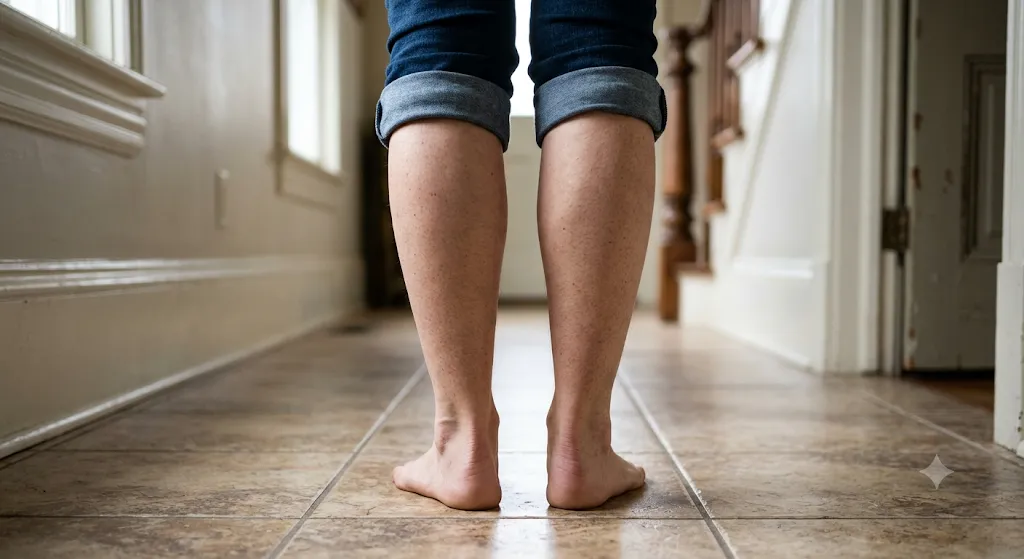
You spent the day on concrete, tile, or polished office floors—shopping, standing at a counter, or just moving between rooms—and by evening your calves feel tight, heavy, or sore. The ache is not sharp; it is more of a dull fatigue that makes the next step feel like work. Many people notice this after a day on hard surfaces and wonder if something is wrong with their legs.
In most cases it is a normal response to the way modern floors load the lower leg. Your calves are built for varied ground and occasional hills, not endless flat, unyielding surfaces. The sensation is usually temporary and improves with rest, softer shoes, or a change in how you load the muscle.
What This Ache Feels Like
The discomfort is typically bilateral and appears after prolonged walking or standing on hard floors. People describe:
- A tight, heavy, or burning feeling in the mid to lower calf
- Soreness that is worse with the first steps after sitting, then eases slightly with continued movement
- Mild stiffness when pointing the foot or rising onto the toes
- No visible swelling, bruising, or sudden sharp pain
It is different from a sudden cramp or the sharp pain of a muscle strain. Most people can still walk; the legs simply feel used up.
Common Reasons Hard Floors Make Calves Ache
Several ordinary factors combine to produce the feeling:
- Repeated impact without give. Hard floors transmit more force up through the foot and ankle with every step. The calf muscles and Achilles tendon absorb that extra load repeatedly.
- Lack of terrain variety. Soft ground, grass, or slight slopes change the angle and timing of each step. Flat hard floors keep the same muscles working in the same pattern for hours.
- Footwear that offers little cushion. Thin-soled or rigid shoes pass more impact straight to the calf.
- Long periods of standing still. When the calf muscle pump is not actively contracting and relaxing, fluid can pool and the muscle feels heavier—similar to the sensation described in articles about calves after standing all day.
These are mechanical and circulatory effects, not signs of damage in most healthy people.
Why the Calf Responds This Way
The gastrocnemius and soleus form the main bulk of the calf. They plantarflex the ankle (point the foot) and help stabilize the lower leg during stance. On soft or uneven ground they also make small, continuous adjustments. On a hard, level floor those adjustments disappear; the same fibers fire in a narrower pattern for longer.
Impact forces on concrete or tile are higher than on grass or carpet. Research on ground-reaction forces shows that harder surfaces increase the peak load transmitted through the lower limb. The calf and Achilles must dissipate that energy. After thousands of steps the muscle accumulates metabolic by-products and mild micro-fatigue—enough to feel sore, not enough to cause lasting injury in most cases.
This is one reason the calves still “expect” occasional hills and softer landings. Modern indoor and urban floors remove that variety. Related pieces on the site explore how the same muscles respond to standing still or to more varied loading.
Hidden Triggers That Make It Worse
Certain everyday habits amplify the ache:
- Walking long distances in new or minimalist shoes without gradual buildup
- Carrying extra weight (backpack, shopping bags, or recent weight gain) that increases ground-reaction force
- Dehydration or low electrolyte intake, which can make muscles more prone to fatigue
- Tightness higher up—in the hips or hamstrings—that changes gait and loads the calves more
- Cold floors or cold environments that reduce muscle blood flow slightly
None of these are dramatic, but together they turn a normal day’s walking into noticeable calf soreness.
When the Ache Is Worth a Closer Look
Most calf ache after hard floors settles within a day or two. Seek medical advice if you notice:
- Sudden, severe pain that started during a single step or jump (possible muscle tear)
- Swelling, warmth, or redness in one calf only
- Pain that is much worse when the foot is pulled upward (stretching the Achilles)
- Numbness, tingling, or color changes in the foot
- The ache appears after very little walking and is getting steadily worse
These patterns are less common and can point to strain, tendon irritation, or, rarely, a circulation issue that needs checking.
Myths vs Facts
Myth: Calf ache after walking on hard floors means you have poor circulation.
Fact: Temporary muscle fatigue and impact loading are far more common. Circulation problems usually produce other signs such as color change, swelling that stays, or pain at rest.
Myth: You should stop walking until the ache completely disappears.
Fact: Gentle movement often helps clear the feeling. Complete rest can make the calves feel stiffer the next day.
Myth: Only older people get this.
Fact: Anyone who spends a long day on hard surfaces—retail workers, teachers, travelers, new parents—can notice it.
How to Ease and Prevent the Ache
Small changes usually make a clear difference:
- Wear shoes with a bit of cushion and a flexible sole when you know you will be on hard floors for hours. Change them if they feel flat by midday.
- Take short walking breaks on softer surfaces when possible—carpet, a mat, or outdoors on grass.
- Do a few gentle calf raises and ankle circles every hour or two. These keep the muscle pump working and reduce the heavy feeling.
- Stretch the calves lightly at the end of the day: stand with the ball of the foot on a low step or against a wall and lean forward until you feel a mild stretch, holding 20–30 seconds.
- Stay hydrated. Even mild dehydration can make muscles feel more fatigued.
- If you stand a lot, shift your weight and rise onto your toes occasionally rather than locking the knees.
Most people find the next day is noticeably better once they reduce continuous hard-surface loading and add a little variety.
When to See a Doctor
Make an appointment if the ache lasts more than a few days despite rest and softer shoes, if it is clearly one-sided, or if you have risk factors for circulation problems and the pain appears with minimal activity. A clinician can rule out strain, tendon issues, or other causes and suggest specific strengthening if the calves have become deconditioned.
Frequently Asked Questions
Why do my calves hurt more on tile or concrete than on carpet?
Hard surfaces have almost no give. Each step sends a sharper force through the foot and into the calf. Carpet and softer ground absorb some of that force, so the muscle works less hard to control the landing.
Is this the same as the calf tightness I get after standing still all day?
They overlap. Standing still reduces the calf’s pumping action and can leave the muscle feeling heavy. Walking on hard floors adds repeated impact on top of that. Both improve with movement and occasional elevation or gentle stretching. You can read more about the standing version in the article on calves after standing all day.
Should I ice or heat the calves?
For ordinary post-walking ache, either can feel good. Many people prefer gentle heat or a warm shower in the evening to relax the muscle, then light movement the next morning. Ice is more useful if there is clear swelling or a recent sharp strain.
Will stronger calves prevent this?
Gradually building calf endurance—through hills, stairs, or controlled calf raises—often reduces how quickly the ache appears. Sudden jumps in hard-floor walking without that base are more likely to produce soreness. The piece on why calves still expect hills and stairs explains the loading they are built for.
Can poor shoes be the only reason?
Shoes matter a lot, but they are rarely the sole factor. Even good shoes cannot fully offset hours of walking on completely unyielding floors if the calves are not used to that volume. Combining better cushion with short breaks and varied surfaces usually works better than changing shoes alone.
Conclusion
Calf ache after a day on hard floors is a common, usually harmless response to repeated impact and limited terrain variety. Your lower legs are well adapted to softer, more changeable ground; modern floors simply ask them to work in a narrower, harder pattern. Softer shoes, brief movement breaks, gentle stretching, and gradual exposure to hills or uneven surfaces typically keep the feeling mild and short-lived. If the ache is sudden, one-sided, or accompanied by swelling or other unusual signs, a medical check is the sensible next step. For most people, the sensation is just the calves reporting that the floor under them has been unforgiving all day.


