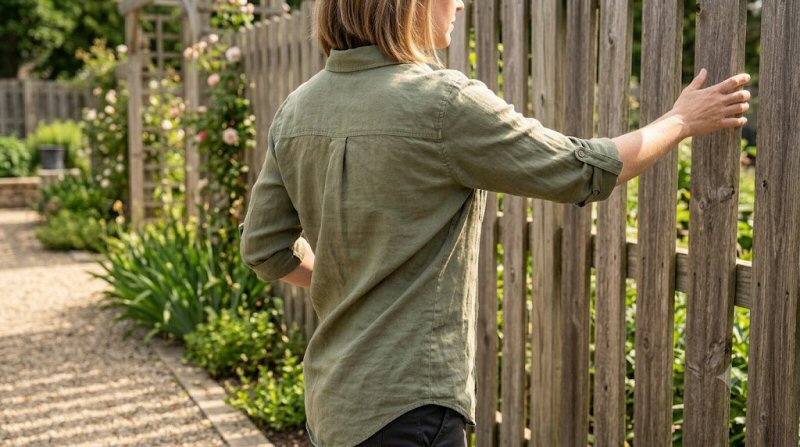
The Achilles tendon still expects a loaded, springy step. Flat shoes, elevators, and long sitting leave it short and quiet, then a sudden hill makes it complain.
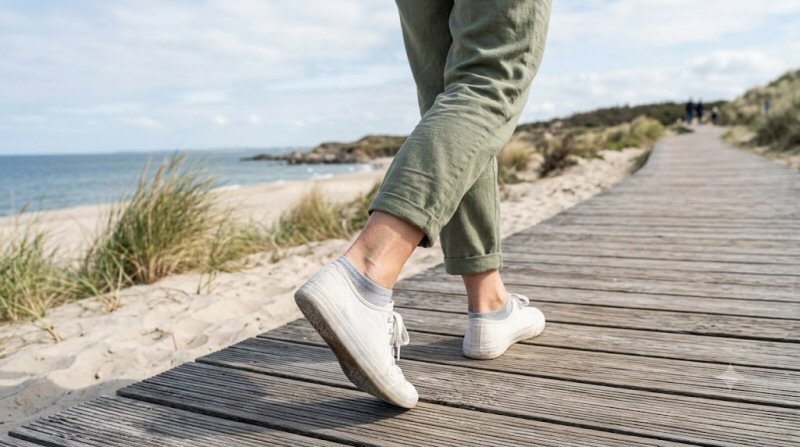
The first stiff steps out of the car are often not in the knee. They sit just above the heel, where the calf narrows into a cord. You rise onto the ball of the foot to reach a shelf and the cord feels short. A weekend hill that used to be nothing now leaves a warm ache at the back of the ankle the next morning.
That cord is the Achilles tendon, shared by the gastrocnemius and the deeper soleus. It was not built as a passive strap between a quiet calf and a cushioned shoe. It was built as a spring. Modern days ask it to stay short, then to behave like a spring on demand.
What This Tightness Feels Like
People usually describe a morning stiffness that eases after a few minutes of walking, a pull when the knee is straight and the heel drops off a step, or a dull ache an inch or two above the heel after hills, speed, or a long stand in flat shoes. The tendon can feel thicker on one side if you pinch it. Stairs down, when the heel has to lower under control, often complain more than stairs up.
A painless click at the ankle is a different story, usually tendon glide or a joint pop. Spring stiffness is a length and load problem. It shows up when the heel finally has to drop and the tendon has to stretch.
The Spring Your Tendon Was Built For
R. McNeill Alexander spent decades showing that running animals store energy in long tendons and get a share of it back on the next push. In humans the Achilles is the main lower-leg spring. During walking and running the calf muscle often holds nearly still while the tendon lengthens and recoils. Tetsuo Fukunaga, Paavo Komi, and later Glen Lichtwark and Alan Wilson mapped that split with ultrasound: the muscle fascicles stay close to one length, and the tendon does the stretch.
That arrangement is efficient. A muscle that shortens and lengthens on every step spends more energy. A tendon that stretches like a rubber band returns a useful part of the step’s mechanical work. Robert Ker and Alexander’s group also showed a second spring under the foot, in the arch. The Achilles and the arch work as a pair. The plantar fascia still expects a springy first step, and the big toe still expects a real push-off. Neither spring loads properly if the Achilles never gets a full heel drop.
Ancestral walking was not a flat treadmill. Hills, soft ground, and occasional speed changed how far the heel dropped and how hard the tendon stretched. The tendon’s collagen turns over slowly. It stays organized when that stretch arrives most days, in modest doses, not in a single Saturday.
Why Modern Days Unload It
A raised heel keeps the tendon in a shorter position for hours. Dress shoes, many running shoes, and even some “comfort” soles reduce how far the heel can drop. The calf adapts to that shorter resting length. Robert Csapo and colleagues have shown that habitual high heels are linked with shorter gastrocnemius fascicles and a stiffer, thicker Achilles. You do not need stilettos for a milder version of the same pattern. A day in a positive heel, then an evening in bare feet on a hard floor, is a small version of the same mismatch.
Elevators, cars, and desk chairs remove the repetitions. A tendon does not need a gym session. It needs hundreds of small stretch-shorten cycles. Sitting gives it almost none. Standing still is not much better: the soleus holds a quiet isometric, and the tendon barely cycles. Then a hike, a sport, or a rush for the bus asks for the spring that has not been rehearsed.
Forefoot running and sudden hill work load the tendon hard. Daniel Lieberman’s barefoot-strike work is often quoted as a simple “heels are bad” rule. The more useful point for this tendon is dose. A forefoot landing raises Achilles force. A cushioned heel strike lowers peak tendon force but also removes the daily stretch the spring expects. Either pattern is tolerable if it is the pattern you practice. Switching in one weekend is how quiet tendons get angry.
Collagen itself still expects load. Michael Kjaer and S. Peter Magnusson have shown that tendon tissue responds to repeated strain, and that turnover is slow. A week of rest does not reset a tendon the way a night’s sleep resets a muscle. The collagen story is the same one vitamin C and load share: without the mechanical signal, the cord does not maintain the spring.
What the Research Shows
Lichtwark and Wilson’s locomotion studies found that the Achilles stretches substantially in stance and recoils before the toes leave the ground, on level ground and on slopes. Fukunaga’s muscle-tendon work made the same point from the inside of the calf: the tendon, not a rapidly shortening muscle, accounts for much of the length change.
Jill Cook and Craig Purdam described tendinopathy as a continuum, from a reactive tendon after a load spike to a more disorganized tendon after months of overload or under-load. Nicola Maffulli’s clinical work on Achilles pain and rupture sits on the same biology. A sudden pop with a gap, and an inability to push off, is a rupture until proven otherwise. Morning stiffness that eases with walking is far more often a grumbling, under-rehearsed tendon.
None of this says a flat shoe is a medical device, or that every ache is ancestral destiny. It says the tissue still keeps the old ledger: cyclic stretch in, stiffness and comfort out. Modern life edits the ledger, then acts surprised at the balance.
Hidden Triggers
A new shoe with a lower heel drop is a common spark, even if the shoe is “better.” So is returning to hills after a flat month, adding speed before adding easy walks, or stretching a cold tendon aggressively first thing. Fluoroquinolone antibiotics have a known association with tendon injury, and a new ache after a recent course deserves a clinician, not a deeper calf stretch. A sudden increase in standing work, especially on concrete, can irritate the insertion where the tendon meets the heel bone.
Tight calves are often the tendon’s neighbor, not the cause. Aggressive stretching into a painful range can poke a reactive tendon. Load that is slow and heavy, in a range that does not spike pain the next morning, is what the cord actually uses.
When to Worry
Most spring stiffness is a load story. Some patterns are not.
Seek urgent care if you felt a pop, as if someone struck the back of the ankle, and you cannot rise onto the toes on that side. A gap in the cord, marked swelling, or inability to walk is not a tight morning. Increasing night pain, redness, heat, or fever is not a simple training error. Pain that is only in the heel bone in a child or teen can be growth-plate irritation, not adult tendinopathy. Calf swelling with warmth in one leg, especially after a flight or a period of immobility, needs a circulation check rather than a stretching routine.
A tendon that has been sore for more than a few weeks despite easier walking is worth a clinician who looks at load, shoes, and the insertion, not only at a foam roller.
Myths vs Facts
Myth: A tight Achilles means you should stretch it hard every morning.
Fact: Cold, aggressive stretching can irritate a reactive tendon. A short walk and a slow heel drop later in the day usually prepare it better.
Myth: Cushioned heels protect the tendon.
Fact: A raised heel shortens the daily stretch. Protection is consistent, modest loading, not permanent heel elevation.
Myth: Pain above the heel is always a tear.
Fact: Morning stiffness that eases is common and usually a load mismatch. A pop plus lost push-off is the pattern that needs same-day care.
Myth: Rest until it is silent, then resume as before.
Fact: Long rest quiets pain and also quiets the spring. The return has to be graded or the same spike returns.
How to Give the Tendon Its Spring Back
Start with steps, not stretches. A daily walk on mixed ground, including a gentle slope, reintroduces heel drop without a workout. Let the heel actually lower. Very stiff soles and tall heels keep the spring unemployed.
If walking is comfortable, a slow heel-drop is the classic rehearsal. Stand on a step with the ball of the foot supported, knee slightly bent for the soleus, then with the knee straighter for the gastrocnemius. Lower the heel over a few seconds, pause, and rise. Håkan Alfredson’s heavy-load heel-drop protocol is the version used in clinics for stubborn Achilles pain, and it is a lot of load. Beginners do not need that volume. Ten slow lowers, a few times a week, below the point that flares the next morning, is a fair start. Pain the next morning is the signal to cut the dose, not to push through.
Rotate heel height instead of living in one position. If work shoes have a heel, spend part of the evening in a flatter shoe or barefoot on a yielding surface. If you are moving to a lower drop, change one walk at a time. Add hills before you add speed. The tendon’s ledger updates in weeks, not in a single session.
Calf strength helps because the muscle and tendon share the job. A seated calf raise loads the soleus, the muscle that works all day in walking. Standing raises load the gastrocnemius. Both belong. Neither replaces the spring of an actual step.
When to See a Doctor
See a clinician if stiffness is worsening over several weeks, if one tendon is clearly thicker, if you cannot single-leg heel raise, or if pain sits in the insertion and ordinary walking keeps flaring it. Mention recent antibiotics, a steroid injection near the tendon, or a sudden load jump. Imaging is sometimes useful. It is not the first step for mild morning stiffness that behaves like a training error.
A physical therapist who doses heel drops and walking is often more useful than a new pair of maximally cushioned shoes.
FAQs
Why is the Achilles stiff in the morning?
Fluid shifts and a night without stretch leave the tendon less compliant. The first steps reload it. Stiffness that eases in a few minutes is common. Stiffness that lasts all morning, or a limp, deserves a closer look.
Do flat shoes help or hurt?
They restore heel drop, which the spring expects. They hurt only when the drop arrives all at once after months in a raised heel. Transition slowly.
Is a heel insert a good idea?
A small lift can calm a very reactive tendon for a short time. Living in the lift keeps the tendon short. Use it as a bridge, not a permanent address.
Can sitting all week and running on Saturday cause this?
Yes. That is the classic spike: almost no cyclic stretch, then a long stretch-shorten session. The tendon’s collagen does not adapt on a weekend schedule.
Should I ice it or heat it?
Either can change comfort for an hour. Neither rebuilds the spring. Graded walking and slow heel drops do that work.
When is it a rupture?
A pop, a feeling of being kicked, a gap, and trouble pushing off are the warning set. Those need urgent assessment, not a calf stretch.
Conclusion
The Achilles still expects a springy step: a heel that drops, a tendon that stretches, and a push that returns some of that energy. Elevators, raised heels, and long sitting edit those repetitions out. The cord does not forget the job. It simply meets the next hill under-rehearsed. Give it small daily stretches of real walking, change heel height gradually, and treat a true pop as an emergency rather than a tight muscle. The spring is still there. It just wants the step it was built to take.