
Your wrists evolved for hanging, carrying, and varied grips—not hours of keyboard extension. Learn the mismatch behind everyday wrist ache and how to restore a more natural position.
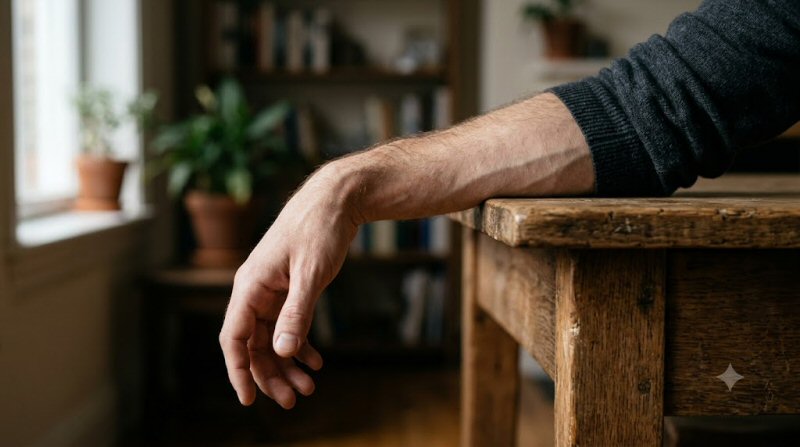
You finish a long afternoon at the laptop and notice a dull ache across the back of one wrist. It is not sharp. It is not swollen. It is just there—present enough that you shake your hand or roll the joint a few times. The feeling is common. It is also a quiet signal from a joint that still expects a different kind of day.
Human wrists spent most of their evolutionary history in motion: hanging from branches, carrying loads, gripping tools, and recovering in a slightly flexed or neutral position between tasks. They were rarely held for hours in the modest extension that a standard keyboard and mouse demand. That difference is small in any single moment and large across a workday.
What This Feeling Actually Is
Most desk-related wrist discomfort is mechanical. The joint is held near the end of its comfortable range for long periods. Soft tissues on the back of the wrist are mildly stretched. The carpal tunnel and surrounding structures experience a slightly different pressure pattern than they would during varied use. Nothing is usually “injured” in the dramatic sense. The tissues simply accumulate load they were not prepared to hold continuously.
People often describe it as a tightness, a low-grade ache, or a sense that the wrist feels “used up” by late afternoon. Shaking the hand or letting the arm hang at the side usually brings quick relief. That pattern points more toward sustained posture than to an acute injury.
Why Wrists Still Expect a Neutral Hang
Anatomist Adalbert Kapandji carefully mapped how the wrist moves through flexion, extension, and deviation. In ordinary life the joint spends much of its time near neutral—neither fully bent nor fully extended—especially when the hand is relaxed or lightly loaded. Power grips and hanging grips also tend to keep the wrist relatively straight or slightly flexed rather than cocked upward.
Modern keyboards reverse that pattern. Typing and mouse use often place the wrist in mild extension for hours. Studies by ergonomists including David Rempel and colleagues have shown that even small sustained deviations increase pressure inside the carpal tunnel and alter the way tendons glide. The absolute pressure change is modest, yet it is applied for far longer than the intermittent loads the joint experienced during tool use or carrying.
The mismatch is not that keyboards are uniquely dangerous. It is that the wrist’s daily loading has become both prolonged and narrow. Ancestral wrists received varied angles, frequent rests in a hanging position, and short bursts of high load. Contemporary wrists often receive one angle, held quietly, for most of the day. Over weeks and months the tissues adapt to that new routine—sometimes by becoming less tolerant of it.
Common Everyday Triggers
- A keyboard that sits too high or too low, forcing the wrist into extension or extreme flexion
- A mouse placed far to the side, adding ulnar deviation on top of extension
- Resting the wrist on a hard desk edge while typing
- Long stretches without letting the arm hang freely at the side
- High typing speed or force combined with poor recovery time
Cold rooms can make the same posture feel worse because tendons and joint capsules become slightly stiffer. Fatigue late in the day reduces the small muscle adjustments that normally keep the wrist closer to neutral. Related sensations, such as the ones described in why hands get cold while typing, often appear in the same work settings.
Less Common but More Serious Possibilities
Persistent numbness, tingling in specific fingers, or weakness when gripping can point toward median or ulnar nerve irritation. Nighttime symptoms that wake you are worth noting. Sudden swelling, bruising, or sharp pain after a fall or impact is different from the gradual end-of-day ache most desk workers describe. These patterns still need context—many mild cases improve with position changes—but they cross the line from “posture fatigue” into something that deserves a proper evaluation.
Hidden Contributors People Overlook
Grip strength and forearm endurance matter. Wrists that rarely carry anything heavier than a phone or laptop have less of the supportive muscle activity that once kept the joint centered. The same principle appears in other hand structures: fingers that still expect a slight curl and hands that lost their daily workout both reflect the same reduction in varied loading.
Sleep position can also matter. Wrists folded tightly under a pillow for hours add another long stretch of non-neutral posture. Combined with daytime keyboard time, the joint may have very few true recovery windows.
When to Pay Closer Attention
Seek advice if the ache is accompanied by progressive numbness, if grip strength is clearly declining, if symptoms interrupt sleep most nights, or if the discomfort spreads up the forearm and does not ease with simple position changes. A sudden “electric” sensation or visible swelling after a specific incident is also a reason to check sooner rather than later. For the ordinary end-of-day tightness that improves with hanging the arm or a short walk, the first step is usually mechanical rather than medical.
Myths Versus What the Evidence Suggests
Myth: Any wrist ache means you are developing carpal tunnel syndrome.
Evidence: Most desk-related discomfort is soft-tissue fatigue from sustained extension. True median-nerve compression has additional features (night symptoms, specific finger numbness, positive provocative tests) that are absent in simple postural ache.
Myth: Wrist rests or gel pads fully solve the problem.
Evidence: They can reduce pressure on the desk edge, but they do not automatically restore a neutral angle. If the keyboard height still forces extension, the pad only changes where the pressure lands.
Myth: You need special braces for ordinary keyboard work.
Evidence: Night splints can help true carpal tunnel symptoms. Daytime braces during typing often encourage people to move less and can increase load on other structures. Position and breaks usually matter more for postural ache.
Practical Ways to Give Wrists What They Still Expect
The goal is not perfect ergonomics every minute. It is more frequent returns to a neutral or hanging position and more variation across the day.
- Adjust keyboard and mouse height so the wrist can stay roughly straight when the fingers are on the keys. Elbows near 90 degrees and shoulders relaxed is a useful starting point.
- Let both arms hang at your sides for 20–30 seconds every half hour. Gravity gently unloads the joint.
- Carry something occasionally—a bag, a book, a jug of water—so the wrist experiences brief loaded neutral grips.
- Vary mouse and keyboard tasks with short standing or walking breaks.
- In the evening, avoid sleeping with wrists sharply flexed under the pillow.
These steps do not require equipment. They simply reintroduce the short rests and varied angles the joint still expects.
When Professional Help Makes Sense
If simple changes do not reduce symptoms within a couple of weeks, or if numbness and weakness are present, a clinician can distinguish postural overload from nerve compression or other joint issues. Early assessment is usually straightforward and often prevents the problem from becoming entrenched. Most people with pure postural wrist ache improve once the daily loading pattern changes.
Frequently Asked Questions
Is it normal for wrists to ache after a full day of typing?
Yes. Sustained mild extension is a common trigger for end-of-day tightness. The ache usually eases when the arm hangs freely or after a short break away from the desk.
Does a neutral wrist mean completely flat?
Not exactly. Neutral means the wrist is neither strongly flexed nor extended—roughly in line with the forearm. A few degrees of variation is normal and comfortable.
Will strengthening my forearms help?
Moderate, varied loading can improve tolerance. Extreme gripping or heavy wrist curls are unnecessary for most desk-related ache and can irritate tendons if added too quickly.
Are vertical mice or split keyboards required?
They help some people by reducing extreme angles, but many improve with ordinary equipment once height, distance, and break frequency are adjusted.
Can cold weather make wrist ache worse?
Yes. Cooler temperatures increase tissue stiffness. The same posture that feels fine in a warm room can feel tighter when hands are cold.
How long should I wait before seeing someone?
If the ache stays mild and improves with position changes, a week or two of consistent adjustments is reasonable. Numbness, weakness, or sleep disruption warrants earlier attention.
Conclusion
Your wrists are not failing because modern work is unnatural. They are simply still calibrated for a day that included hanging, carrying, and frequent changes of angle. The low-grade ache that appears after hours of keyboard extension is the joint noticing the difference. Returning the wrist, even briefly, to a neutral hang—arms at your sides, occasional loads, less sustained extension—gives the tissues the recovery pattern they still expect. Most of the time that is enough.


