
Your tibialis anterior evolved to control soft, varied foot landings. Flat modern surfaces and cushioned shoes reduce that demand, and the mismatch can leave the front of the shin tight or sore.
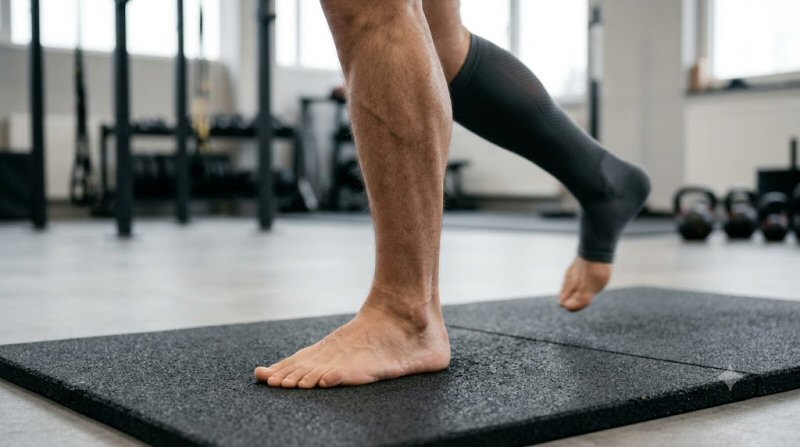
You step off a curb or start a run after weeks of flat sidewalks and suddenly the front of your shin feels tight, almost as if the muscle is arguing with the ground. Or you notice a dull ache along the outer edge of the tibia after a day on hard floors. That sensation is common once the daily footwork becomes mostly level and cushioned. The main muscle on the front of the shin, the tibialis anterior, spent most of human history managing the moment the foot meets uneven or yielding ground. Modern surfaces rarely ask it to do the same job.
What the Front of the Shin Actually Does
The tibialis anterior runs along the outer side of the tibia and inserts on the medial foot. Its primary actions are dorsiflexion (lifting the foot toward the shin) and inversion. In walking it has two clear jobs. During swing it lifts the toes so they clear the ground. At the start of stance it contracts eccentrically to slow the foot as the heel or midfoot meets the surface, preventing an abrupt slap. That controlled deceleration is especially useful on soft or irregular ground where the surface itself gives a little.
Anthropological and biomechanical work, including studies by Daniel Lieberman on barefoot and minimally shod populations, shows that people who regularly walk or run without thick cushioning use more varied foot-strike patterns and keep the intrinsic and extrinsic foot muscles more active. The tibialis anterior participates in that control. On hills, trails, or grassy ground the muscle must adjust timing and force for each step; on a smooth concrete path with a cushioned shoe the same adjustment is largely handled by the shoe and the flat surface.
How Flat Ground and Shoes Change the Demand
Most daily walking now happens on hard, level surfaces. Cushioned shoes absorb the initial contact and reduce the need for precise eccentric control by the tibialis anterior. Research on heel hardness has shown that softer heels can lower pre-activation and early-stance activity in the muscle compared with harder soles. Over months and years the muscle receives less of the repeated, graded loading it evolved to manage. The same sitting habit that keeps knees and hips in limited ranges often leaves the ankles in mild plantarflexion under a desk, further reducing the time the tibialis anterior spends in its lengthened, working position.
When the demand suddenly returns—a hike, a new running program, or even a long day on unforgiving floors—the under-conditioned muscle can feel tight, fatigued, or sore. Anterior shin discomfort (sometimes called anterior tibial stress syndrome) is a frequent result of that mismatch. The tissue is not broken; it is simply being asked to do more work than its recent training has prepared it for. Related under-use shows up in neighboring structures. The calf complex and the arch-supporting muscles experience their own version of the same modern reduction in varied load, explored in pieces on why the soleus still expects you on your feet and why the tibialis posterior still expects a springy arch.
Everyday Sensations That Fit the Pattern
Common benign patterns include a tight or “full” feeling along the front of the shin after a change in activity, mild ache that settles with rest, or a sense that the ankle feels less controlled on uneven ground. Some people notice it most when they switch from cushioned shoes to flatter ones, or when they start walking on trails after months of pavement. The discomfort usually stays localized to the muscle belly rather than the bone itself, and it eases once the loading is graded back down.
The same evolutionary expectation appears in other joints that also prefer variety over static or highly cushioned use. Knees that rarely leave chair height and lower backs that stand still for long periods often share the broader pattern of under-loaded tissues meeting occasional higher demand. Articles on why knees still expect a deep squat and lower-back ache after standing still describe neighboring pieces of that mismatch.
When the Ache Deserves a Closer Look
Most shin tightness from a sudden increase in activity improves with relative rest, graded return, and simple mobility work. Seek professional assessment if the pain is sharp and localized to the bone, worsens at night, causes swelling or warmth that does not settle, or is accompanied by numbness, weakness, or difficulty lifting the foot. Stress reactions, compartment issues, or nerve irritation are less common but more serious and need evaluation rather than continued loading. A gradual onset that follows a clear change in activity is usually the benign mismatch pattern; sudden severe pain without an obvious trigger is not.
Myths Versus What the Tissue Actually Needs
Myth: Shin pain always means you have a stress fracture or need complete rest.
Fact: The majority of anterior shin discomfort after a change in walking or running surface is muscular overload that responds to graded loading and recovery, not prolonged avoidance.
Myth: Stretching the front of the shin every day will fix the problem.
Fact: Gentle mobility helps, but the muscle also needs progressive, controlled loading—heel walks, controlled lowering, and varied terrain—so it can regain the capacity it has lost.
Myth: Only runners get this.
Fact: Desk workers who suddenly walk more, stand on hard floors, or switch footwear often notice the same tightness. The key variable is the recent mismatch in demand, not an athletic identity.
Practical Ways to Restore the Expected Load
Start with short bouts of walking on slightly uneven surfaces—grass, packed dirt, or a trail—while wearing shoes that still allow some foot movement. Heel walks (lifting the toes and walking on the heels for short distances) specifically load the tibialis anterior in a controlled way. Slow, controlled lowering of the foot from a raised position adds the eccentric work the muscle uses at contact. Progress these only as the tissue stays comfortable the next day.
During desk time, occasionally lift the toes toward the shins and hold for a few seconds, or place the feet flat and gently press the balls of the feet down while keeping the heels down. These small interruptions reduce the hours spent in passive plantarflexion. If you are returning to running or hiking, increase distance or intensity by no more than about ten percent per week and include at least one easier day between harder efforts. The goal is not to avoid modern surfaces entirely, but to reintroduce the varied, controlled landings the shin still expects so the muscle stays prepared for them.
Frequently Asked Questions
Is it normal for the front of my shin to feel tight after switching to flatter shoes?
Yes. Flatter or more minimal shoes transfer more of the landing control back to the tibialis anterior. A temporary increase in tightness is common while the muscle adapts; persistent sharp pain is not and should be checked.
Can sitting all day contribute to shin tightness?
It can. Hours with the ankles in mild plantarflexion under a desk reduce the time the muscle spends working or lengthened. Occasional toe lifts and short walking breaks help offset that.
Should I stop walking if my shins feel sore?
Relative rest is useful for a day or two if the soreness is new and noticeable, but complete avoidance usually delays the adaptation. Gentle movement on softer surfaces is often better than total rest once the acute phase has eased.
Does this only happen to people who run?
No. Any sudden increase in walking volume, time on hard floors, or change in footwear can produce the same pattern in people who otherwise sit most of the day.
When should I see a clinician about shin pain?
If the pain is localized to the bone, wakes you at night, causes swelling that does not settle, or comes with foot drop or numbness, seek evaluation. Gradual muscle tightness that follows a clear activity change and improves with graded return is usually self-limiting.
Conclusion
The front of the shin still expects the soft, slightly unpredictable landings that defined most of human walking. Flat pavement and cushioned shoes remove much of that daily work, so the tibialis anterior can become under-prepared. When the demand returns, tightness or mild ache is a common signal rather than a sign that the tissue is failing. Gradual reintroduction of controlled, varied loading—heel walks, short bouts on grass or trails, and simple ankle mobility during the day—lets the muscle regain the capacity it was built to maintain. Most of the time the discomfort fades as the mismatch narrows, and the shin becomes comfortable with the occasional soft landing again.


