
Your semimembranosus, a key hamstring muscle, evolved for frequent knee flexion and hip extension during walking, squatting, and climbing. Modern sitting leaves it underused—here’s why that matters and what to do.
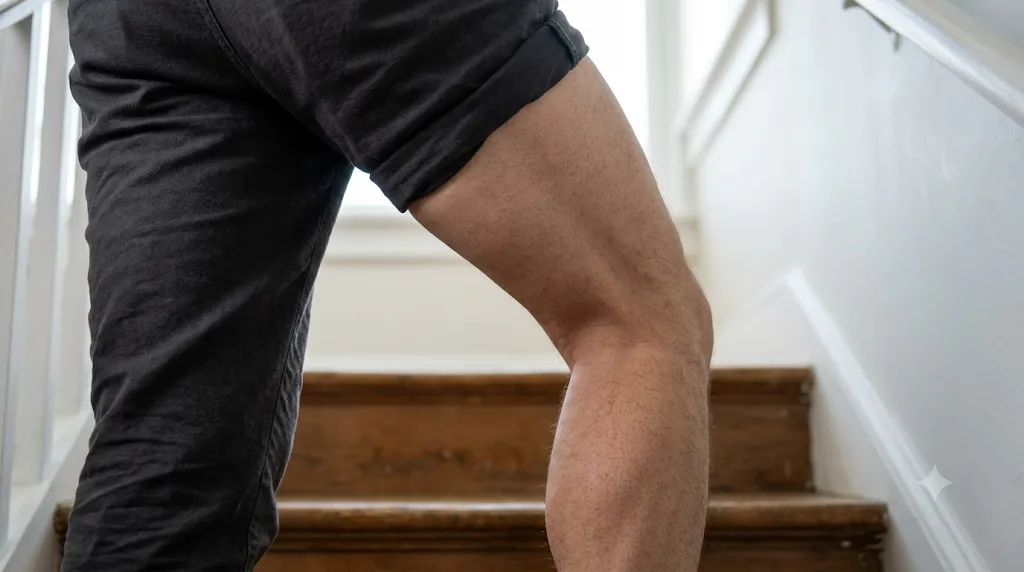
You stand up from your desk after a long stretch of sitting and feel a dull tightness across the back of your thigh, right above the knee. Or you try a deep squat and the same area protests more than it used to. That sensation often traces to the semimembranosus—one of the three hamstring muscles on the back of your thigh. It is built for repeated deep knee bends and hip extensions that used to be ordinary parts of daily life. Most of us now give it far less of that work.
What This Muscle Actually Does
The semimembranosus runs from the ischial tuberosity (the sit bone) down to the back of the medial tibial condyle. Along with the semitendinosus and biceps femoris, it forms the hamstring group. Its main jobs are flexing the knee (bending the heel toward the buttock) and extending the hip (pulling the thigh backward). It also helps control rotation at the knee and stabilizes the pelvis when you lean forward.
Electromyography studies, including classic work by researchers such as John Basmajian, show that the hamstrings stay relatively quiet during quiet standing but become active as soon as you tilt forward or begin to walk. During gait they fire in the late swing phase to control knee extension and then again for hip extension as the foot pushes off. The same muscle is heavily recruited when you climb stairs, rise from a low seat, or pick something up from the floor with a hip hinge.
The Ancestral Pattern It Still Remembers
Human hips and hamstrings changed with the shift to upright walking. Compared with other primates, our ischial tuberosity and hamstring orientation favor efficient hip extension when the hip is nearly straight—exactly the posture used in striding. Deep knee flexion was also common: squatting to rest, climbing, or working near the ground. The semimembranosus, with its broad insertion and ability to stay functional across a wide range of knee angles, was well suited to those repeated bends and extensions.
Today the average person sits for many hours with the knee flexed to about 90 degrees and the hip flexed, placing the muscle in a shortened, passive position for long stretches. When we finally move, we often do so on flat surfaces with limited range—short steps, shallow squats, or none at all. The muscle still “expects” the occasional deeper flexion and loaded extension that once kept it resilient.
Common Everyday Triggers for Tightness
Prolonged sitting is the most frequent modern mismatch. Hours with the knee bent and little active shortening or lengthening leave the semimembranosus and its neighbors under-stimulated. When you stand, the sudden demand for hip extension can feel stiff or even mildly crampy. Other common situations include:
- Driving or flying with the seat low and the knees bent for a long time
- Desk work followed by a sudden attempt at a deep squat or lunge
- Walking only on flat, hard floors without stairs or hills
- Carrying heavy bags in a way that keeps the hips flexed rather than allowing natural stride
These are usually benign adaptations rather than injury. The muscle simply has not been asked to work through its fuller range recently.
When the Sensation Is Worth Checking
Most tightness or mild discomfort that eases with gentle movement is ordinary. Seek a medical evaluation if you notice:
- Sudden sharp pain or a “pop” at the back of the thigh during activity (possible strain)
- Persistent pain that interferes with walking or sleep
- Numbness, tingling, or weakness traveling down the leg
- Swelling or bruising behind the knee or thigh
- Symptoms that appear after a fall or direct blow
Hamstring strains are common in sports that involve sprinting or rapid lengthening, but everyday desk-related tightness is far more often a simple under-use issue.
Myths Versus Facts
Myth: Tight hamstrings always mean you need aggressive stretching.
Fact: Passive stretching can help temporarily, but the semimembranosus also needs occasional active knee flexion and hip extension under light load to stay responsive. Sitting less and adding a few functional movements usually matters more than forcing length.
Myth: The three hamstrings work identically.
Fact: EMG research shows subtle differences. The semimembranosus often contributes more to medial stability and can stay active across a broader range of knee angles than its neighbors. That is why deep, controlled bends can feel particularly useful for it.
Practical Ways to Give It What It Expects
You do not need a gym. Small, frequent doses of the movements it was built for are enough:
- Stand and sit from a chair a few times each hour, letting the knees bend past 90 degrees if comfortable.
- Use stairs when available; the controlled lowering phase asks the hamstrings to lengthen under load.
- Practice a gentle hip-hinge to pick up a bag or water bottle, keeping a soft bend in the knees.
- While standing, slowly bend one knee, bringing the heel toward the buttock, then straighten—repeat a few times on each side.
- Walk with a slightly longer stride on varied surfaces when you can; the late-swing and push-off phases naturally recruit the muscle.
These simple actions restore some of the range and loading pattern the semimembranosus still anticipates. Consistency matters more than intensity.
How This Fits With Other Everyday Patterns
The same modern sitting that quiets the semimembranosus also shortens the hip flexors and reduces the natural arm swing that helps the whole gait cycle. Articles on why your semitendinosus still expects occasional knee bends and why your vastus medialis still expects occasional deep knee bends explore neighboring muscles that face similar mismatches. Meanwhile, why your pelvis still expects the motion of walking looks at the larger coordination that once kept these muscles active throughout the day.
Frequently Asked Questions
Is it normal for the back of my thigh to feel tight after a day of sitting?
Yes. The semimembranosus spends those hours in a shortened position with little active work. The tightness is usually a temporary response that eases once you stand, walk, and gently bend the knee a few times.
Do I need to stretch my hamstrings every day?
Gentle movement through the range is more useful than aggressive static stretching. Occasional deep but comfortable knee bends, hip hinges, and walking on varied surfaces give the muscle the active use it expects.
Can sitting really weaken this muscle?
Prolonged sitting reduces the daily loading that maintains strength and coordination. The muscle does not disappear, but its responsiveness can decline until you reintroduce the movements it was built for.
Why does one side sometimes feel tighter than the other?
Uneven sitting posture, crossing the same leg, or favoring one side while carrying a bag can create small differences. Light, symmetrical movements usually even them out over time.
When should I see a doctor about hamstring tightness?
If the sensation is sudden and sharp, accompanied by swelling, bruising, numbness, or difficulty walking, or if it persists despite ordinary movement, have it checked. Most desk-related tightness does not require medical care.
Conclusion
Your semimembranosus is still calibrated for a life that included frequent deep knee bends, hip extensions, and natural walking. Modern sitting and flat-surface living give it far fewer of those signals. The resulting tightness is usually a quiet reminder rather than a problem. A few deliberate, everyday movements—standing from a chair, using stairs, or a simple heel-to-buttock bend—restore some of the pattern the muscle continues to expect. That small return to ancestral range is often enough to keep the back of the thigh feeling more like itself.


