Your midfoot evolved for flexible contact with natural ground. Shoes and flat floors change that daily loading. Learn why it still expects barefoot time and how to support it.
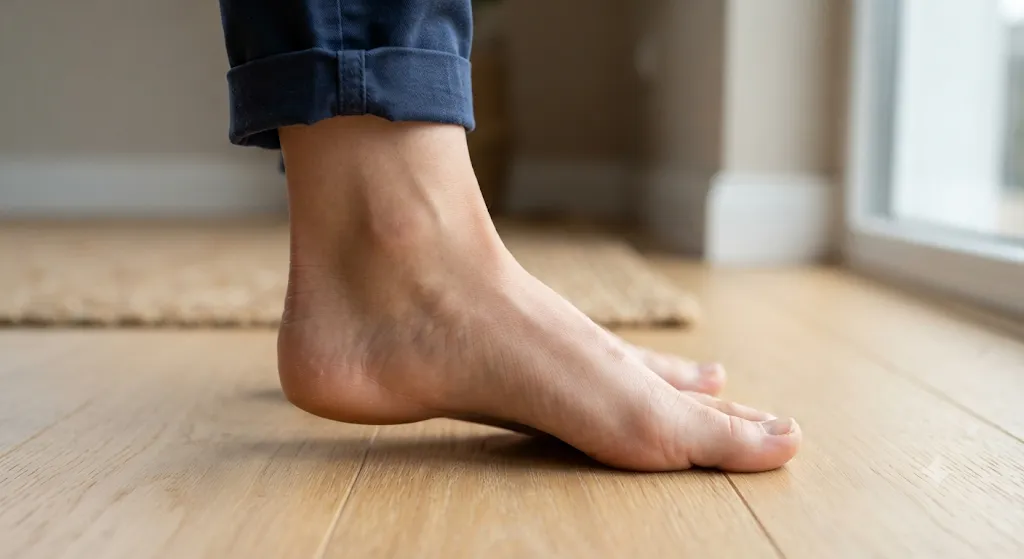
Your foot has a flexible middle section that most people never notice until it starts to feel stiff or tired. The midfoot sits between the heel and the ball of the foot. It is built to bend, spread slightly, and sense the ground. For most of human history that contact happened barefoot or in thin, flexible coverings on uneven surfaces. Today the midfoot spends almost all of its time inside a shoe on hard, flat floors. The structures inside it still behave as if occasional barefoot contact is normal.
What the Midfoot Actually Does
The midfoot contains several small bones, ligaments, and the transverse arch. It acts as a mobile adapter. When you step on something uneven, the midfoot can twist and conform so the whole sole stays in contact. It also helps transfer force from the heel to the forefoot during walking. Evolutionary biologist Daniel Lieberman and colleagues have shown that the human foot is specialized for both shock absorption and efficient propulsion on natural terrain. The midfoot’s flexibility is part of that design.
Inside a typical shoe the midfoot is held in a more rigid position. The sole plate and upper limit how much it can bend or spread. Over thousands of steps the small muscles and sensory endings receive less varied input than they evolved to expect. This is not harmful by itself, but it changes how the foot feels and how force travels through the leg.
Why Barefoot Contact Was the Default
Before shoes became everyday objects, feet met sand, grass, dirt, and rock. Each surface gave different pressure patterns across the midfoot. That sensory information helped the brain adjust balance and muscle timing with every step. Studies of habitually barefoot populations show greater midfoot mobility and different pressure distribution compared with people who have worn shoes their entire lives. The difference is not that one group is “better”; it is that the midfoot’s tissues and nerves developed under regular direct ground contact.
Modern life removed most of that contact. Even when people go barefoot at home, the floor is usually flat and hard. The midfoot still receives some pressure, but the variety and the feedback are reduced. Related articles on this site explore similar mismatches, such as why the abductor hallucis still expects occasional barefoot balance and why the flexor digitorum longus still expects occasional toe curls.
Everyday Effects of Reduced Midfoot Contact
Many people notice that their feet feel “flat” or less responsive after a long day in shoes. The midfoot can feel stiff when they first step out of the shoe, especially in the morning or after sitting. Some describe a mild ache across the top or middle of the foot after hours on hard floors. These sensations are usually the result of reduced movement and sensory input rather than injury.
Because the midfoot contributes to the foot’s spring-like behavior, less flexible loading can shift more work to the calves and ankles. That is one reason some people find their lower legs tire more quickly on concrete than on softer ground. The article Is It Normal for Your Calves to Ache After Walking on Hard Floors? covers a related pattern.
Less Common but Worth Checking
Persistent sharp pain, swelling that does not settle, or a sudden change in how the arch looks should be evaluated. Stress reactions in the midfoot bones, ligament sprains, or inflammatory conditions can produce similar stiffness. These are uncommon in people who simply spend most of their time in shoes, but they become more likely with sudden increases in barefoot activity or with underlying bone density issues. A healthcare professional can distinguish ordinary stiffness from something that needs imaging or specific care.
Hidden Triggers in Daily Life
Very stiff or highly cushioned shoes limit midfoot motion more than minimalist designs. Standing still for long periods on hard surfaces also reduces the small adjustments the midfoot normally makes. Tight socks or shoes that compress the top of the foot can add local pressure. Even the way a person sits with feet tucked under a chair can leave the midfoot in a shortened position for hours. None of these are dramatic, yet they accumulate.
When to Worry
Seek advice if midfoot pain is severe, follows a clear injury, or is accompanied by redness, warmth, or difficulty bearing weight. Numbness that spreads into the toes, or pain that wakes you at night, also deserves attention. For the majority of people the sensation is simply the midfoot noting that it has had less varied contact than it evolved to handle.
Myths vs Facts
Myth: Going barefoot more often will automatically fix foot problems.
Fact: Gradual, short periods of barefoot time on safe surfaces can restore some sensory input and mobility. Sudden long barefoot walks on hard ground can irritate tissues that are not ready.
Myth: The midfoot should never bend.
Fact: Controlled flexibility is normal. The midfoot is meant to adapt; excessive rigidity or excessive collapse are the patterns that usually cause trouble.
Myth: Arch supports are the only solution for midfoot fatigue.
Fact: Supports can be helpful for some people, but many improve comfort simply by varying surfaces and allowing brief periods of natural foot motion.
Practical Ways to Give the Midfoot What It Still Expects
You do not need to abandon shoes. Small, consistent changes restore some of the contact and movement the midfoot anticipates.
- Spend a few minutes barefoot on a clean, varied surface at home—carpet, a yoga mat, or a wooden floor—while gently shifting weight.
- Choose shoes with a flexible midsole for at least part of the day when safety allows.
- Practice slow, controlled toe and arch movements while seated: press the ball of the foot down, then gently lift the arch without curling the toes hard.
- When walking outside, notice the ground under the middle of the foot rather than only the heel or toes.
- Avoid sudden long barefoot sessions on concrete if your feet are used to shoes.
These steps are low-risk for most healthy adults. If you have diabetes, neuropathy, or a history of foot injury, check with a clinician before increasing barefoot time.
Frequently Asked Questions
Is it normal for the middle of my foot to feel stiff after wearing shoes all day?
Yes. The midfoot has had limited motion and reduced sensory variety. The stiffness usually eases after a few minutes of walking barefoot or in flexible footwear.
Should I walk barefoot more to strengthen my midfoot?
Short, gradual barefoot periods on safe indoor surfaces can help. There is no need for long outdoor barefoot walks unless you are already accustomed to them. Consistency matters more than duration.
Can tight shoes permanently change the midfoot?
Long-term use of very narrow or rigid shoes can reduce mobility, but the tissues remain adaptable. Most people regain comfortable motion with varied loading and better-fitting footwear.
Why does one foot’s midfoot feel different from the other?
Slight differences in bone shape, past injuries, or how you stand are common. As long as pain is absent and both feet function well, the asymmetry is usually harmless.
When should midfoot discomfort after a day in shoes be checked?
If the discomfort is sharp, worsens over weeks, or is joined by swelling or limping, have it assessed. Ordinary end-of-day stiffness that settles overnight is typically the expected response to modern loading.
Conclusion
The midfoot still expects occasional direct contact with the ground because that is the condition under which it developed. Shoes and flat surfaces are useful, yet they reduce the flexibility and sensory feedback the midfoot is built to receive. Brief, mindful barefoot time and shoes that allow natural motion give those structures some of what they still anticipate, without requiring a return to an earlier way of life. Most of the stiffness people notice is simply the midfoot registering the difference.