
Your flexor digitorum longus helps your lesser toes grip and push during walking. Modern shoes often leave it underused. Learn why it still expects occasional curls and simple ways to meet that need.
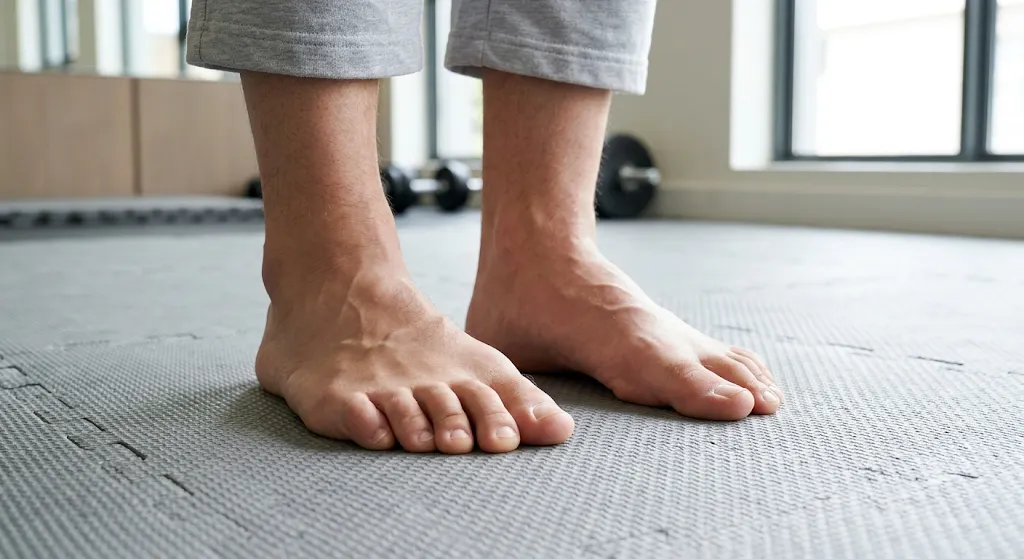
Most of us never think about the muscle that curls our lesser toes. It sits deep in the back of the lower leg, sends four slender tendons under the arch, and quietly helps the second through fifth toes press and grip during each step. For most of human history that muscle worked every day on uneven ground, barefoot or in thin footwear. Today it often spends long stretches doing almost nothing inside supportive shoes. The mismatch is subtle, but it shows up as weaker toe control, a less stable arch, and a foot that feels less “alive” when you walk barefoot.
What This Muscle Actually Does
The flexor digitorum longus (FDL) originates on the back of the tibia, travels down behind the medial ankle, and divides into four tendons that attach to the distal bones of toes two through five. Its main jobs are straightforward: flex those toes at every joint and assist with plantarflexion and a bit of inversion at the ankle. During walking it helps keep the toes in contact with the ground so the foot can push off cleanly and maintain balance on uneven surfaces.
Classic electromyography work by researchers such as John Basmajian showed that the deep posterior compartment muscles, including the FDL, become active during the stance and push-off phases of gait when the foot must stabilize and propel. On soft or irregular ground the demand rises further because the toes must actively curl and grip to keep the foot from sliding. That is the environment the muscle was shaped for.
Why It Still Expects Occasional Curls
Human feet evolved for barefoot or minimally shod walking on natural terrain. Daniel Lieberman and colleagues have documented how modern conventional shoes with rigid soles, elevated heels, and narrow toe boxes reduce the need for active intrinsic and extrinsic foot-muscle work. The FDL in particular loses the frequent, varied toe-flexion loads it once received every day. Studies comparing habitually minimally shod populations with conventionally shod groups find larger cross-sectional areas in several foot muscles and stiffer longitudinal arches in the minimal-footwear groups. The pattern suggests that regular toe-gripping and arch-working demands keep these muscles stronger and more functional.
When those demands disappear for months or years, the muscle does not vanish, but it adapts downward. Tendons remain, yet force capacity and coordination decline. The result is not dramatic injury for most people, but a quieter loss of foot dexterity that can contribute to poorer balance, more reliance on passive shoe support, and sometimes earlier fatigue in the lower leg during longer walks.
What Modern Life Does to It
A typical weekday keeps the FDL in a low-demand state. Standing or walking in stiff work shoes, driving, and sitting all minimize active toe flexion. Even many athletic shoes prioritize cushioning and stability over free toe movement. The muscle still fires a little with each step, yet the peak loads and the variety of angles it once handled are largely gone. Over time this underuse can leave the toes less able to spread, curl, or contribute to propulsion, while the larger calf muscles take on more of the push-off work.
Related articles on the site explore similar patterns: why your foot soles still expect occasional barefoot time, why your flexor hallucis longus still expects occasional big-toe flexion, and why your abductor hallucis still expects occasional barefoot balance. The FDL fits the same story for the lesser toes.
Signs the Muscle Is Underused
Most people notice nothing dramatic. Common quiet signs include difficulty picking up a small object with the toes, a sense that the front of the foot feels “flat” or less responsive on hard floors, or mild fatigue along the inner ankle after a long walk on varied terrain. Some notice that their toes no longer press firmly into the ground during push-off when they try walking barefoot. These are not diagnostic by themselves; they simply suggest the muscle has not been asked to work at higher levels recently.
How to Give It What It Expects
You do not need special equipment or long sessions. Short, regular doses of active toe flexion restore some of the missing stimulus:
- Seated towel or marble pick-ups: curl the lesser toes to grasp and move a light object for 1–2 minutes.
- Standing short-foot or toe-curl holds: gently press the toes down into the floor without gripping hard enough to cramp, hold 5–10 seconds, repeat 8–10 times.
- Barefoot time on safe, clean surfaces: a few minutes of walking or balancing on a mat or short grass lets the toes respond to texture.
- Gradual minimal-footwear use for short walks if your feet tolerate it, following any guidance from a clinician if you have existing foot conditions.
Start gently. The goal is occasional loading, not maximal effort. Most people feel a mild sense of work in the arch or lower leg rather than pain. Consistency over weeks matters more than intensity on any single day.
When to Be More Cautious
See a clinician if you have persistent medial ankle or arch pain, sudden weakness, numbness, or swelling. Posterior tibial tendon issues can sometimes involve or mimic deep flexor problems, and sudden inability to flex the toes warrants evaluation. If you have diabetes, neuropathy, or significant arthritis, check with a professional before adding barefoot or toe-curl exercises. Ordinary underuse itself is rarely urgent; the red flags are pain that worsens, loss of function, or symptoms that do not settle with rest.
Myths Versus Facts
Myth: Toe-curl exercises will create bunions or hammer toes.
Fact: Gentle, controlled flexion within a comfortable range does not force the toes into deformed positions. Aggressive, painful gripping is different and unnecessary.
Myth: Only the big toe matters for propulsion.
Fact: The lesser toes contribute meaningfully to balance and the final push-off, especially on uneven ground. The FDL is part of that system.
Myth: Once the muscle is weak it cannot improve.
Fact: Like other skeletal muscles, the FDL responds to progressive loading. Studies of minimal footwear and targeted foot exercises show measurable gains in strength and, in some cases, muscle size over weeks to months.
Frequently Asked Questions
Is it normal for my lesser toes to feel weak when I try to curl them?
Yes for many people who spend most of the day in supportive shoes. The capacity is usually still there; it simply has not been trained recently.
How often should I practice toe curls?
A few minutes, three to five days a week, is enough for most people to notice better control. More is not necessarily better if the tissues become sore.
Can weak flexor digitorum longus cause plantar fasciitis?
It is unlikely to be the sole cause. Reduced foot-muscle strength and poorer arch control can contribute to higher loads on the plantar fascia, but many other factors are involved.
Should I do these exercises if I already have hammer toes?
Gentle, pain-free motion is often fine and sometimes helpful, but rigid or painful deformities need professional assessment first so you do not force a fixed joint.
Do minimal shoes automatically strengthen the FDL?
They increase the demand compared with stiff conventional shoes, but only if you actually walk and the toes are free to move. Transition gradually and listen to your feet.
Conclusion
The flexor digitorum longus is a quiet worker that evolved for daily toe curling and gripping on natural ground. Modern footwear and sedentary habits largely remove that stimulus, so the muscle settles into a lower capacity. Occasional, gentle toe-curl practice and short periods of barefoot or minimal-shoe movement give it back a little of what it still expects. Most people can restore useful strength and control without special equipment or dramatic changes—just a few mindful minutes on a regular basis.


