
Your abductor hallucis evolved to stabilize the medial arch and big toe during barefoot steps on uneven ground. Modern shoes can leave it under-stimulated.
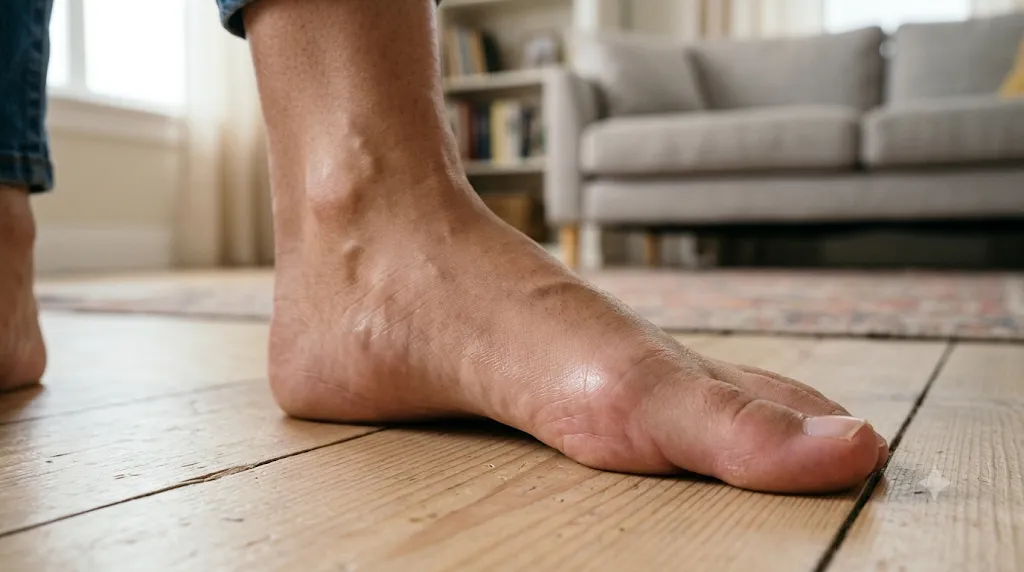
Your feet spend most of their day inside shoes that keep the big toe pointed forward and the arch supported from the outside. The small muscle running along the inside of your foot—the abductor hallucis—still behaves as if it will regularly feel the ground, spread the big toe slightly, and help stiffen the medial arch during a step. When that occasional barefoot balance work disappears, the muscle can quietly weaken even while the rest of you feels fine.
What This Muscle Actually Does
The abductor hallucis sits on the medial (inner) side of the sole, originating from the heel bone and inserting into the base of the big toe’s proximal phalanx. Its name describes the main job: it abducts the big toe, pulling it slightly away from the second toe, and it also assists in flexion. More importantly for everyday walking, it helps support the medial longitudinal arch and keeps the big toe from drifting inward under load.
Electromyography work by researchers such as J.V. Basmajian and E.G. Gray showed that intrinsic foot muscles, including the abductor hallucis, are active during stance and push-off. Later studies (including work by Randall Susman) suggested these muscles help position pressure under the foot rather than simply holding the arch up like passive straps. In minimally shod or barefoot populations, the abductor hallucis tends to be thicker—evidence that regular ground contact and free toe movement keep it in regular use.
Why Modern Shoes Change the Demand
Most contemporary shoes have a narrow toe box, a cushioned sole, and often some degree of arch support. These features reduce the need for the foot’s own muscles to stabilize the medial column on every step. Research comparing habitually minimally shod people with conventionally shod people (for example, Holowka and colleagues) found larger abductor hallucis cross-sectional area and stiffer arches in the minimally shod group. The muscle simply receives more of the mechanical signal it evolved to receive.
Ancestral walking and running involved frequent barefoot or minimally protected contact with varied surfaces—sand, rock, uneven dirt. The big toe could splay a little, the arch could respond dynamically, and the abductor hallucis contributed to that responsiveness. Today, many people log thousands of steps inside rigid or cushioned shoes and rarely place a bare foot on anything but a smooth floor. The mismatch is subtle but cumulative.
You can read more about related barefoot expectations in our piece on why your foot soles still expect occasional barefoot time and the spring-like role of the arch in why your arches still expect a springy step.
Everyday Signs the Muscle Is Under-Used
Most people never notice the abductor hallucis itself. Instead they notice downstream effects: a big toe that gradually angles toward the second toe, a feeling that the inner arch “gives way” on longer walks, or mild fatigue along the inside of the foot after standing. Some develop early hallux valgus tendencies; weakness of the abductor hallucis is one of several factors linked to that shift. Others simply feel less stable when they step barefoot onto an uneven surface or try to balance on one foot.
These are not automatic signs of injury. They can simply reflect reduced daily demand. People who spend long hours in tight shoes or who rarely go barefoot often show smaller intrinsic foot muscles on ultrasound, even when they have no pain.
Less Common but Worth Checking
Persistent pain at the inside of the heel or along the medial arch, numbness under the foot, or a rapidly progressing bunion that interferes with walking should be evaluated. Baxter’s nerve entrapment or other medial plantar nerve issues can affect the abductor hallucis and produce aching or weakness. These are less common than simple under-use, but they exist. Sudden swelling, redness, or inability to bear weight are red flags that need prompt attention rather than home exercises.
How to Give the Muscle Occasional Work
You do not need to abandon shoes. Short, regular doses of the stimulus the muscle expects are usually enough:
- Spend a few minutes barefoot on a non-slip indoor floor each day—standing, shifting weight, or slowly rising onto the balls of the feet while keeping the big toe grounded.
- Practice the short-foot exercise: gently draw the ball of the foot toward the heel without curling the toes, feeling the medial arch lift. Hold for a few seconds and repeat.
- Try toe-spread-out movements: keep the heel down and actively spread the big toe away from the others, then relax. This specifically recruits the abductor hallucis.
- When safe, walk briefly barefoot or in minimal footwear on varied but clean surfaces (carpet, wooden floor, packed earth). Gradual exposure matters; sudden long barefoot sessions on hard surfaces can irritate tissues.
- Choose shoes with a wider toe box when possible so the big toe is not constantly compressed toward the midline.
Studies on minimalist footwear and targeted foot exercises show measurable increases in abductor hallucis thickness over weeks to months when the transition is gradual. The goal is occasional loading, not constant barefoot living.
Myths vs Facts
Myth: The arch is held up only by ligaments; the muscles do not matter.
Fact: Ligaments and bones provide passive structure, but EMG and ultrasound data show the intrinsic muscles, including the abductor hallucis, actively contribute to arch stiffness during gait.
Myth: Once the big toe starts to drift, nothing helps.
Fact: Early strengthening of the abductor hallucis and roomier footwear can slow or partially reverse mild drift in many people; advanced structural changes need professional assessment.
Myth: Cushioned shoes protect the foot so the muscles can rest.
Fact: Reduced demand often leads to smaller intrinsic muscles over time, which can lower the foot’s own capacity to manage load.
When to See a Doctor
See a clinician if you have persistent medial foot or heel pain, progressive big-toe deviation that affects shoe fit or walking, numbness, or weakness that does not improve with simple barefoot practice and wider shoes. A podiatrist or physical therapist can assess muscle function, rule out nerve entrapment, and guide progressive loading. Imaging is rarely needed for straightforward under-use but may be useful if symptoms are severe or sudden.
FAQs
Can I strengthen the abductor hallucis without special equipment?
Yes. Short-foot holds, big-toe abduction (spreading) against light resistance (such as a towel or just gravity), and brief barefoot standing on a firm surface are usually sufficient to start.
How long before I notice a difference?
Ultrasound studies of minimalist-shoe transitions have shown thickness changes in 12–24 weeks. Subjective stability often improves sooner with consistent daily practice.
Is it safe to go barefoot if I have flat feet?
Many people with flexible flat feet benefit from gradual intrinsic-muscle work, but start short and on soft surfaces. If pain increases, stop and get an assessment.
Do orthotics make the muscle weaker?
Long-term reliance on rigid support can reduce demand, but temporary orthotics for pain relief are different from permanent avoidance of barefoot time. Combining support when needed with daily short-foot or barefoot practice is a common balanced approach.
Will this help prevent bunions?
It can reduce one contributing factor (abductor hallucis weakness) and improve toe alignment in early stages. Genetics, footwear history, and joint structure also matter, so results vary.
Conclusion
The abductor hallucis is a small muscle with a clear ancestral job: help stabilize the big toe and medial arch when the foot meets the ground without constant external support. Modern shoes remove much of that signal. Occasional barefoot balance, simple toe-spreading drills, and slightly roomier footwear restore a portion of the demand the muscle still expects. Most people notice better foot awareness and fewer minor aches once the muscle receives regular, gentle work again—no dramatic overhaul required.


