
Your knees spend hours bent in cars, desks, and couches, yet they still expect regular full straightening. Learn why this ancestral pattern matters and how short extensions help.
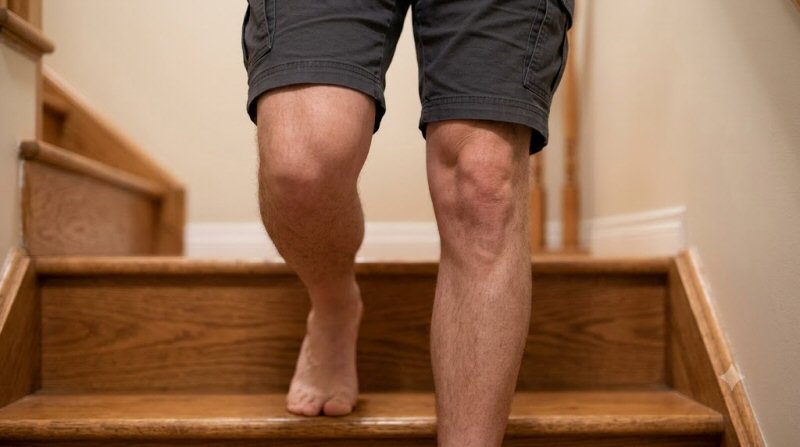
After a long car ride or a full day at a desk, the first few steps can feel stiff. Your knees protest as if they have forgotten how to straighten all the way. This is common, and it has a simple explanation rooted in how human knees evolved to move.
What Full Extension Actually Feels Like
Full knee extension means the leg is straight, the back of the knee softens, and the joint locks gently into its most open position. In daily life this happens when you stand up from a low seat, take a long stride, or simply stand with weight shifted onto one leg. Many people notice a brief stiffness or a soft click the first time they fully straighten after hours of sitting. The sensation usually fades within a few steps.
Why Ancestral Life Demanded Frequent Straightening
For most of human history, knees did not stay bent at 90 degrees for hours. Walking, foraging, climbing, and resting on the ground involved constant changes in joint angle. A full extension occurred many times an hour—during a longer step, while carrying something, or when rising from a squat. Researchers studying modern hunter-gatherer groups, such as those documented by anthropologists following the work of Daniel Lieberman, note far more variety in knee range than the typical office or driving day provides. The cartilage, synovial fluid, and surrounding muscles still “expect” these regular full openings.
What Happens When Extension Is Rare
When the knee stays flexed for long periods, synovial fluid is not pumped as efficiently through the joint. The posterior structures (hamstrings and the back of the joint capsule) stay shortened, and the front of the joint experiences sustained compression. Studies on prolonged sitting, including work by researchers such as Neville Owen and others examining sedentary behavior, show that joint stiffness rises and perceived ease of movement drops. A brief full extension reverses much of this temporary change by restoring fluid distribution and gently lengthening the shortened tissues.
This is one reason many people feel better after a short walk or after simply standing and straightening the legs a few times. Related sensations appear in articles such as Is It Normal for Your Knees to Crack When You Stand Up? and Is It Normal for Your Knee to Ache After Sitting?.
Common Modern Triggers
- Long car rides or flights with knees held at a fixed angle
- Desk work with the chair height forcing a deep bend
- Soft couches that encourage slouching and flexed hips and knees
- Prolonged cross-legged sitting
These situations are normal parts of contemporary life. The mismatch is not that sitting exists, but that full extension has become rare rather than frequent.
When the Stiffness Is Worth Checking
Occasional stiffness that eases with a few steps is usually benign. See a clinician if you notice:
- Swelling that appears quickly and stays
- True locking (the knee will not straighten at all)
- Pain that wakes you at night or limits daily walking
- Instability or giving way
- Stiffness that worsens rather than improves over days
These patterns can point to meniscus issues, inflammatory conditions, or other problems that benefit from assessment. Most everyday post-sitting stiffness does not fall into this category.
Simple Ways to Give Your Knees the Extension They Expect
You do not need a formal exercise program. Small, frequent straightening works well:
- Stand up every 30–45 minutes and fully straighten one knee at a time, holding for a few seconds.
- When driving, use rest stops to walk a short distance with natural long strides.
- After a meeting, take a minute to shift weight onto each straight leg.
- While standing, gently press the back of the knee toward a wall or just stand tall with soft knees that can still fully lock.
These habits restore the fluid movement and tissue length the joint is built for. Many people also notice that the lower back and hips feel easier when the knees regain full range—see Is It Normal for Your Low Back to Ache After a Long Drive? for related patterns.
Myths vs Facts
Myth: Knees should never fully lock.
Fact: Occasional full extension is normal and beneficial for most people. Sustained hyperextension under heavy load is different from the gentle lock that occurs in everyday standing.
Myth: Stiffness after sitting means the cartilage is wearing out.
Fact: Temporary stiffness is more often a fluid and soft-tissue response to prolonged flexion. It usually improves with movement.
Frequently Asked Questions
Why do my knees feel stiffest right after I stand up?
Synovial fluid has settled and the posterior tissues have shortened during the long bend. The first full extensions redistribute fluid and gently stretch those tissues, so the feeling eases quickly.
Is a soft click when I straighten my knee a problem?
A painless click is common and often comes from the same cavitation or tendon movement described in articles about standing-up cracks. Pain, swelling, or locking with the click is the signal to get it checked.
How long can I sit before my knees “expect” an extension?
There is no strict number, but many people notice stiffness after 45–90 minutes of continuous flexion. Shorter breaks with full straightening reduce the buildup.
Does walking on flat ground count as full extension?
Yes. A normal walking stride includes a phase of full or near-full knee extension. Even a short walk restores much of the movement the joint is designed for.
Can strengthening the muscles around the knee replace the need for full extension?
Strength helps, but the joint still benefits from the actual range. Extension is a positional habit as much as a strength issue.
Conclusion
Your knees spent most of evolutionary time moving through a wide range of angles, including frequent full straightening. Modern chairs, cars, and desks have made that full extension rare. The stiffness you feel after long periods of bending is the joint reminding you of an older pattern. A few deliberate straightening moments throughout the day usually restore ease without special equipment or long workouts. Listen to the first steps after sitting—they are telling you what the knee still expects.


