
Your hands evolved for precision pinches, power grips, and constant variety. Modern screens and tools often leave them stiff or sore. Here is what the research shows and how to help.
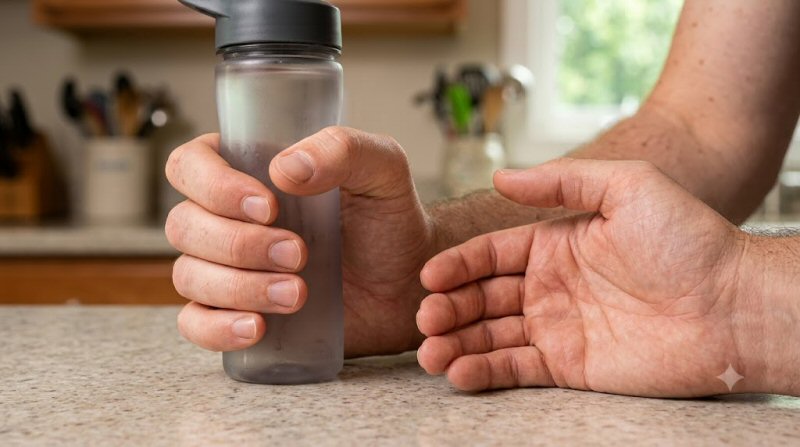
You finish a long session at the computer or on your phone and notice your hands feel tight, a little achy, or slower to open and close. It is a familiar modern sensation. The muscles and joints that once handled tools, branches, food, and climbing all day now spend hours in a narrow set of positions. That mismatch is common, usually manageable, and rooted in how the human hand was shaped.
What Varied Grips Actually Look Like
A varied grip means the hand is not locked into one shape for long periods. Precision pinches (thumb to fingertips) alternate with power grips (palm and fingers wrapping a handle). Fingers flex, extend, spread slightly, and rest. The thumb moves through opposition. The wrist stays mostly neutral rather than cocked for hours. In daily ancestral life this variety was automatic. Today it often has to be chosen on purpose.
The Evolutionary Expectation
Human hands are specialized for both power and precision. Anthropologist John Napier described the power grip and the precision grip as two fundamental patterns made possible by our hand architecture. Later work by Mary Marzke and colleagues showed that the human hand’s proportions, thumb mobility, and muscle arrangement support forceful precision pinches and power squeezes used in tool making and tool use. These capabilities were useful for shaping stone, gripping branches, carrying loads, and preparing food.
The hand’s many small muscles, tendons, and joints expect changing loads. Ligaments and cartilage stay healthier with motion that distributes pressure. Tendons glide better when the wrist and fingers are not held in one extreme position. The brain’s motor maps for the hand stay sharper when the fingers are used in different combinations rather than the same few swipes or clicks. When those varied inputs disappear for long stretches, the tissues can stiffen and the sense of control can feel less automatic.
Why Modern Life Narrows the Input
Most contemporary hand use is limited. Typing keeps the wrists slightly extended and the fingers in a mid-range curl. Scrolling or swiping uses mainly the thumb and index finger in small, repeated motions. Holding a phone or mouse freezes the hand in a semi-grip for long periods. Even driving or carrying a bag often uses the same power grip over and over. The result is high repetition in a small range of motion and very little of the forceful, multi-directional loading the hand’s structure was refined for.
This is a classic evolutionary mismatch. The anatomy did not change; the daily tasks did. Studies of traditional populations and experimental work on stone-tool grips illustrate how much more varied and loaded ancestral hand use was. In industrial settings the same structures are asked to perform thousands of nearly identical micro-movements. Over months and years that pattern can contribute to tightness, reduced endurance, or early signs of overuse.
Common Effects People Notice
Many people report a dull ache across the back of the hand or in the thenar (thumb) muscles after a long screen day. Fingers may feel stiff when they first open them, or the grip may feel weaker when opening a jar. Some notice mild swelling or a sense that the hands “wake up” slowly. These sensations are often linked to sustained postures that reduce tendon gliding and local circulation rather than to a single injury.
Related articles on the site cover neighboring issues: why your wrists still expect a neutral hang and why your fingers still expect a slight curl. The hand does not work in isolation; the wrist position and resting finger posture influence how comfortable the whole system feels.
Less Common but Serious Signals
Most hand fatigue from modern use is benign and improves with movement breaks and position changes. Certain patterns deserve prompt attention. Persistent numbness or tingling that wakes you at night, clear weakness (dropping objects, inability to open a jar that was previously easy), visible swelling that does not settle, or pain that radiates up the arm are not typical of simple overuse. These can relate to nerve compression, inflammatory conditions, or other issues that benefit from medical evaluation.
Hidden Triggers
Cold environments tighten the small muscles and reduce dexterity. Dehydration can make tendons feel less smooth. High stress increases muscle tone in the forearms and hands, so a tense day at the keyboard often leaves the hands more fatigued than the actual keystrokes would predict. Poor sleep reduces tissue recovery overnight. Even the way you sleep—hands curled tightly or under the pillow—can add to morning stiffness.
When to Worry
See a clinician if you have:
- Numbness or tingling that is constant or wakes you repeatedly
- Noticeable weakness or loss of coordination that is not improving
- Swelling, redness, or warmth that persists
- Pain that is sharp, localized to a joint, or accompanied by locking or catching
- Symptoms that begin after a fall or sudden overload
Occasional tightness after a long day of the same grip is common. Progressive or neurological symptoms are the ones that need professional assessment.
Myths vs Facts
Myth: Hand pain from computer use always means carpal tunnel syndrome.
Fact: Many people experience muscle and tendon fatigue from sustained postures long before a nerve is compressed. Simple changes in position and variety often help.
Myth: You need to avoid all gripping to protect your hands.
Fact: The hand thrives on varied, moderate loading. Complete rest can increase stiffness; the goal is diversity of movement rather than zero use.
Myth: Grip strength only matters for athletes.
Fact: Everyday grip strength supports opening containers, carrying groceries, and maintaining hand function as you age. Maintaining it through varied use is practical prevention.
How to Give Your Hands What They Expect
You do not need to return to stone-tool making. Small, consistent variety is enough for most people.
- Change grips often. Alternate between a light power grip on a mug or bottle and a precise pinch when you pick up small objects.
- Take micro-breaks. Every 30–45 minutes, open the hands fully, spread the fingers, and make a gentle fist a few times.
- Use both hands. Carry a bag in the non-dominant hand sometimes, or stir with the other hand.
- Include simple loaded movements. Squeeze a soft ball or towel for a few repetitions, then fully open the hand. Hang from a sturdy bar for a few seconds if your shoulders allow it (see related notes on why your thumbs still expect to pinch and hang).
- Keep the wrist closer to neutral during long typing or mouse sessions. A soft wrist rest or simply resting the forearms can help.
- Warm the hands in cooler weather. Cold stiffens the small muscles faster.
These steps restore some of the positional variety and light loading the hand’s tissues handle well. Most people notice less end-of-day tightness within a week or two of consistent practice.
When to See a Doctor
If the practical steps above do not reduce symptoms after a couple of weeks, or if you develop the red-flag signs listed earlier, a primary-care visit or referral to a hand specialist or physical therapist is reasonable. Early assessment can distinguish simple overuse from nerve, joint, or inflammatory issues and guide the right next steps.
FAQs
Is it normal for my hands to feel stiff after a day of typing?
Yes. Sustained mid-range postures reduce tendon gliding and local blood flow. Brief movement breaks and full opening of the fingers usually ease it.
Will doing more grip exercises make the problem worse?
Heavy, repetitive gripping can irritate already fatigued tissues. Light, varied loading (different grips, short holds, full opening between sets) is usually helpful. Stop if pain increases.
Does phone use affect the hands the same way as a keyboard?
Phone use often loads the thumb and thenar muscles in a small range. Keyboard use loads the finger flexors and wrist extensors more. Both reduce overall variety; both improve with position changes and breaks.
Can cold weather make hand tightness worse?
Yes. Cooler temperatures increase muscle tone and reduce dexterity. Warming the hands and keeping them moving helps.
Should I worry about losing grip strength as I get older?
Some decline is common, but much of it is linked to reduced use. Maintaining varied everyday gripping and occasional loaded tasks supports strength and function longer.
Is there a best resting position for the hands?
A relaxed, slightly curled position with the wrist near neutral is comfortable for most people. Avoid sleeping with the wrists sharply bent or the fingers tightly clenched for long periods.
Conclusion
Your hands still expect the mix of precision pinches, power grips, and frequent position changes that shaped them. Modern tools and screens often deliver the opposite: long stretches of the same small motions. The resulting tightness or fatigue is common and usually responds well to deliberate variety, short movement breaks, and attention to wrist position. When symptoms stay mild and improve with these steps, they are a reminder of an evolutionary mismatch rather than a sign of damage. Persistent numbness, weakness, or swelling, however, deserve a professional look so the right support can be found early.


