
Modern shoes keep toes stacked and still for hours. Your forefoot was built for a wider base, active spreading, and varied ground contact that most footwear quietly removes.
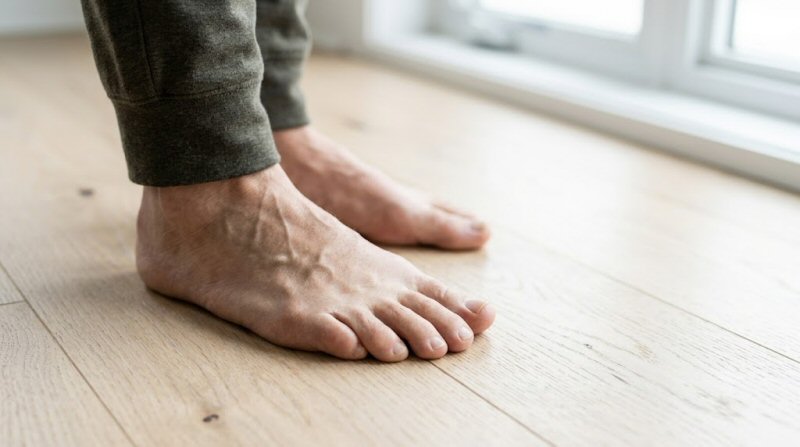
Most people notice it only when they take their shoes off. The toes that have been pressed together all day slowly separate, the ball of the foot feels a little less compressed, and standing barefoot on a hard floor suddenly feels more stable. That small shift is not random. The forefoot—the metatarsal heads and the toes they support—developed under conditions where the toes could spread, grip, and adjust with every step. Modern shoes largely prevent that.
What the Forefoot Was Built to Do
The five metatarsals fan outward from the midfoot and end in the toes. In a natural stance the first and fifth metatarsal heads form a broad base. The big toe sits roughly in line with the first metatarsal rather than being pulled sideways, and the smaller toes can move independently enough to sense the ground and add small corrective forces. This arrangement spreads load across the ball of the foot instead of concentrating it under the second and third metatarsal heads.
When the toes are free to spread, the transverse arch under the forefoot stays more supported. Intrinsic foot muscles that attach to the toes and metatarsals stay active in small amounts throughout the day. That low-level activity helps keep the soft tissues between the metatarsals from being chronically compressed and helps the fat pad under the ball of the foot stay positioned where it can cushion impact.
What Changes Inside a Typical Shoe
Most everyday shoes taper toward the front. The toe box is narrower than the natural width of the forefoot when the toes are relaxed. Over hours the toes are held closer together than they would be barefoot. The big toe is often nudged toward the second toe. The smaller toes have little room to lift or spread. The result is a quieter forefoot: less independent toe motion, less varied pressure under the metatarsal heads, and less sensory feedback from the skin and joints of the toes.
Researchers who study footwear and foot shape, including work following Hylton Menz and others on the relationship between shoe fit and forefoot problems, have documented how prolonged narrow toe boxes correlate with changes in toe alignment over time. The mechanical environment inside the shoe simply does not match the loading pattern the forefoot experienced for most of human history—barefoot or in flexible, wider coverings on uneven ground.
Everyday Signs of the Mismatch
Many people feel the difference without labeling it. Toes that tingle or go numb after a day in dress shoes or tight sneakers often improve within minutes of being freed. The ball of the foot can feel bruised or hot after walking on hard surfaces in shoes that keep the toes stacked. Some notice that their second toe starts to look longer or more prominent as the big toe drifts. Others simply find that standing or walking barefoot at home feels more comfortable than expected after years of structured shoes.
These sensations are common. They reflect the forefoot spending most of its day in a position it was not built to hold for long periods. The tissues adapt, but the underlying preference for a wider, more mobile base remains.
What the Research Suggests
Studies of populations that spend more time barefoot or in minimal footwear tend to show broader forefeet and fewer of the alignment changes common in habitually shod groups. Work by researchers such as Daniel Lieberman and colleagues on barefoot biomechanics has highlighted how the foot manages load differently when the toes can participate fully. Clinical observations from foot specialists, including those tracking the progression of hallux valgus and metatarsalgia, repeatedly note that narrow toe boxes are a frequent contributing factor.
The mechanism is straightforward. When the toes cannot spread, the first metatarsal is less able to stabilize the medial side of the foot. Load shifts toward the central metatarsals. The soft tissues between the metatarsal heads experience more sustained compression. Over years this pattern can contribute to the discomfort many people feel under the ball of the foot or the gradual change in toe position. None of this requires an extreme diagnosis; it is the ordinary result of a daily mismatch between shoe shape and foot anatomy.
Less Common but Worth Noting
Persistent numbness that does not resolve after removing shoes, sharp pain between the toes that radiates into the ball of the foot, or visible deformity that continues to worsen can point to issues such as a Morton neuroma or progressive bunion formation. These are still influenced by the same mechanical factors, but they may need specific assessment. Sudden swelling, redness, or pain after an injury is different and should be checked promptly.
When to Pay Closer Attention
- Numbness or tingling in the toes that lasts more than a short time after shoes come off
- Pain under the ball of the foot that interferes with walking
- A noticeable increase in the angle of the big toe over months
- Skin breakdown or corns that keep returning in the same spot between toes
Most everyday forefoot discomfort improves with changes in footwear and simple movement habits. The red-flag cases are those that keep progressing or appear with other symptoms such as unexplained swelling or night pain.
Myths vs Facts
Myth: Toes are supposed to stay pointed forward and close together.
Fact: A relaxed barefoot stance shows the toes in a gentle fan. The stacked, tapered look is largely a product of shoe shape.
Myth: Only people with bunions need wider shoes.
Fact: Even feet without obvious deformity often feel less compressed and more stable when the toe box allows natural spread.
Myth: Strengthening the foot will fully counteract a narrow shoe worn all day.
Fact: Exercises help, but hours of sustained compression still limit the motion and sensory input the forefoot expects.
How to Give the Forefoot What It Expects
Small, consistent changes usually matter more than dramatic ones. Choose shoes whose toe box matches the width of your foot when you are standing, not when the foot is unloaded. A simple check is to stand on the insole or a piece of paper, trace the outline, and compare it with the shoe. Many people discover their everyday shoes are narrower than their actual forefoot.
Spend some time each day with the feet free. Standing barefoot on a firm surface, gently spreading the toes, or walking a few steps on varied textures (a rug, a wooden floor, a firm mat) gives the metatarsals and intrinsic muscles the brief loading they rarely receive inside shoes. Toe spacers or simply conscious spreading while seated can restore a little of the width the tissues prefer, especially if used regularly rather than only when pain appears.
If you already have discomfort under the ball of the foot, reducing time in the narrowest shoes and adding short sessions of barefoot balance on one foot can reduce the concentrated pressure. These steps do not reverse years of adaptation overnight, but they align daily loading more closely with the forefoot’s original design.
When to See a Doctor or Specialist
See a clinician if toe numbness persists, if pain under the forefoot limits normal walking, or if a bunion or hammer toe is clearly progressing. A podiatrist or orthopedic foot specialist can distinguish ordinary mechanical discomfort from conditions that benefit from specific treatment. Imaging is rarely needed for the common, activity-related sensations described here.
FAQs
Is it normal for my toes to feel cramped after a full day in shoes?
Yes. Most conventional shoes hold the toes closer together than a natural stance. The cramped feeling usually eases within minutes of removing the shoes.
Will switching to wider shoes change the shape of my forefoot?
Over months many people notice the toes sit a little farther apart and the ball of the foot feels less compressed. Existing bony changes do not reverse quickly, but further progression often slows.
Do I need special toe-spread exercises?
Simple daily spreading while barefoot, plus time spent in shoes that already allow width, is usually enough. Formal exercises can help if the toes feel especially stiff.
Why do my smaller toes sometimes feel numb even in shoes that are not extremely tight?
Even moderate tapering reduces circulation and nerve space between the toes during prolonged standing or walking. The numbness is often positional rather than a sign of nerve damage.
Can children develop the same forefoot habits?
Yes. Shoes that are too narrow during growth years can influence toe alignment. Many pediatric foot observations note that allowing more natural width early on supports a broader forefoot later.
Conclusion
The forefoot still carries the expectation of a wider base and active toes. Hours spent in tapered shoes quietly remove that condition. The result is ordinary sensations—cramping, tingling, concentrated pressure under the ball of the foot—that many people accept as normal. Giving the toes room to spread for part of the day, and choosing footwear that does not constantly override their natural position, restores a small but consistent piece of the loading pattern the foot was built to use. The change is rarely dramatic, yet most people notice the difference the moment the shoes come off.
Related reading: Why Your Toes Still Expect to Spread and Grip, Is It Normal for Your Toes to Go Numb in Shoes?, and Why Your Arches Still Expect a Springy Step.


