
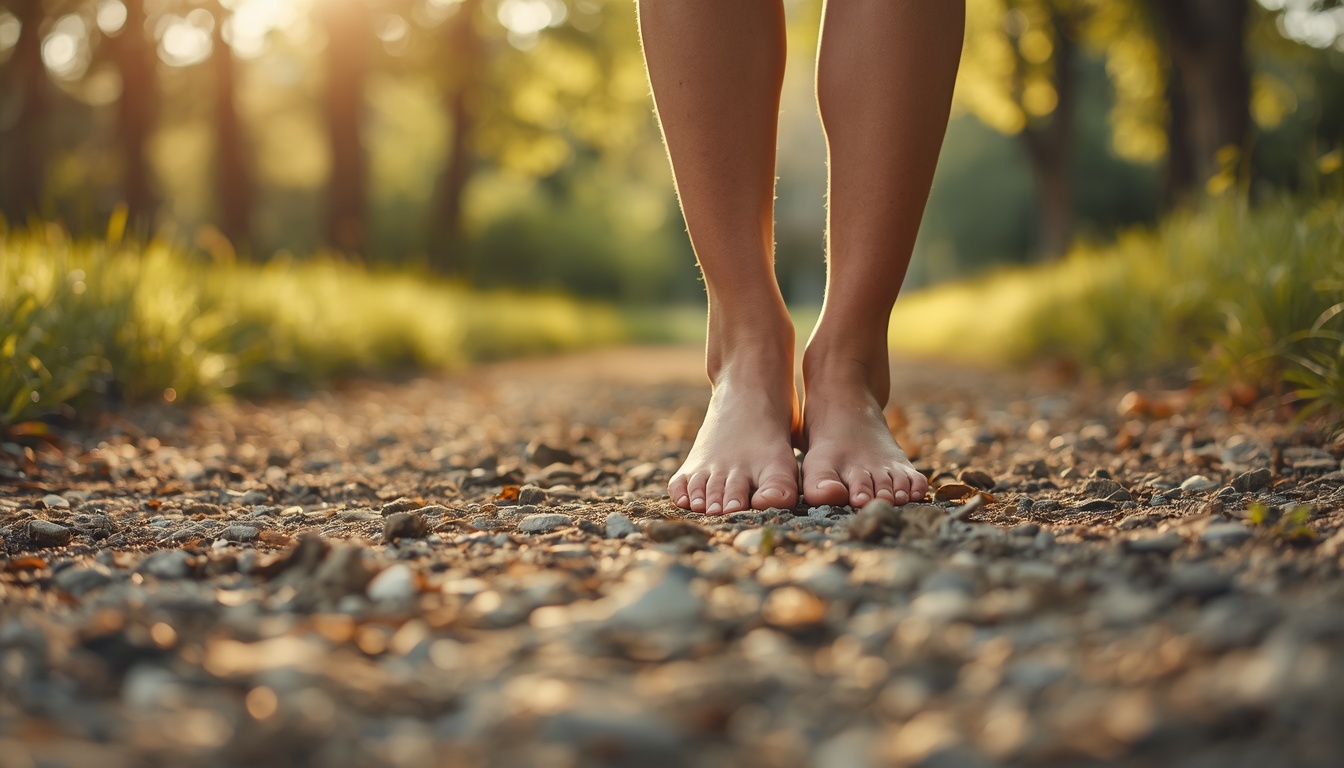
Look at a child’s bare foot on a beach. The toes fan. The big toe points more or less forward. The little toes press and lift like small fingers. Now look at the same foot after a decade in pointed dress shoes or tapered running sneakers. The toes often sit in a tight bundle, the big toe drifting inward, the small ones stacked or numb.
That change is not a fashion accident only. Human toes spent most of evolutionary time as a living edge of the foot — spreading for balance, gripping slightly on uneven ground, and feeding the brain a detailed map of pressure. Modern shoes, floors, and sitting take that job away for most of the day. The bones are still there. The daily practice is not.
What Toes Were Built to Do
Each foot has 14 toe bones, a web of small muscles, and a dense field of sensors in the skin and joints. The big toe (hallux) is the power toe. In a healthy push-off it helps drive you forward and keeps the inner arch from collapsing. The lesser toes help you fine-tune balance, especially when the ground tilts or when you stand on one leg to reach or look around.
On ancestral terrain this system worked all day. Walking, crouching, climbing, carrying, and standing on dirt or rock asked the toes to spread, press, and recover thousands of times. Ankles that still expect uneven ground and feet that still expect varied loading rely on that toe map. When the toes cannot move, the rest of the chain guesses.
Why Modern Life Quietly Shrinks the Job
Tapered toe boxes squeeze the fan. Many shoes look sleek because they narrow in front of the ball of the foot. Toes that want to splay on landing are forced together. Over years, the big toe can drift toward the second toe — the pattern people later call a bunion — and the small toes can curl into hammer or claw shapes from trying to grip inside a cramped space.
Thick, stiff soles mute sensation. Cushion is comfortable. It also blunts the early pressure signals the toes use to adjust balance. The brain still gets some information. It gets it late and blurry.
Sitting turns toes into passengers. Hours with the feet still under a desk leave the small foot muscles under-used. When you finally stand, the first uneven step asks a sleepy set of toes to do a skilled job.
Always-on support can hide a weak map. Arch support and rigid shoes are useful tools after injury or for some foot shapes. Worn every waking hour, they can also mean the toes never have to participate. The foot still works. It just delegates.
What This Often Feels Like
People describe numb little toes after a workday, a burning ball of the foot in dress shoes, cramps in the arch at night, or a clumsy first step off a curb. Some notice they cannot spread their toes on command. Others only notice after a rolled ankle or after a long day when the big toe joint aches.
None of that automatically means damage. It often means a part of the foot that evolved for constant small work is being asked to sit still in a tapered box, then suddenly perform.
Common Causes You Can Work With
- Shoes that taper in front of the widest part of the foot
- High heels that jam the toes downhill into the toe box
- Very cushioned sneakers worn from morning until bed
- Little or no safe barefoot time on clean indoor floors
- Long sitting with the feet still or tucked
- A prior ankle sprain that made the toes “grip” in a tense, curled habit
Hidden Triggers
- Socks that bind the toes as tightly as the shoe
- Always standing with the weight on the heels so the toes barely share the load
- Phone walking: eyes down, shorter steps, less natural toe spread on landing
- Nail problems or overlapping toes that make any spread feel unsafe
- Sudden barefoot beach or yoga days after months in stiff shoes — a spike, not a practice
Wrists that still expect varied load and hands that lost their daily workout tell a similar story further up the body. Distal parts of the skeleton stay skilled only if they keep getting skilled work.
Less Common but Serious
Sudden inability to lift the foot or toes, one-sided swelling with calf pain, or a hot, red first-toe joint may be nerve injury, clot-related swelling, or crystal arthritis — not a shoe-shape problem. Numbness that climbs the leg, night pain that wakes you, an ulcer on the toe in someone with diabetes, or a rapidly worsening deformity needs medical care, not only wider shoes.
Children who trip often, or older adults who start catching the toes on rugs, need a broader look at strength, sensation, vision, and home hazards.
When to Worry
- An open sore, color change, or infection on a toe
- A big-toe joint that is hot, extremely painful, and swollen overnight
- Progressive numbness in a person with diabetes or known nerve disease
- A toe that will not move after an injury
- Falls linked to catching the toes or losing balance on flat floors
Myths vs Facts
Myth: Bunions are only inherited, so shoes do not matter.
Fact: Family foot shape can load the odds. Narrow, tapered shoes and a lifetime of crowding still influence how that shape behaves. Many people improve comfort and slow irritation by giving the big toe room, even if the bone angle does not fully reverse.
Myth: You must go fully barefoot everywhere to “fix” your toes.
Fact: Sudden full-time barefoot walking on hard city surfaces is a load spike. Safer progress is wider toe boxes, short indoor barefoot time, and gradual outdoor variety.
Myth: If a shoe is expensive and athletic, it must be foot-shaped.
Fact: Plenty of performance shoes still taper. The test is whether your toes can lie flat and slightly spread when you stand in the shoe on a hard floor.
Myth: Toe spacers or “foot gymnastics” will rebuild a foot in a week.
Fact: Small muscles adapt over weeks to months, the same way tendons that still expect gradual loading do. Consistency beats intensity.
How to Give Your Toes Their Job Back
Choose width where the foot is actually widest. Stand on a piece of paper, trace the foot, and compare it with the shoe’s outline. The shoe should not pinch in front of the ball of the foot. This one change does more than most gadgets.
Give the toes short, safe barefoot minutes. Clean indoor floors, a familiar garden path, or a yoga mat are enough to start. Let the toes spread when you stand and when you rise onto the balls of the feet.
Practice a quiet toe spread. Sit or stand and try to create space between each toe without curling them. If that is hard, slide a thin sock or a soft spacer in for short periods — not as a 16-hour device on day one.
Use the big toe on purpose. In walking, think of a light press through the big toe as you leave the ground, not a clawing of all five toes. In standing, share some weight forward so the toes participate instead of dangling.
Alternate shoes instead of hunting one perfect pair. A wider casual shoe at home, a less tapered trainer for errands, and dress shoes saved for shorter blocks give the toes more hours of room than any single “minimalist” purchase.
Rebuild after a cramped day. A few minutes of foot rolling on a soft ball, toe spreading, and easy calf mobility after heels or pointed shoes is maintenance, not a punishment workout.
When to See a Doctor
See a clinician if pain limits walking, a deformity is progressing quickly, you have diabetes and any toe wound, or numbness is spreading. A podiatrist, sports-medicine physician, or physical therapist can sort crowding from arthritis, nerve entrapment, and true structural problems. Imaging is not the first step for every ache. It is useful when the story and exam do not match a simple mismatch.
FAQs
Can toes really “wake up” in adulthood?
Often, yes — in function if not in bone shape. Spreading, balance time, and wider shoes can restore useful control even when an X-ray still shows an angled big toe.
Are toe spacers safe every day?
Short sessions are reasonable for many people. All-day spacers inside a still-narrow shoe just create a new pinch. Room in the shoe matters more than the spacer.
Do children need special barefoot shoes?
Growing feet do well with room to splay and flexible soles for play. Constant stiff, tapered shoes in childhood are a missed practice window, not a moral failing of parents who need durable sneakers for school.
Why do my toes cramp at night?
Tired small muscles, dehydration, low evening movement, and a day spent clawing inside shoes are common contributors. Persistent one-sided cramps or cramps with swelling deserve a check.
Is walking on sand enough?
Soft sand is excellent variety in modest doses. A rare long beach day after months in stiff shoes can also leave the calves and plantar fascia sore. Short and regular beats rare and heroic.
Conclusion
Your toes are not decorative. They are the front edge of a balance and push-off system that still expects space, sensation, and thousands of small corrections. Modern shoes and floors did not ruin that system overnight. They simply stopped asking it to work.
You do not need to abandon cities or live barefoot. You need a little more width, a little more honest ground time, and the patience to treat the toes as living parts of the foot again. Give them a job they recognize, and they usually remember how to help you stay upright.