
Toe numbness that fades when the shoes come off is usually a tight toe box or a pinched digital nerve, not failing circulation. Fit, Morton neuroma, and red flags.
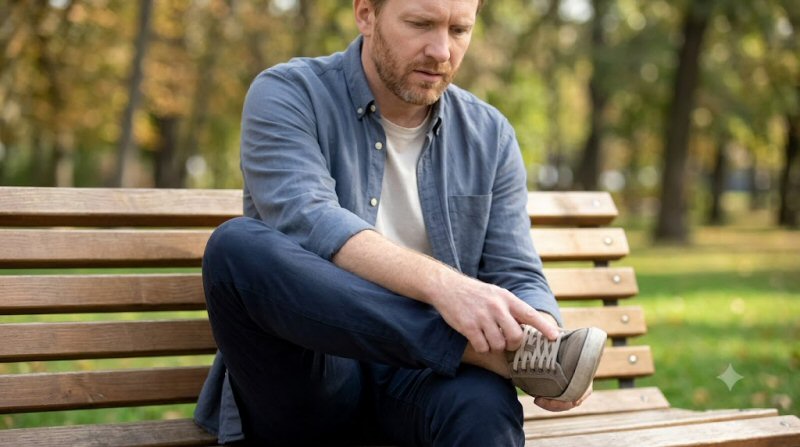
Halfway through a commute, or an hour into a walk, the smaller toes go quiet. Pins and needles arrive first, then a cottony numb patch across the ball of the foot or the tips of the third and fourth toes. You wiggle them inside the shoe and get almost nothing back. Ten minutes after the shoes come off, the feeling returns, sometimes with a hot after-buzz. That pattern is common. It is usually a nerve and a blood-flow squeeze from the shoe, not a circulation failure and not the start of a neuropathy that only exists in footwear.
The foot was built to spread on the ground. Most everyday shoes ask the toes to share a tapered box for hours. The numbness is the nerve saying the space ran out. Sorting the ordinary squeeze from the patterns that need a clinician is mostly about timing, which toes, and what happens when the shoe is gone.
What This Numbness Feels Like
People describe a gradual fade rather than a sudden dead foot. The third and fourth toes are the usual pair, sometimes the second, less often the big toe alone. A burning stripe can sit in the web space between them. The ball of the foot may feel as if a pebble is under the sock, even when the sock is empty. Standing still in the same shoes makes it worse. Walking barefoot on a carpet, or simply untying the laces, often clears it within minutes.
A click or a sudden electric jab when you squeeze the forefoot from the sides is a different clue. That is the classic sign Jacob D. Mulder described in 1951, later called Mulder’s click: the metatarsal heads pinch a swollen digital nerve and it slips. Thomas G. Morton, writing in the 1870s, had already linked forefoot pain with the outer toes. What he called a neuroma is now understood more often as irritation and thickening around the plantar digital nerve, especially in the third web space, where two nerve branches meet in a tight tunnel.
If the whole foot falls asleep only when you sit with the legs crossed, that is a different compression, higher up, and it is covered in why a leg goes numb after you sit on it. Shoe numbness stays in the toes and tracks the hours the shoe was on.
Common Causes
The usual drivers are mechanical, and they stack.
- A tapered toe box. Fashion lasts narrow toward the tip. The toes cannot sit side by side, so the digital nerves between the metatarsal heads take side pressure for hours.
- A heel that shifts load forward. Even a modest heel, or a rocker that is too aggressive, parks more body weight on the ball of the foot. The nerve is squeezed from above and below, not only from the sides.
- Laces, a tight vamp, or swollen feet by afternoon. Feet lengthen and widen a little across the day. Shoes that felt fine at breakfast can pinch by late afternoon, especially on warm pavement or after a flight.
- A nerve already irritable. A long walk in new shoes, a thin-soled day on concrete, or a previous sprain that changed how you roll through the toes can leave one web space touchy. The next pair of shoes finds it.
- Toe shape. A longer second toe, a bunion that crowds the smaller toes, or toes that already overlap give the nerve less spare room before the shoe adds any.
Hylton B. Menz’s footwear research has repeatedly tied narrow toe boxes and heel height to forefoot pain and lesser-toe deformity. Daniel E. Lieberman’s work on barefoot and minimally shod walkers makes the mismatch plain: a foot that loads with the toes splayed does not match a shoe that holds them in a point. The nerve does not need a disease to complain. It needs a few millimeters back.
Why the Toes Go Quiet
Each toe has a small digital nerve and a small artery running beside the bone. Between the metatarsal heads, the nerve passes under a ligament that acts like a low bridge. Side compression from a narrow shoe, plus downward pressure from body weight, narrows that tunnel. Nerves fail at pressure before muscle does. Light touch and temperature fade first. That is why the toes feel numb or burning while you can still push off.
Blood flow joins in. A tight vamp reduces the small pulses that keep the toe pads warm. The pad cools, the nerve conducts less cleanly, and the numb feeling deepens. Release the laces and both the pressure and the warmth return. That reversibility is the reassuring part. A nerve that wakes up when the shoe comes off has not been cut. It has been crowded.
Michael J. Coughlin and Roger A. Mann’s forefoot work separated this crowded-nerve picture from true joint disease. The painful spot is in the web space, not inside the toe joint. Pressing up between the bones reproduces it. Pressing the joint line of the toe often does not. Carol Frey’s reviews of women’s dress shoes added the practical point: many “normal” widths are still narrower than the foot they are sold for, especially at the toe tips.
Less Common but Serious Causes
Most shoe-only numbness is local. A few patterns are not.
- A nerve root in the back. A disc or a narrowed foramen can send numbness into the toes, but it usually comes with back or buttock pain, and it does not vanish the moment the shoes are off.
- Polyneuropathy. Diabetes, vitamin B12 deficiency, heavy alcohol use, and some medicines numb the feet in a stocking pattern. The feeling is there in bed, in sandals, and on the carpet, not only in one pair of shoes.
- Poor arterial supply. A cold, pale, or blue toe that stays that way, especially with calf pain on walking that forces a stop, is a circulation problem. Shoe squeeze can cool a toe. It should not leave one toe white after the shoe is off.
- A Morton neuroma that has thickened. Repeated pinch can leave a tender, swollen nerve that hurts in wider shoes too, often with a click and a pebble sensation. It is still a local foot problem, but it may need a clinician rather than a new lace pattern alone.
- Tarsal tunnel or a local cyst. Numbness that includes the heel or the sole, and that is worse at night, points higher than the toe box.
Hidden Triggers
A few modern habits make an ordinary shoe worse. Socks with a thick seam across the toes add a ridge exactly where the nerve is. Wearing the same pair every day never lets the irritated web space calm down. A long sit, then a walk, leaves the foot a little swollen, so the morning fit becomes an afternoon pinch. Thin flats with no structure still squeeze if the front is pointed. That ache is a cousin of foot ache after walking in flat shoes, but numbness means the nerve, not only the skin, is in the pinch.
Flip-flops and slides can do the opposite squeeze. Toes claw to keep the shoe on, the metatarsal heads drop, and the same nerve takes pressure from the gripping. The toes were built to spread and push, which is the point of why the toes still expect to spread and grip. A day of clawing is not that job.
When to Worry
Shoe numbness that fades barefoot, stays in the forefoot, and has no color change is the ordinary version. Get it checked sooner if:
- Numbness remains after the shoes have been off for an hour, or it is there on waking.
- One toe turns white, blue, or dusky, or a sore appears and you cannot feel it.
- Weakness shows up, such as a foot that slaps or a toe you cannot lift.
- Back pain, saddle numbness, or new bladder trouble arrives with the foot symptoms.
- Both feet go numb in a stocking pattern that ignores footwear.
- A pebble sensation and a click keep returning in every shoe, including wide ones.
Sudden coldness of a whole foot, chest pain, or trouble speaking are not shoe problems. Those need urgent care.
Myths vs Facts
- Myth: Numb toes always mean bad circulation. Fact: If the feeling returns when the shoe comes off and the toe is warm and pink, the nerve was crowded. Circulation failure does not clock out with the laces.
- Myth: Only pointed heels do this. Fact: Running shoes, work boots, and “wide” styles can still taper at the tips. The last shape matters more than the label.
- Myth: A neuroma means you need surgery. Fact: Coughlin and others have shown that wider shoes, pads, and load changes settle many irritable digital nerves. Surgery is for the minority that stay painful.
- Myth: If you can still walk, the nerve is fine. Fact: Digital nerves complain with numbness and burning long before strength drops. Waiting for weakness is waiting too long to change the shoe.
- Myth: Numbness in shoes is just aging. Fact: Age can thin the fat pad under the metatarsal heads, so the nerve has less cushion. The trigger is still usually the shoe and the load, and both can be changed.
How to Manage It
Start with the shoe that causes it, not with a supplement.
- Retie so the forefoot is loose enough to pinch a small fold of sock, while the heel stays seated. Many people cinch the whole shoe to stop slip, and the toes pay for it.
- Shop for shoes late in the day, standing, with the socks you will wear. There should be width at the toes, not only length in front of the big toe.
- Rotate pairs. Give an irritated web space a day in a wider toe box.
- Use a thin pad just behind the sore spot, not on top of it, if a clinician or a fitter has shown you where. The goal is to spread the metatarsal heads slightly and unload the nerve.
- Shorten the heel height for daily walking. A lower heel moves load back toward the midfoot.
- After the shoes are off, spread the toes gently and walk a minute barefoot on a soft floor if balance is fine. The nerve likes the pressure gone more than it likes a hard stretch.
- If you have diabetes or poor feeling in the feet already, do not wait for pain as a warning. Look at the skin daily. A pinched numb spot can hide a blister.
A big-toe ache after distance is a related load problem, covered in why the big toe aches after a long walk. Numb smaller toes point more at the web-space nerve than at the big-toe joint.
When to See a Doctor
See a clinician if the numbness no longer clears barefoot, if walking is changing, or if wider shoes and looser laces have not helped after a couple of weeks. A foot and ankle exam can separate a digital nerve from a joint, a stress injury, or a nerve higher up. People with diabetes, known vascular disease, or unexplained weight loss should not trial shoe changes alone. Imaging is rarely the first step. The history — shoes on, shoes off — already does most of the sorting.
FAQs
Is it normal for only two toes to go numb?
Yes. The third and fourth toes share a tight web space, so they often fade together while the big toe is fine. That pattern fits a local digital nerve more than a whole-foot neuropathy.
Why does it happen in shoes that are not new?
Feet swell across the day, socks settle, and laces get cinched out of habit. A shoe that cleared the toes in the morning can pinch them after a commute. The shape did not change. The spare room did.
Does numbness mean I have a Morton neuroma?
Not by itself. A brief numb spell that ends when the shoes come off is usually compression. A neuroma is the name for a nerve that has become tender and thickened after repeated pinch, often with a click and a pebble feeling. Many people never get that far if the toe box changes.
Should I worry if my toes tingle when I take the shoes off?
A short warm buzz as feeling returns is expected, the way a foot buzzes after you uncross your legs. Tingling that continues for hours, or that starts with no shoe at all, deserves a check.
Can tighter socks be the only cause?
They can be enough, especially a thick seam or a compression sock that ends across the toes. If the same numbness happens in every shoe and barefoot, look past the sock.
Will walking more fix it?
Walking in a shoe that already numbs the toes usually irritates the nerve further. Walking in a wider toe box, or barefoot at home on a safe surface, is the useful version. Distance in the pinching pair is not rehabilitation.
Conclusion
Toes that go numb in shoes and wake up when the shoes come off are telling a fit story. A tapered box, a forward shift of load, and a digital nerve under a small ligament are enough. Morton, Mulder, Coughlin, and Menz all circled the same practical point: the forefoot needs width and a share of the pressure, not a diagnosis first. Change the space, loosen the vamp, and give the web space a day off. If the quiet stays after the shoes are gone, or a toe changes color, that is no longer a lace problem. That is the moment to have the foot examined.


