Your forearms evolved for varied, intermittent gripping and rest, not hours of static holds on keyboards and phones. Here is why that mismatch can leave them tight or tired, and what helps.
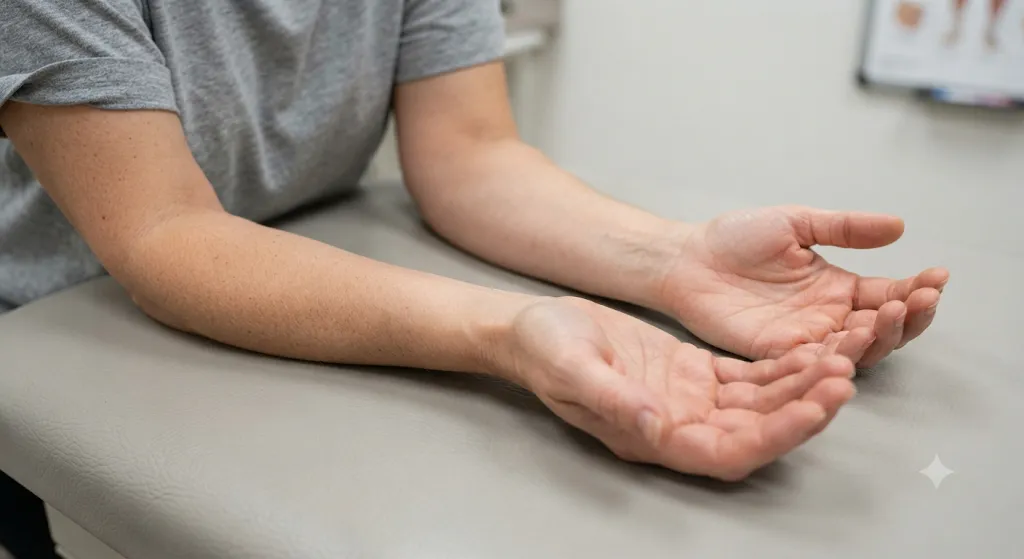
You finish a long stretch of typing, scrolling, or holding a steering wheel and notice your forearms feel heavy, tight, or oddly fatigued even though you did not lift anything heavy. The sensation is common enough that most people simply shake their hands and keep going. Yet the pattern is not what the muscles of the forearm were primarily shaped to handle across most of human history.
What Your Forearms Were Built For
The forearm is a dense collection of muscles that control the wrist, fingers, and the twisting motions of the hand. These muscles evolved for a mix of powerful grips, precise manipulations, and frequent periods of release. Tool making, climbing, carrying, preparing food, and social gestures all required intermittent loading rather than continuous low-level contraction.
Electromyography work by researchers such as John V. Basmajian showed that many forearm muscles are relatively quiet during light, varied hand tasks and become active mainly when force or precision is needed. Evolutionary biologists including Daniel E. Lieberman have noted that human hands and forearms show adaptations for both power and precision grips, with the expectation of changing demands and regular recovery. Constant static gripping was never the baseline.
In short, the system anticipates work, then rest. When the rest portion is largely removed, the tissues can feel the difference even if no single action seems extreme.
How Modern Gripping Changes the Pattern
Keyboards, mice, phones, tablets, and steering wheels often keep the finger flexors and wrist stabilizers in a mild, sustained contraction for long periods. The hands may not feel like they are “gripping hard,” yet the muscles are rarely fully off. Over hours this can reduce local blood flow slightly, increase metabolic byproducts, and leave the fascia and tendons less able to glide freely.
The same pattern appears in other modern activities: prolonged knitting or crocheting, continuous use of hand tools without breaks, or even holding a book or tablet at a fixed angle. Related articles on the site explore similar mismatches, such as why your hands still expect occasional open-palm rest and why your wrists still expect occasional side-to-side loading.
Common Reasons Forearms Feel Tired or Tight
Several everyday factors amplify the mismatch:
- Long uninterrupted sessions of typing or mouse use without changing hand position
- Gripping a phone or steering wheel more tightly than necessary, especially when concentrating or stressed
- Cool environments that reduce tissue pliability
- Previous minor strains or high training volumes in the arms that lower the threshold for fatigue
- Forward shoulder or wrist postures that increase baseline tension in the forearm extensors
Most of these are mechanical and reversible rather than signs of deeper damage. An article on whether it is normal for forearms to ache after typing all day covers the short-term discomfort side of the same pattern.
When the Feeling Might Need Attention
Occasional tightness that eases with movement or a short break is usually benign. Consider checking with a clinician if you notice:
- Persistent pain that interferes with sleep or daily tasks
- Numbness, tingling, or weakness that spreads into the hand or does not resolve
- Visible swelling, redness, or a clear loss of grip strength
- Symptoms that began after a specific injury or that steadily worsen despite rest and simple changes
These can occasionally relate to tendon irritation, nerve compression, or other issues that benefit from targeted assessment. The large majority of everyday forearm fatigue, however, improves once the loading pattern includes more genuine rest.
Myths vs Facts
Myth: Forearm tightness only happens if you are weak or out of shape.
Fact: Even strong, active people develop the sensation when the balance of work and recovery shifts toward continuous low-level gripping.
Myth: You need special equipment or long stretching routines to reverse it.
Fact: Frequent brief releases of the grip and small changes in hand position are often enough to restore the expected rhythm.
Myth: The feeling means you should avoid using your hands altogether.
Fact: Varied, intermittent use is what the forearms handle well; complete avoidance is rarely necessary or helpful.
Simple Ways to Give Your Forearms the Rest They Expect
The goal is not to eliminate gripping but to reintroduce the pauses and variety the system anticipates:
- Set a quiet timer or use natural task breaks to open the hands fully for 20–30 seconds every half hour
- Alternate between keyboard, mouse, and other tasks so no single grip is held continuously
- Keep the wrists in a roughly neutral position rather than strongly flexed or extended while working
- Occasionally perform light, slow wrist circles or gentle finger spreads to restore glide without aggressive stretching
- Notice and soften unnecessary tension when concentrating; many people grip harder than the task requires
These adjustments align daily behavior more closely with the intermittent loading pattern the forearm muscles and tendons handled for most of human history. Over days to weeks the sense of baseline tightness often decreases.
Frequently Asked Questions
Is it normal for forearms to feel tight after a day of computer work?
Yes. Sustained low-level contraction of the finger flexors and wrist stabilizers is a common modern pattern, and many people notice heaviness or tightness by the end of the day. Brief open-hand rests usually ease it.
Does this mean I have tendonitis?
Not necessarily. Everyday fatigue and tightness from static gripping are far more common than true tendon injury. Persistent pain, swelling, or weakness that does not improve with rest and position changes is worth having assessed.
Will strengthening my grip make the problem worse?
Targeted, progressive strengthening can be useful if done with adequate recovery, but simply adding more continuous gripping without rest often reinforces the mismatch. Variety and recovery matter more than raw strength alone.
How long should I open my hands during a break?
Even 15–30 seconds of fully relaxed, open palms several times an hour is often enough to interrupt the static pattern. Longer rests are fine but not required for most people.
Can stress make forearm tightness worse?
Yes. Many people unconsciously increase grip tension when concentrating or under pressure. Noticing and releasing that extra force is a simple and effective step.
Conclusion
Your forearms still operate with an expectation shaped by intermittent, varied gripping and genuine rest. Modern tools that keep the hands in mild, continuous contraction for long stretches create a quiet mismatch. Reintroducing short open-hand pauses, changing positions, and avoiding unnecessary tension usually restores comfort without elaborate interventions. The sensation is a reminder of what the system was built to do, not a sign that something is fundamentally wrong.