Modern hands spend hours lightly gripping phones and hovering over keyboards. Your intrinsic hand muscles and tendons still expect short periods of fully open, unloaded rest that ancestral life provided automatically.
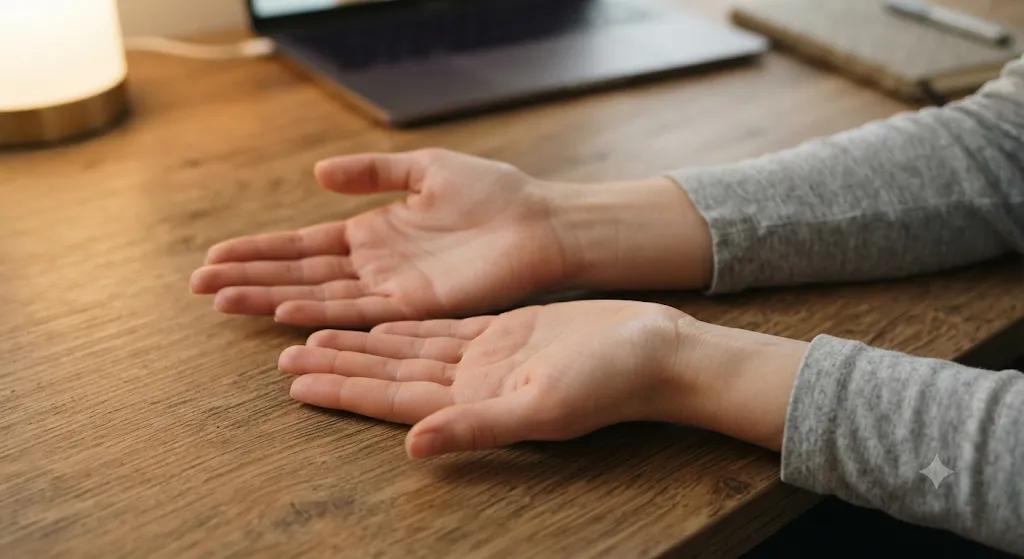
You finish a stretch of texting or typing and notice your fingers feel a little tight or reluctant to open fully. The sensation is usually mild—a background stiffness rather than sharp pain—and it fades once you set the device down and let your hands hang open. It is common, and it is not a sign that something is broken. It is a small mismatch between what your hand muscles and tendons were built to do and what modern work asks of them for hours at a time.
Human hands evolved for a mix of strong grips, precise pinches, and frequent periods of complete rest with the palm open and the fingers extended. Ancestral tasks—carrying, climbing, tool use, food preparation—alternated between loaded gripping and unloaded open positions. Today, many people keep a low-level flexed posture for long stretches: thumb and fingers lightly closed around a phone, or hovering in a typing ready position. The intrinsic muscles and the long flexor tendons stay in a mild, sustained contraction. Over a day that adds up.
What This Feels Like
The sensation is usually described as a light tightness across the palm or at the base of the fingers after a long period of device use. Opening the hand fully can feel slightly stiff for a few seconds. Some people notice the fingers want to stay a little curled until they deliberately stretch them. It is different from true joint pain or numbness; it is more a sense that the soft tissues have been held in one position too long.
It often appears after sessions of continuous phone holding or keyboard work and improves quickly with a short break in which the hands hang open or rest flat. Cold rooms or dehydration can make the feeling more noticeable, but the core trigger is the prolonged low-level flexion.
Why This Happens
The small muscles inside the hand (interossei, lumbricals, thenar and hypothenar groups) and the long flexor tendons that run through the carpal tunnel are designed for intermittent work. Classic anatomic descriptions by Adalbert Kapandji emphasize the hand’s capacity for independent finger movement and for returning to a relaxed open position between tasks. When those muscles stay lightly activated for hours, local blood flow and synovial fluid circulation around the tendons slow. The tissues become slightly less compliant until movement restores normal sliding.
Occupational research on keyboard and phone use (including work by Thomas Armstrong and others on upper-extremity ergonomics) has repeatedly shown that non-neutral wrist and finger postures raise pressure inside the carpal tunnel and increase low-level muscle activity. The absolute loads are small compared with heavy tool use, yet the duration is new. Ancestral hands spent far more of the day either fully loaded or fully unloaded; modern hands often live in the middle.
Related everyday experiences include the stiffness many people notice after typing all day or the temporary tingling that can follow prolonged texting. Both share the same underlying pattern of sustained posture without full recovery positions.
Common Contributors
- Holding a phone for long periods with the fingers lightly closed around the edges.
- Typing or mouse use with the hands hovering rather than resting fully between keystrokes.
- Cold environments that reduce tissue extensibility.
- Insufficient overall movement of the upper limbs during the workday.
- Previous minor strains or general low-level inflammation that make the tissues more reactive to sustained postures.
When to Pay Closer Attention
Occasional mild stiffness that clears within minutes of opening the hands is normal. Seek evaluation if you develop persistent numbness, especially at night, true weakness in the thumb or fingers, visible swelling, or pain that wakes you or limits grip strength. Those patterns can indicate carpal-tunnel irritation or other nerve compression and are worth checking rather than simply stretching through.
Myths vs Facts
Myth: Hands are only stiff because of “arthritis from typing.”
Fact: Most short-term stiffness after device use is soft-tissue and postural, not joint degeneration. Long-term heavy repetitive loading can contribute to tendon irritation, but ordinary daily phone and keyboard use more often produces reversible tightness from lack of open rest.
Myth: You need special stretches or gadgets to protect your hands.
Fact: Simply allowing the hands to hang open or rest flat for 30–60 seconds every 20–30 minutes is usually enough to restore normal tendon sliding and muscle tone.
Practical Ways to Meet the Expectation
The goal is not to eliminate modern tools; it is to re-introduce brief periods of the open, unloaded posture the hand still expects.
- Every half hour, set the phone or keyboard aside and let both hands hang at your sides with palms open and fingers extended for 30–60 seconds.
- When possible, rest the heels of the hands on the desk between typing bursts rather than hovering continuously.
- Use voice-to-text or a stylus for longer messages so the grip can release.
- Keep the workspace moderately warm; cold stiffens tendons faster.
- Include a few full open-and-close cycles or gentle finger spreads during normal breaks. No intense stretching is required.
These small resets match the intermittent pattern the hand was built for and usually eliminate the background tightness within a day or two of consistent practice.
FAQs
Is it normal for my fingers to feel stiff right after I put my phone down?
Yes. The mild sustained flexion of holding a device leaves the flexor muscles and tendons slightly less compliant. Opening the hand fully and letting it hang open for a minute usually restores normal feel quickly.
Does this mean I am developing carpal tunnel syndrome?
Not necessarily. Temporary stiffness that clears with rest is common. True carpal-tunnel symptoms typically include numbness or tingling (especially at night), reduced thumb strength, or symptoms that persist after the hands are fully rested. If those appear, have it checked.
Will resting my hands flat on the desk help more than hanging them?
Both work. Hanging allows complete unloading and gravity-assisted opening; resting flat on a surface also lets the fingers extend fully. Alternate whichever is convenient.
How long should the open-rest break be?
Thirty to sixty seconds is enough for most people to restore tendon glide and reduce the tight feeling. Longer breaks are fine but not required for ordinary daily use.
Can cold weather make this worse?
Yes. Cooler temperatures reduce the elasticity of tendons and soft tissues, so the same sustained posture feels stiffer. Warming the hands or the room reduces the effect.
Conclusion
Your hands still carry the expectation of occasional fully open, unloaded rest that was automatic in a life of mixed gripping and release. Modern devices quietly remove those rest positions. Brief, deliberate open-palm intervals restore the pattern the tissues were built for and keep everyday stiffness from accumulating. The change is small, the biology is straightforward, and most people notice the difference within a day of trying it.