
Your foot soles developed for textured, barefoot contact with the ground. Modern shoes and hard indoor floors change the sensory and mechanical input they still expect.
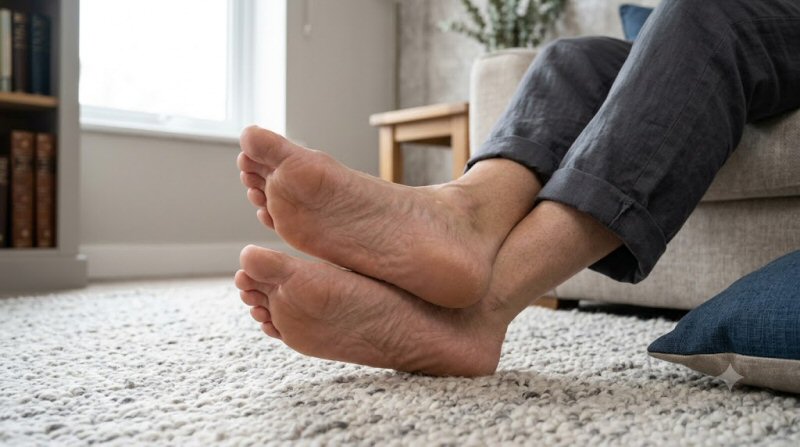
After a long day in shoes, taking them off at home often feels like a small relief. The soles of your feet may feel slightly warm, a little tender, or simply more alive once they meet a cool floor or soft rug. That sensation is not random. Your foot soles are built for direct contact with varied surfaces, and long hours inside structured shoes create a quiet mismatch with what they still expect.
What This Experience Feels Like
Many people notice that their feet feel “happier” barefoot at the end of the day. The skin on the soles may tingle briefly when it first touches the floor, or the arches may feel more springy once the shoe constraint is gone. Some describe a mild ache across the ball of the foot or heel that eases after a few minutes of barefoot standing or walking indoors. Others simply feel more stable or grounded once the thick sole is removed.
These are usually mild, temporary sensations rather than sharp pain. They tend to appear after hours of continuous shoe wear and improve with short periods of barefoot time on safe indoor surfaces.
Why Your Foot Soles Still Expect Barefoot Contact
Human feet evolved for most of their history without rigid shoes. The sole is densely packed with mechanoreceptors—sensors that detect pressure, texture, and stretch. These receptors feed information to the brain about the ground beneath you, helping fine-tune balance and gait. Anthropologist Daniel Lieberman and colleagues have shown that barefoot or minimally shod feet experience different loading patterns and sensory input compared with feet inside cushioned modern shoes.
The skin of the sole is also thicker and more specialized than skin elsewhere. It is designed to handle friction, small debris, and changing temperatures. When it stays sealed inside a shoe for most of the day, that sensory and mechanical variety is reduced. The sole still “expects” occasional direct contact, texture, and the ability to spread and grip slightly. Related articles on why your toes still expect to spread and grip and why your arches still expect a springy step explore the same underlying mismatch from slightly different angles.
Common Modern Triggers
- Long hours in structured work shoes, dress shoes, or athletic shoes with thick, rigid soles
- Hard indoor floors (concrete, tile, laminate) that offer little give once shoes come off
- Minimal barefoot time during the day because of workplace or weather constraints
- Sudden transition from supportive shoes to completely bare feet on hard surfaces
- Reduced natural foot motion inside narrow toe boxes
These conditions do not damage most feet, but they limit the varied input the sole and its sensors developed to receive.
Less Common but Worth Noting
Persistent burning, sharp heel pain, or numbness that does not ease with short barefoot periods can point to other issues such as plantar fasciitis, nerve irritation, or circulatory changes. These are less common than simple sensory relief after shoe removal, but they deserve attention if they interfere with walking or sleep.
Hidden Triggers
Very dry indoor air can make the skin of the sole feel tighter or more sensitive once shoes come off. Sudden temperature changes (cold floor after warm shoes) can also heighten awareness of the soles. People who spend almost the entire day sitting may notice the sensation more because the feet have had little active loading all day.
When to Worry
See a clinician if you have:
- Pain that worsens with barefoot walking rather than improving
- Visible skin cracks, open sores, or signs of infection
- Numbness, tingling, or color changes in the feet that persist
- Difficulty walking or a new limp
- Symptoms that appear after an injury or in the setting of diabetes or poor circulation
Most end-of-day sole relief is benign, but new or severe symptoms should be checked.
Myths vs Facts
Myth: Feet should never go barefoot because they need constant support.
Fact: Occasional barefoot time on safe surfaces can restore sensory input and allow natural foot motion. Continuous hard-surface barefoot walking is different and can irritate some people.
Myth: If your feet feel better barefoot, your shoes must be completely wrong.
Fact: Many well-fitting shoes still reduce texture and movement. Brief barefoot periods are often enough to satisfy the sole’s expectation without abandoning supportive footwear for long days.
How to Give Your Soles What They Still Expect
Short, regular barefoot intervals are usually more helpful than sudden long periods on hard floors.
- Spend 10–20 minutes barefoot at home on a rug, carpet, or soft mat after work.
- Walk slowly across a variety of safe indoor textures (rug, wood, tile) rather than standing still.
- If outdoor conditions allow, brief barefoot time on grass or sand can add natural texture—stop if the surface is hot, cold, or rough.
- Choose shoes with a roomy toe box for daytime wear so the foot can spread more naturally even inside the shoe.
- After barefoot time, a simple foot massage or gentle stretch of the toes and arches can further ease residual tightness.
These small habits restore some of the sensory and mechanical variety the sole developed to receive. Related guidance appears in the article on why your feet still expect uneven ground.
When to See a Doctor
Consult a healthcare professional if barefoot relief is accompanied by ongoing pain, swelling, skin breakdown, or neurological symptoms. People with diabetes, neuropathy, or circulatory conditions should check with their clinician before increasing barefoot time.
FAQs
Is it bad to go barefoot after wearing shoes all day?
For most healthy feet, short barefoot periods on clean indoor surfaces are safe and often feel restorative. Start gradually if you are not used to it.
Why do my soles tingle when I first take my shoes off?
The sudden change in pressure and temperature can briefly heighten sensation from the many receptors in the sole. It usually fades within a minute or two.
Should I walk barefoot on hard floors every day?
Occasional short periods are fine for most people. Prolonged barefoot walking on hard, unyielding surfaces can irritate some heels or forefeet, so mix in softer surfaces.
Can barefoot time help with mild foot fatigue?
Many people find that brief barefoot movement after shoe removal reduces the “trapped” feeling and mild ache that builds during a long day in shoes.
Do children benefit from more barefoot time?
Growing feet generally adapt well to varied barefoot play on safe surfaces. Supervised barefoot time can support natural foot development, though protective shoes remain important for rough or public outdoor areas.
Conclusion
Your foot soles still carry the expectation of occasional direct contact with the ground—textured, varied, and free of constant enclosure. Modern shoes serve many useful purposes, yet they reduce the sensory and mechanical input those soles developed to receive. A few minutes of barefoot time on safe indoor surfaces at the end of the day is often enough to meet that expectation, ease the mild end-of-day sensations, and keep the feet feeling more alive. If pain, numbness, or skin changes appear, a clinician can help sort out whether something else is involved.


