Coming in from the cold and feeling your fingers throb, turn red, or sting is a common reaction. Your hands are still built for slower temperature shifts, not sudden indoor heat.
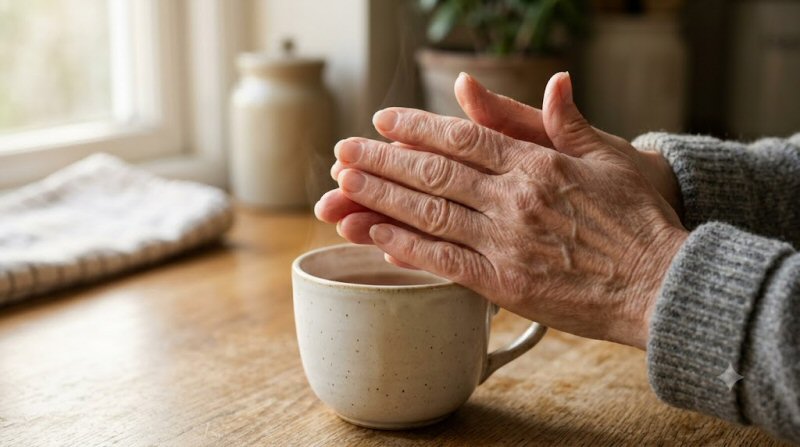
You step inside after a walk on a crisp morning. Within a minute your fingers, which were pale and stiff, flush pink, feel hot, and start to throb or tingle. The sensation can be oddly intense for something as ordinary as warming up. Your hands are not malfunctioning. They are following an old program that assumes temperature changes will be gradual.
What This Sensation Feels Like
The classic pattern is straightforward. Fingers that have been cold turn from pale or bluish to bright red. They feel warm—sometimes uncomfortably so—and may throb, sting, or prickle for a few minutes. The feeling usually peaks and then settles as the hands reach room temperature. Some people notice it most in the fingertips; others feel it across the whole hand. It is more noticeable after longer cold exposure or when you go straight from outdoors into a well-heated room.
Common Causes
The main driver is a rapid return of blood flow. In the cold, the small arteries and arteriovenous anastomoses in your fingers constrict hard. This cuts heat loss and protects core temperature. When you enter warmth, those vessels open again. Blood rushes back into tissue that was briefly under-perfused. The sudden increase in flow and local temperature stimulates sensory nerves, producing the warm, red, throbbing feeling. This is reactive hyperemia—the same principle that makes a limb tingle when you release a tight tourniquet.
A second, related process is the hunting reaction, first described by Thomas Lewis in 1930. During sustained cold, the fingers do not stay fully constricted. After several minutes they periodically vasodilate, then constrict again. The cycle keeps fingertip temperature from falling too far. When you finally leave the cold, the vessels that have been oscillating are primed to open widely once the cold signal ends.
Why This Happens
Your fingers evolved for a world in which temperature shifted with the weather, not with a door. Outdoor cold arrived slowly as the day cooled or as you moved into shade. Rewarming happened by walking, by holding warm objects, or by gradual air temperature rise. The vascular system in the digits is built for that tempo. Arteriovenous anastomoses can open and close quickly, but the sensory and local metabolic feedback loops still expect the change to unfold over minutes rather than seconds.
Modern life compresses the timeline. You can go from 2 °C outdoor air to 22 °C indoor air in the time it takes to open a door. The same vessels that once managed a slow thaw now open into a sudden heat load. The result is an exaggerated flush and the characteristic throbbing or stinging. People who work outdoors or who regularly expose their hands to cold often show a stronger or earlier hunting response, suggesting the system adapts to frequent cold but still reacts sharply to abrupt rewarming.
Less Common but Serious Possibilities
Most rewarming discomfort is harmless and lasts only minutes. A few situations deserve attention. If the fingers stay white or blue for a long time after coming inside, or if the color change is sharply demarcated and painful even in mild cold, Raynaud phenomenon may be involved. Primary Raynaud is common and usually benign; secondary forms linked to other conditions need medical review. Chilblains (pernio) can follow repeated cold-damp exposure and produce itchy, swollen, red-purple patches that last days rather than minutes. True frostnip or frostbite leaves lingering numbness, hard white skin, or blisters after rewarming and requires prompt care.
Hidden Triggers
Several everyday factors make the sensation stronger. Moving straight from cold air into a hot shower or under a strong heater accelerates the blood-flow surge. Holding a cold drink or metal object just before coming inside keeps the vessels more constricted. Smoking or nicotine reduces baseline finger blood flow, so the rebound feels sharper. Dehydration and fatigue can make the whole vascular response less smooth. People with lower body fat or poorer cold acclimation often notice the flush more readily.
When to Worry
See a clinician if the redness and throbbing are accompanied by lasting color changes, sores, or significant pain that does not settle within 15–20 minutes. Persistent numbness after rewarming, or episodes that occur with minimal cold, also warrant evaluation. Sudden severe pain, swelling, or skin that stays mottled long after warming can signal a circulation problem that needs checking. For the ordinary post-cold flush that fades on its own, no investigation is required.
Myths vs Facts
Myth: The throbbing means you have poor circulation.
Fact: It usually means the opposite—the vessels are opening briskly after cold-induced constriction. Poor circulation would more often leave the hands pale and slow to warm.
Myth: Rubbing your hands hard or holding them under hot water is the best way to warm them.
Fact: Gentle, gradual warming is kinder to the vessels and nerves. Sudden intense heat can intensify the stinging.
Myth: Only people with Raynaud feel this.
Fact: Healthy hands show the same reactive flush. Raynaud simply makes the preceding constriction more extreme and longer-lasting.
How to Manage It
Let the hands rewarm at a moderate pace. Rub them together lightly, tuck them under your arms, or hold a lukewarm (not hot) mug. Avoid plunging cold fingers straight into hot water. If you know you will be outside for a while, keep the core warm so the fingers do not have to constrict as hard in the first place. After you come inside, give the hands a minute or two of gentle movement before you expect full dexterity—related articles on why fingers still expect a slight curl and on cold-hand clumsiness explain why fine control lags behind the flush. Over time, regular mild cold exposure (short walks without gloves on cool days) can improve the smoothness of the response for many people.
When to See a Doctor
Make an appointment if the color changes are frequent, last more than half an hour, or are paired with fingertip sores, joint swelling, or other new symptoms. Mention any family history of autoimmune disease or if the problem started after starting a new medication. Most people who simply notice a brief red throb after cold weather never need medical care for it.
FAQs
Why do my fingers throb when they warm up?
The throbbing is reactive hyperemia. Blood rushes back into vessels that were tightly constricted in the cold, stimulating local nerves.
Is the red color normal?
Yes. The red flush is the visible sign of increased blood flow. It should fade as the hands reach room temperature.
Does this mean I have Raynaud’s?
Not by itself. Raynaud involves more prolonged, clearly demarcated color changes (often white then blue then red) triggered by milder cold or stress. A brief flush after genuine outdoor cold is ordinary.
Should I use hot water to warm my hands faster?
Gentle warmth is better. Very hot water can make the stinging worse and, in extreme cold injury, risks further tissue stress.
Will this get better if I spend more time outside?
Many people find the response becomes smoother with gradual cold acclimation. The vessels still open, but the sensory intensity often lessens.
When is the throbbing a problem?
If it is severe, lasts a long time, or is followed by lingering numbness, color change, or skin damage, have it checked. Ordinary minutes-long discomfort after cold exposure is not.
Conclusion
The warm red throb you feel when cold fingers meet indoor heat is an old vascular reflex meeting a new speed of temperature change. Your hands still expect the slower rewarming of outdoor life. Giving them a gentler transition—light movement, moderate warmth, and a moment of patience—lets the system do what it was built to do without the extra sting.