
Your extensor digitorum longus evolved for active toe lifts on uneven ground. Modern flat floors and shoes leave it underused, leading to mild shin tightness or reduced clearance.
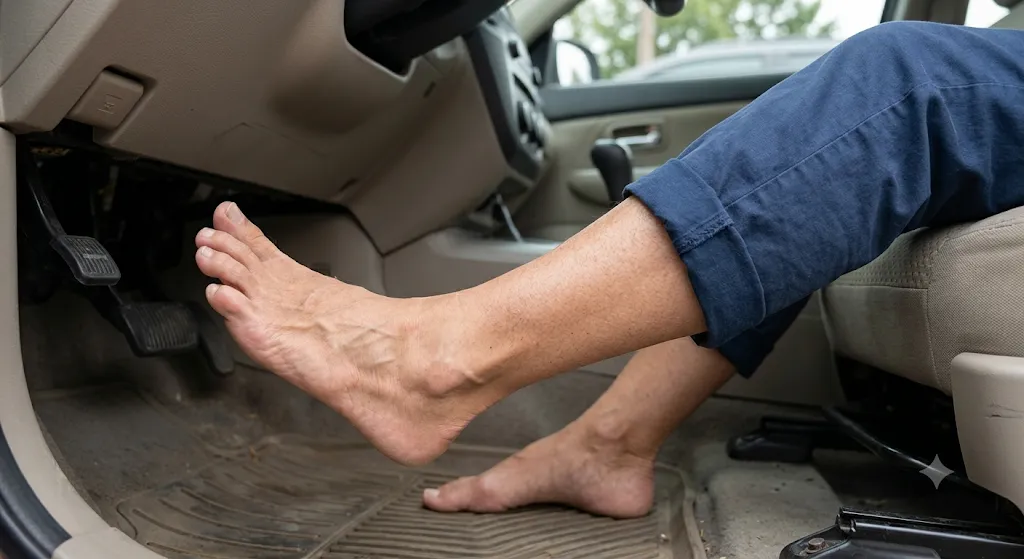
You stand up from your desk, take a few steps across the office floor, and feel a mild tightness across the front of your lower legs. Or maybe you notice your toes seem a little stiff inside your shoes after a long day of walking on hard surfaces. That quiet pull is often your extensor digitorum longus reminding you it was built for more than flat, predictable ground.
This muscle runs along the front-outer part of your shin and sends tendons to the four smaller toes. Its main job is simple: lift those toes so they clear the ground during the swing of each step, and help control how your foot meets the surface. For most of human history that clearance happened on rough, uneven terrain. Today the surfaces are smooth, the shoes are often rigid or cushioned, and the muscle spends long stretches doing almost nothing. The mismatch shows up as ordinary tightness, mild fatigue after ordinary walking, or the sense that your toes just don’t lift as freely as they once did.
What This Feels Like
The sensation is usually low-key. A dull ache or tightness across the front of the lower leg, especially after sitting for hours then walking. Some people describe a slight heaviness or reduced “spring” in the toes when they first stand. Others notice the toes curling a little more inside shoes, or a mild fatigue that appears only after walking on concrete or tile. It is rarely sharp. It tends to ease once you have been moving for a few minutes, then return after the next long period of stillness.
Unlike a calf cramp or a sudden shin splint pain, this is more of a background stiffness. You may also feel the tendons on the top of the foot tighten when you try to lift your toes while seated. Most of the time it is simply the muscle adapting to a day that never asked it to work the way it evolved to work.
Common Everyday Triggers
Prolonged sitting keeps the ankle in a relatively plantar-flexed position and gives the extensor digitorum longus almost no active load. When you finally stand, the muscle has to wake up quickly to clear the toes. Flat, hard floors require less precise toe placement than a trail or uneven path, so the muscle receives fewer of the small, varied contractions it is used to. Many modern shoes have a stiff sole or a toe box that limits full extension, further reducing the natural demand.
Walking mostly on level pavement, standing at a counter for long periods, or driving with the foot resting in a fixed position all contribute. The combination is common: hours of near-zero use followed by ordinary walking that still does not match the varied, obstacle-clearing work the muscle once performed regularly.
Why This Happens
The extensor digitorum longus originates along the upper fibula and interosseous membrane and inserts on the middle and distal phalanges of the second through fifth toes. It extends those toes at the metatarsophalangeal joints and assists with ankle dorsiflexion and a small amount of eversion. Classic electromyography work by Edwin Gray and John Basmajian showed that the anterior compartment muscles, including the extensor digitorum longus, become active in the swing phase precisely to lift the toes and clear the ground. Without that lift, the toes catch and you trip.
On natural terrain the requirement is higher. Roots, rocks, soft soil, and slight rises force constant small adjustments in toe position. The muscle works both concentrically to lift and eccentrically to control the descent of the toes at the end of swing. Modern paved surfaces and indoor floors remove most of that variation. Cushioned or rigid shoes further dampen the feedback and often hold the toes in a mildly flexed position. The result is a muscle that is rarely asked to do the full range of work it was shaped for.
Evolutionary biologist Daniel Lieberman and colleagues have documented how modern footwear changes foot loading and reduces the active work of intrinsic and extrinsic foot muscles compared with barefoot or minimally shod walking. While their studies focused more on overall foot strike and arch function, the same principle applies to the toe extensors: when the environment no longer requires frequent, precise toe clearance, the muscle loses the regular low-level loading that keeps it supple and coordinated. Sitting adds another layer by keeping the muscle in a shortened or unloaded state for hours. When movement resumes, the first steps can feel stiff until circulation and motor control catch up. Related patterns appear in other underused foot and lower-leg muscles, such as the ones discussed in articles on peroneal control on uneven steps and toes curling inside shoes.
Less Common but Serious Causes
Most anterior shin tightness after sitting or ordinary walking is benign. Persistent or worsening pain, visible swelling, numbness in the foot, or weakness that makes toe lift or foot clearance difficult can point to other issues. These include anterior compartment syndrome (rare in everyday activity), deep peroneal nerve irritation, or stress reactions in the tibia. Sudden inability to lift the toes or foot after trauma needs prompt evaluation. For the ordinary desk-to-walking stiffness described here, those red-flag features are usually absent.
Hidden Triggers
Even small changes can amplify the feeling. A new pair of shoes with a higher heel or tighter toe box alters the resting length of the extensors. Walking faster than usual on hard floors increases the demand for rapid toe clearance. Cold indoor air can make the muscle feel stiffer. Mild dehydration or low overall activity across the day leaves the tissue less resilient. People who already have tight calves or limited ankle dorsiflexion often compensate by asking the toe extensors to work harder at the end of each step, adding extra load they are not accustomed to. If you also notice calf ache after hard floors, the two patterns often travel together; the calf response to hard surfaces is a common companion.
When to Worry
Seek medical advice if the tightness is accompanied by marked swelling, skin color changes, progressive weakness, numbness or tingling that spreads into the foot, or pain that wakes you at night. Sudden foot drop, a recent increase in running volume without recovery, or pain that worsens with continued walking rather than easing after a few minutes are also reasons to be checked. Ordinary post-sitting stiffness that settles with gentle movement and does not limit daily activity is usually just the muscle noting the mismatch.
Myths vs Facts
Myth: Front-of-shin tightness always means shin splints and requires complete rest.
Fact: Mild, activity-related tightness in the extensor digitorum longus is often simple underuse. Gentle, frequent toe lifts and short walks usually help more than total rest.
Myth: You need special orthotics or thick cushioned shoes to protect the front of the shin.
Fact: Most people benefit more from occasional barefoot or thin-soled time on safe surfaces and from simply using the full range of toe extension during the day. Overly stiff shoes can reduce the very motion the muscle needs.
Myth: If the muscle feels tight, stretching it hard is the only solution.
Fact: Light, repeated active lifts (concentric work) plus occasional gentle holds are usually more effective than aggressive passive stretching, especially after long periods of sitting.
How to Manage It
Give the muscle the small, frequent clearances it expects. Every hour or so while seated, lift the toes upward ten to fifteen times, keeping the heel on the floor. Stand and take a short walk that includes a few deliberate high steps or steps over a low object (a book or the edge of a rug). Spend a few minutes each day barefoot on a safe indoor surface, actively spreading and lifting the toes. When walking outdoors, choose routes with slight unevenness when practical—a grassy edge, a gravel path, or a sidewalk with tree roots—so the toes must clear small variations.
Choose shoes that allow the toes to extend fully rather than holding them flexed. A brief calf stretch after sitting can reduce compensatory load on the extensors. Consistency matters more than intensity: short, repeated activations throughout the day restore the coordination the muscle lost during long still periods. Most people notice the end-of-day tightness decrease within a week or two of these simple habits.
When to See a Doctor
If the sensation persists despite regular movement, is associated with true weakness, or is accompanied by the red-flag signs listed earlier, a clinician can assess nerve function, compartment pressures if indicated, and rule out other sources. For the common pattern of mild post-sitting or post-walking tightness, self-management is usually sufficient.
FAQs
Is it normal for the front of my shin to feel tight only after I sit for a long time?
Yes. The extensor digitorum longus receives almost no load while you sit. The first steps after standing ask it to resume toe clearance after hours of stillness, which commonly produces brief tightness that eases with continued walking.
Can tight toe extensors make me trip more easily?
Mild underuse can slow the automatic toe lift at the start of a walk, especially if you are tired or wearing restrictive shoes. Once the muscle is warmed up and you are moving regularly, clearance usually returns to normal. Persistent tripping warrants a check for other causes.
Should I avoid hard floors if my shins feel this way?
No. Hard floors are not the problem; lack of variation and long periods of stillness are. Adding short walks, occasional toe lifts, and a little uneven ground when possible is more helpful than avoiding ordinary surfaces.
Do I need to strengthen this muscle with special exercises?
Simple, frequent toe lifts while seated or standing are enough for most people. They restore the exact motion the muscle uses in gait. Heavy resistance is unnecessary unless a clinician identifies true weakness.
Will switching to barefoot shoes fix it?
Minimally structured shoes can increase natural toe motion, but the larger factor is simply using the muscle more often during the day. A gradual shift plus the hourly lifts usually works better than an abrupt change in footwear.
Conclusion
Your extensor digitorum longus still expects the occasional need to clear toes over roots, stones, and soft ground. Modern life—long sitting, flat floors, and shoes that limit motion—rarely supplies that demand. The mild tightness many people feel after desk time or ordinary walking is the muscle noting the difference. Short, repeated toe lifts, brief walks that include a little variation, and shoes that allow full extension give it the small clearances it was built for. Most of the time that is all it takes for the stiffness to settle and for ordinary steps to feel easier again.


