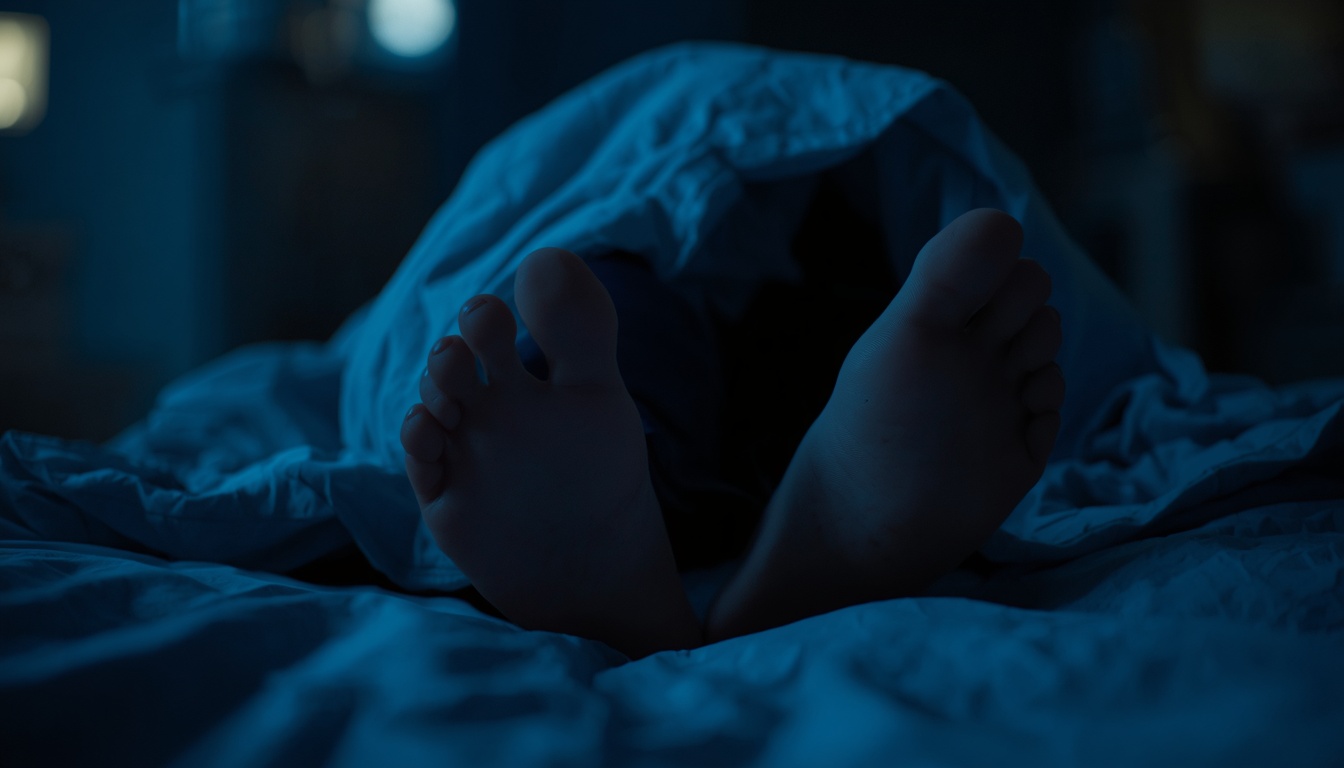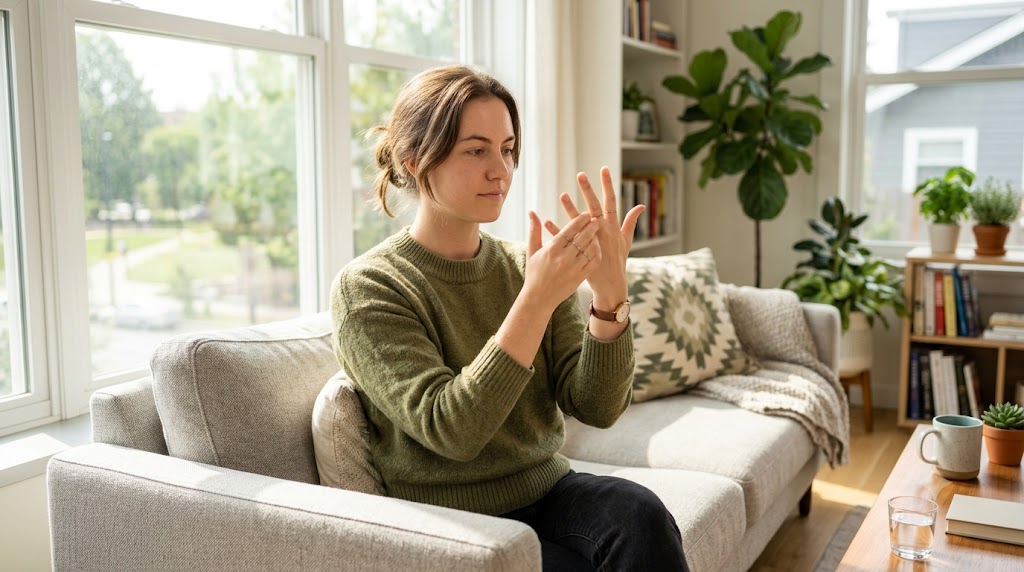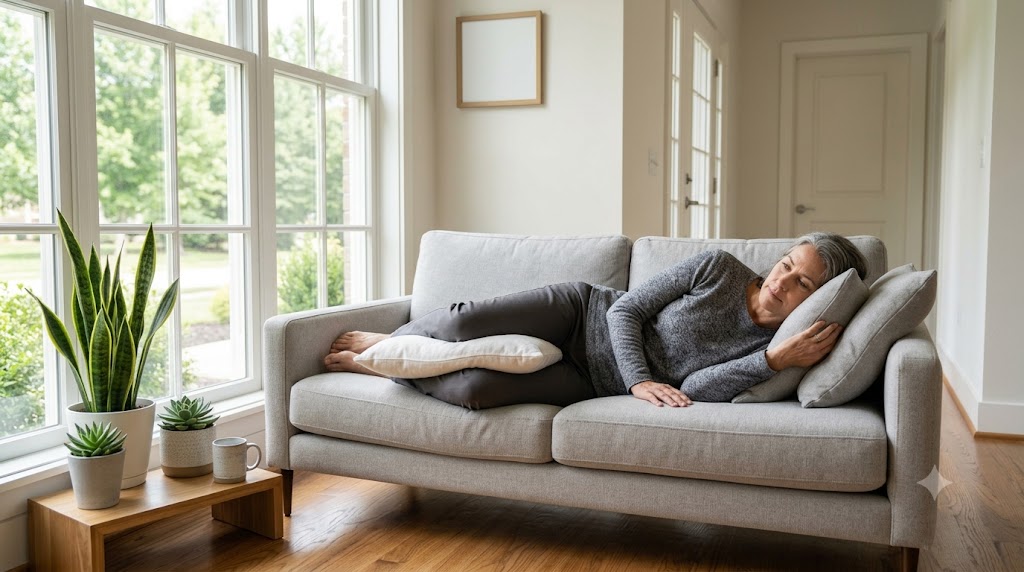
Core body temperature still falls in the evening so sleep can start. Evening light, late meals, hot rooms and social jet lag flatten the dip Jürgen Aschoff and Kurt Kräuchi mapped.
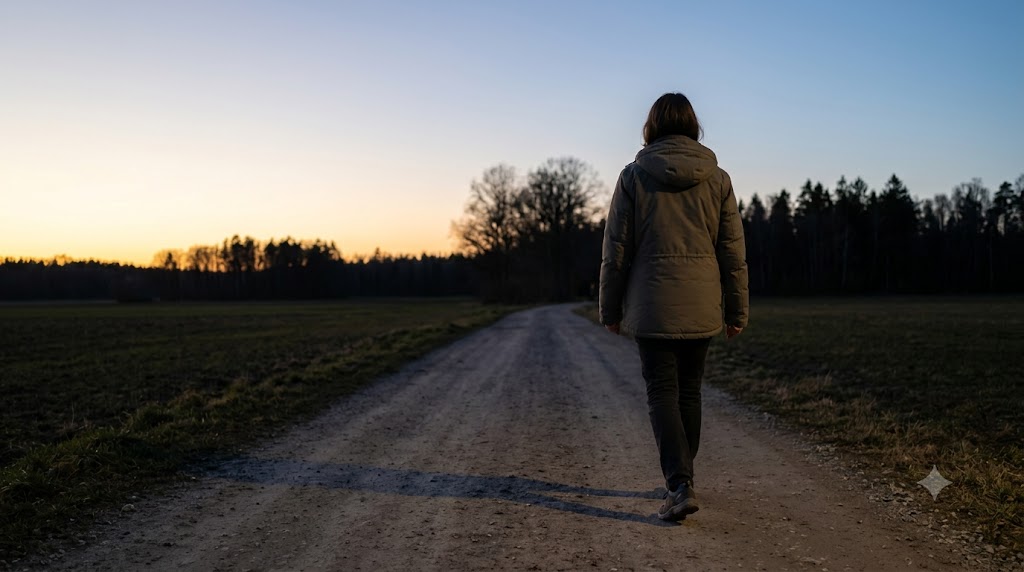
Your body is not the same temperature all day. It is not supposed to be.
Core temperature — the heat of the brain and the organs in the trunk — rises through the afternoon, peaks in the early evening, then falls by about 0.5–1.0 °C as night arrives. That drop is not a side effect of lying still. It is a scheduled event. Jürgen Aschoff showed decades ago that the human temperature rhythm keeps running even when people live without clocks. Kurt Kräuchi and Anna Wirz-Justice later showed that the fall in core heat is tightly tied to warm hands and feet, melatonin, and the minutes it takes to fall asleep.
The modern evening often fights that schedule. Bright indoor light, a late heavy meal, a warm room, a workout at 9 p.m., and a weekend that slides two hours later than the workweek all tell the thermostat to stay high. Sleep then has to start against a body that still thinks it is late afternoon. That is why some people feel “tired but wired,” take forever to drop off, and wake hot and unrested even after eight hours in the dark.
What This Rhythm Was Built to Do
Human core temperature is not a fixed 37 °C. It is a wave. In a typical day-active adult, the minimum arrives in the second half of the night, often between 4 and 6 a.m. The maximum arrives in the late afternoon or early evening. The amplitude is small in degrees and large in meaning. Half a degree is enough to change how easily the brain enters sleep, how the heart and vessels behave, and how growth hormone, cortisol and immune traffic are timed.
The control room sits in the preoptic area of the hypothalamus, working with the suprachiasmatic nucleus — the master clock. Charles Czeisler and colleagues showed that the temperature rhythm is one of the most robust outputs of that clock. Even when sleep is denied, the wave continues. Sleep then prefers to begin on the falling slope. That is why a nap in the mid-afternoon, when temperature is still high or just turning, feels different from sleep after the evening decline has started.
Heat loss is the real evening job. Core temperature falls because the body opens distal skin — fingers, palms, toes, earlobes — and dumps heat. Kräuchi called the gradient between the core and those distal sites a predictor of sleep-onset latency. Warm feet and hands are not a cozy extra. They are the radiator. When the radiator opens on time, core heat drops and sleep onset shortens. When the radiator stays clamped — cold extremities, a hot room, anxiety that keeps skin vessels tight — core heat stays high and the brain stays in “still day” mode.
Melatonin is part of the same briefing. Once evening light fades, the pineal signal helps the vessels open and the thermostat accept a lower set point. That is one reason true darkness still matters for the pineal gland and why a bright screen at 11 p.m. is not only a mental habit. It is a thermal one.
The Evening Physics Your Clock Still Expects
Ancestral evenings were cooler, darker and quieter than ancestral afternoons. Outdoor temperature usually fell after sunset. Activity usually fell with it. The last large meal was earlier relative to sleep. Distal skin could warm and dump heat without competing with a heated room or a late training session.
Eus Van Someren has argued that the aging and insomnia story is often a thermoregulatory story: the evening heat-loss window narrows, the temperature amplitude flattens, and sleep fragments. Roberto Refinetti mapped how tightly temperature and the rest–activity cycle stay coupled across species. Humans are not an exception. We are a day-active mammal whose sleep gate opens as the core cools.
That gate is why a hot bath or shower an hour or two before sleep can help some people. The bath raises skin temperature; after you step out, the rebound heat loss steepens the core drop. The bath is not magic water. It is a borrowed version of the radiator Kräuchi described. A room that is already as warm as late afternoon cancels the same physics.
Late exercise and late alcohol play both sides. A hard workout raises core heat and can delay the drop for hours. A drink can open skin vessels and make you sleepy, then fragment the second half of the night as the thermal and autonomic rebound arrives. Neither is a moral problem. Both are timing problems for a clock that still expects the heat of the day to be over before the dark of the night begins.
How Modern Evenings Flatten the Dip
Indoor climate control holds evening air near afternoon comfort. That is pleasant. It is also a missing cue. The skin no longer feels a reliable outdoor cool-down, so the preoptic thermostat gets a weaker weather report.
Evening light is the stronger cue. Melanopsin cells in the retina treat bright indoor light and phone glare as “still day.” Melatonin is delayed. Distal vasodilation is delayed. Core temperature stays on the afternoon plateau for an extra hour or two. People then get into a dark room with a body that has not finished its heat dump. They call it racing thoughts. Part of it is still heat.
Late eating adds a post-meal rise in metabolic heat and a splanchnic blood-flow shift. The liver and gut are still working when the brain is trying to cool. That is one reason daylight-timed meals still fit the clock better than a large dinner at 10 p.m..
Social schedules add a weekly twist. Sleeping much later on free days slides the temperature minimum later. Monday then asks the core to be low at an hour when the weekend clock still wants it high. That is part of what social jet lag actually does to the body — not only a tired Monday brain, but a thermostat that is two time zones off without leaving town.
Aging, some antidepressants, beta blockers, and poorly timed shift work can flatten the same wave. So can a night of alcohol or a room that never drops below the skin’s idea of “still afternoon.”
Hidden Triggers
A few ordinary habits quietly hold core temperature up when it should be falling:
- Bright overhead light and phones in the last two hours before sleep.
- A bedroom or evening living space kept as warm as late afternoon.
- Cold hands and feet from anxiety or a cool floor, so the radiator never opens.
- A heavy meal, hot spicy dinner, or alcohol within two hours of sleep.
- High-intensity training in the late evening without a long cool-down.
- Weekend delay of bedtime and wake time by two or more hours.
- Caffeine late enough that adenosine block and catecholamine tone keep heat production up.
None of these means the thermostat is broken. They mean the briefing arrived in the wrong order.
When a Flat Curve Is More Than a Warm Room
A modest delay of the evening drop is common and often reversible with light, meal and room timing. A few patterns are not “just a warm night.”
Night sweats that soak clothes, a feverish feeling with chills, unexplained weight loss, a new hot-flush pattern, or temperature that stays high at rest through the day needs medical review. So does insomnia that arrives with loud snoring, gasping, morning headache or resistant high blood pressure — because sleep apnea can scramble both the night dip in blood pressure and the night dip in core heat.
Menopause can change the same preoptic thermostat. The set point becomes jumpy; heat dumps arrive as flushes at the wrong hour. That is physiology with a name, not a failure of willpower. Thyroid overactivity can flatten or raise the whole curve. Infection raises the set point on purpose. Those are different stories from an evening that never quite cools because the lights never quite dim.
Myths vs Facts
Myth: A healthy body stays at 37.0 °C around the clock.
Fact: A healthy body runs a daily wave. The night minimum is supposed to be lower than the afternoon peak.
Myth: Feeling warm at lights-out means you are “bad at sleep.”
Fact: It often means heat loss has not started. Warming the hands and feet and cooling the room is treating the radiator, not a character flaw.
Myth: A hotter room is more restful.
Fact: Sleep onset usually prefers a cooler room so distal skin can dump core heat. Many people sleep better near 16–19 °C than near 24 °C, if they have enough covering for comfort.
Myth: The temperature rhythm is only about comfort.
Fact: It gates sleep, helps time hormones, and travels with the same clock that times melatonin, cortisol and overnight blood-pressure dip.
How to Give the Thermostat an Honest Evening
You cannot install a new hypothalamus. You can return some of the cues it still reads.
Dim indoor light in the last two hours before sleep. Outdoor dusk, if you can take it, is even better: falling light plus falling air temperature is the original pair. Keep evenings cooler than afternoons. Warm the hands and feet if they are clamped — socks, a short warm shower an hour before sleep, or a few minutes of easy walking — so the radiator can open.
Move hard training earlier when you can. If the only hour you have is late, add a long, easy cool-down and avoid jumping from a hot workout into a hot room and a screen. Finish the main meal earlier relative to sleep. Keep weekend wake times within about an hour of weekday wake times so the temperature minimum does not slide two zones away.
Morning light still matters. A bright outdoor start after dawn anchors the whole wave so the evening drop has a place to land. That is the same logic as the cortisol system that still expects dawn: one end of the day sets the other.
When to See a Doctor
See a clinician if night heat comes with soaking sweats, unexplained fever, rapid heart rate at rest, tremor, weight loss, or a new pattern of flushes that disrupt life. See someone sooner if sleep is loud, gaspy or paired with morning headaches and high blood pressure. Sudden confusion with a high temperature is an emergency, not a circadian mismatch.
For ordinary “I run hot at 11 p.m. and then sleep through an alarm,” start with light, room temperature, meal timing and a more stable wake time. Those are the levers Aschoff’s wave still answers to.
FAQs
How much is core temperature supposed to fall at night?
In many healthy adults the core-to-core drop from evening peak to night minimum is about half a degree to a full degree Celsius. The exact number varies with age, sex, menstrual phase and measurement site. The direction of the wave matters more than hitting a textbook 36.5 °C.
Why do my hands and feet need to be warm if my core needs to be cool?
Because heat has to leave through skin. Distal vasodilation sends warm blood into hands and feet so core heat can fall. Cold, clamped extremities keep the heat trapped in the trunk. Warm socks and a cool room are not opposites. They are the same strategy.
Can a warm bath really help me fall asleep?
A warm bath or shower 60–90 minutes before sleep can steepen the later heat-loss phase. Immediately before sleep it can leave core temperature too high. Timing is the point, not the brand of soap.
Does menopause ruin the temperature rhythm?
It can make the preoptic set point unstable, so heat dumps arrive as flushes at odd hours. The daily wave does not disappear. It becomes noisier. Cooler rooms, earlier light cues and medical options aimed at vasomotor symptoms can all help; they are not competing explanations.
Is a flat temperature curve dangerous on its own?
A flatter curve is common with aging, indoor evenings and circadian disruption. By itself it is not a diagnosis. It becomes a medical problem when it travels with night sweats, apnea, thyroid disease, infection or insomnia that does not yield to timing changes.
Do wearable thermometers show the real core wave?
Wrist and finger devices track skin temperature, which often rises as the core falls — that is the radiator opening. They are useful trend tools. They are not the same number as a rectal or ingested-capsule core reading. Read the direction and timing, not a single “normal” digit.
Conclusion
Your thermostat is not a broken indoor gadget. It is an old outdoor clock. It still expects a brighter, more active, slightly warmer day and a darker, quieter, slightly cooler night. Give it a real dusk — dimmer light, a cooler room, warm hands, an earlier last meal — and the drop that Aschoff and Kräuchi measured has a chance to arrive on time. Sleep then does not have to fight the heat of a day that never ended.