Your cheeks evolved for outdoor temperature swings. Constant indoor air can leave facial skin feeling tight, flushed, or less resilient. Here's the science and what helps.

You step outside on a cool morning and your cheeks tighten for a moment, then feel awake. Or you spend the whole day in climate-controlled air and later notice a faint flush or a dry, taut feeling across the mid-face. These small signals are common. Your facial skin, especially the cheeks, still carries expectations shaped by outdoor temperature changes rather than steady indoor comfort.
What This Feels Like
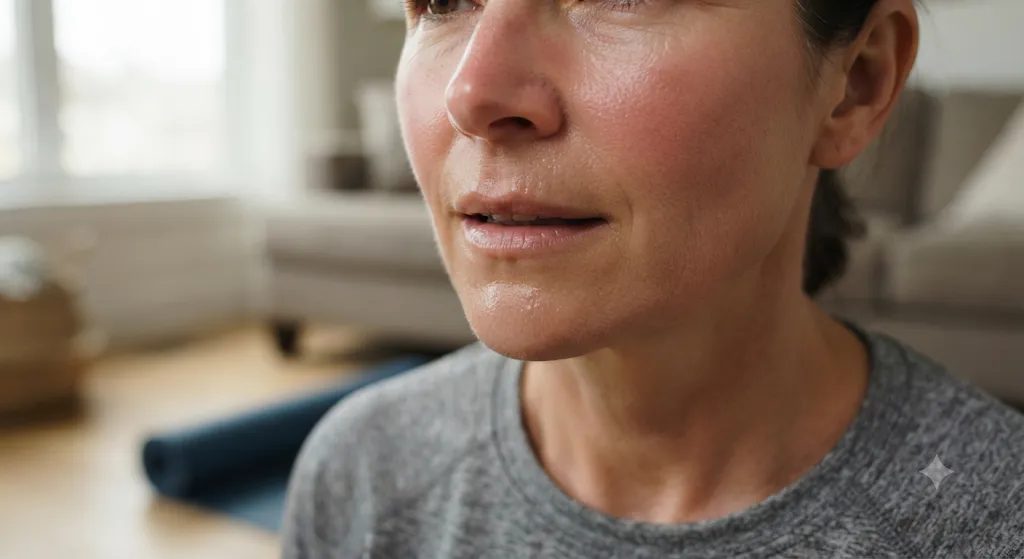
People describe a brief tightness when moving from warm indoor air into cooler outdoor air, or the opposite—a mild flush after coming back inside. Some notice the skin looking slightly dull or feeling less supple after long periods without temperature contrast. Others see more visible capillaries or a tendency for the cheeks to feel warm after little effort. None of these are automatic signs of a problem; they often reflect how facial blood vessels and the skin barrier respond to the environment they were shaped by.
Why This Happens
Human facial skin evolved under conditions of daily and seasonal temperature swings. The cheeks sit over a rich network of blood vessels that can dilate or constrict quickly to help regulate heat. This vascular reactivity, studied in physiology for decades, lets the face dump excess heat or conserve it. Outdoor air also brings changing humidity, wind, and mild mechanical stimulation from air movement—all of which influence the outer skin barrier.
Modern life compresses those swings. Most people spend the large majority of their hours in spaces held near a constant temperature. The facial vessels and barrier cells receive less of the intermittent challenge that once came with stepping between shade and sun, wind and still air, or cool dawn and warmer midday. Over time the system can become a little less practiced at rapid, mild adjustments. The result is not disease for most people, but a lower tolerance for the very conditions the skin still “expects.”
Related patterns appear in other tissues. Just as circulation still expects occasional temperature contrast and the skin barrier still expects outdoor humidity fluctuations, the cheeks show a local version of the same mismatch.
Common Everyday Triggers
- Long stretches in heated or air-conditioned rooms without brief outdoor breaks
- Direct airflow from vents or fans aimed at the face
- Sudden transitions (warm car to cold outside, or the reverse)
- Low indoor humidity combined with little natural air movement
- Screen-focused days that keep the head still and reduce overall movement
Hidden Triggers
Certain habits amplify the effect. Frequent hot showers or aggressive face washing can strip surface lipids that help the barrier handle temperature shifts. Alcohol, spicy food, or intense exercise can produce facial flushing that feels more noticeable when the skin has had little mild contrast training. Some people also carry a naturally higher density of facial vessels or a tendency toward rosacea-spectrum reactivity; the mismatch does not cause these traits, but it can make ordinary reactions stand out more.
When to Worry
Occasional tightness, a brief flush, or a mild change in skin feel after temperature shifts is usually benign. Seek medical advice if you notice:
- Persistent redness that does not fade, or burning that interferes with daily life
- Visible broken vessels that increase rapidly, or skin that feels hot and tender without clear triggers
- Swelling, rash, or flushing accompanied by breathing difficulty or other systemic symptoms
- Changes limited to one side of the face, or new asymmetry
These patterns warrant professional evaluation rather than self-management alone.
Myths vs Facts
Myth: Facial tightness or flush always means the skin barrier is permanently damaged.
Fact: Most mild reactions reflect temporary vascular and barrier responses that improve with gradual re-exposure to ordinary outdoor conditions.
Myth: You should avoid all cool air to protect your cheeks.
Fact: Brief, mild cool exposure is part of what facial skin is adapted for; total avoidance can reduce resilience.
Myth: Only people with sensitive skin notice this.
Fact: The underlying vascular and barrier expectations are widespread; individual thresholds simply differ.
How to Support What Your Cheeks Still Expect
The goal is not extreme cold or heat, but gentle, repeated contrast that resembles ordinary outdoor variation.
- Step outside for a few minutes several times a day, even on cool or mildly windy days. Let the face feel the air without forcing prolonged exposure.
- Avoid aiming strong HVAC vents directly at the face for long periods; redirect airflow when possible.
- Use a simple, non-irritating moisturizer if the skin feels tight after indoor stretches, especially in low-humidity seasons. Apply to slightly damp skin.
- Wash the face with lukewarm rather than hot water and limit harsh cleansers that remove surface lipids.
- If you exercise, a brief cool-down walk outdoors can pair temperature change with movement.
These steps are low-cost and reversible. Most people notice improved comfort within days to a couple of weeks of consistent mild contrast.
When to See a Doctor
See a clinician if redness, burning, or flushing becomes frequent, progressive, or is accompanied by other symptoms such as joint pain, fatigue, or vision changes. A dermatologist or primary-care physician can distinguish ordinary vascular reactivity from conditions that benefit from targeted treatment.
FAQs
Is it normal for my cheeks to feel tight only when I go outside in cooler weather?
Yes. The initial tightness is often a normal vascular and barrier response to cooler, sometimes drier outdoor air after steady indoor conditions.
Can indoor heating alone make my cheeks flush more easily?
It can contribute. Prolonged dry heat reduces the mild contrast the facial vessels are adapted to, so ordinary triggers (food, emotion, exercise) may produce a more noticeable flush.
Should I use special products to “train” my facial skin?
Most people do well with ordinary outdoor time and gentle basic care. No special training devices or aggressive routines are required for the everyday mismatch described here.
Does this mean I have rosacea?
Not necessarily. Occasional temperature-related tightness or mild flush is common and does not equal a diagnosis. Persistent or bothersome redness should be evaluated professionally.
How quickly can outdoor air time help?
Many people feel a difference in skin comfort within several days of adding short outdoor intervals, though individual responses vary with climate, skin type, and overall habits.
Conclusion
Your cheeks still carry the imprint of outdoor temperature variation—rich blood flow that adjusts quickly and a barrier that meets changing air. Constant indoor climates remove much of that ordinary challenge. Brief, regular outdoor air and simple barrier care restore a portion of what the skin expects, usually without drama or special equipment. The small signals of tightness or flush are often just the face reminding you of conditions it was built to handle.