Your skin barrier evolved for the shifting humidity of outdoor air. Constant indoor dryness from heating and air conditioning can leave it tight, flaky, or itchy. Here is why that mismatch happens and what helps.
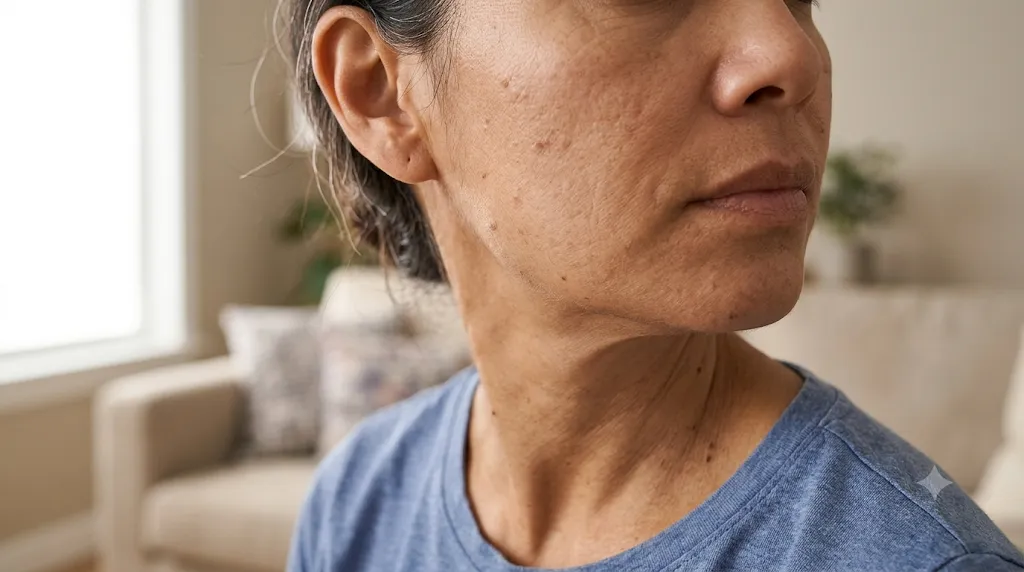
You step out of a hot shower into a heated room and your skin feels tight within minutes. Or you sit under air conditioning all day and notice flaking on your shins or cheeks by evening. Many people blame “dry skin” or genetics, but part of the story is simpler: the outermost layer of your skin still behaves as if it is outdoors, where humidity rises and falls with the weather. Constant low indoor humidity is a relatively new condition for human skin.
What This Feels Like
The sensation is usually mild but persistent. Skin feels taut or slightly rough after time in heated or air-conditioned spaces. You may see fine flakes, especially on the lower legs, forearms, or face. Itching can appear without an obvious rash. Some people notice the tightness most after washing or when moving from a humid bathroom into a dry room. The feeling often improves outdoors on a humid day or after a longer walk in milder weather.
Common Everyday Triggers
Central heating in winter drops indoor relative humidity well below outdoor levels in many climates. Air conditioning does the same in summer. Long hot showers, frequent handwashing, and soaps that strip surface lipids make the problem more noticeable. Office environments with sealed windows and constant airflow add another layer of low-humidity exposure. These are ordinary modern conditions, not medical events.
Why This Happens
The outermost layer of skin, the stratum corneum, functions as a permeability barrier. It keeps water from evaporating too quickly and keeps irritants out. This barrier is built from lipids arranged in layers and from natural moisturizing factors produced as the protein filaggrin breaks down. Research by Peter M. Elias and colleagues has shown that the barrier is highly sensitive to the humidity of the air around it. When external humidity falls, water loss across the skin (transepidermal water loss) tends to rise. The skin can respond by thickening the barrier or adjusting its lipid production, but that response takes time and is not perfect under continuous dryness.
Human ancestors spent most of their lives in outdoor air whose humidity varied with weather, season, and time of day. Indoor climate control keeps humidity low and steady for comfort and building protection. The barrier system still “expects” the older pattern of fluctuation and recovery. Prolonged low humidity can also influence filaggrin processing and local skin pH, both of which matter for barrier integrity. In people with already thinner or more sensitive barriers, the same conditions make tightness, flaking, or low-grade itching more likely. Related everyday dryness appears in other places too—for example, hands after frequent washing or how skin oil interacts with weather.
Less Common but Serious Causes
Persistent severe dryness, widespread rash, or cracking that bleeds can appear with eczema (atopic dermatitis), where the barrier is already impaired. Elias’s work has linked low environmental humidity to worsening of that condition. Other possibilities include irritant contact dermatitis from harsh products, certain medications, or thyroid-related dryness. These are less common than simple indoor-humidity effects but matter when symptoms do not settle with ordinary care.
Hidden Triggers
Hot water and alkaline soaps raise skin pH and remove lipids faster than humidity alone would. Alcohol-based hand sanitizers and frequent washing compound the problem. Wool or rough fabrics next to already-dry skin increase friction and itch. Low fluid intake does not directly dry the surface barrier the way low humidity does, but it can make overall skin feel less resilient. Stress and poor sleep may also slow barrier recovery, though the humidity effect is more immediate.
When to Worry
Most tightness and light flaking improve with humidity adjustments and gentler care. See a clinician if you have widespread redness, oozing, thick scale, cracks that stay open, or itching that keeps you awake. Sudden severe dryness with other symptoms (fatigue, cold intolerance, hair loss) warrants a check for broader causes. Any new rash that spreads or fails to calm within a couple of weeks is worth evaluating rather than assuming it is only dry air.
Myths vs Facts
Myth: Drinking more water fixes dry skin.
Fact: Internal hydration matters for overall health, but the surface barrier responds more to external humidity and to the lipids and natural moisturizing factors already in the stratum corneum.
Myth: Only winter heating causes this.
Fact: Air conditioning and sealed offices create similar low-humidity conditions year-round.
Myth: Any moisturizer is enough.
Fact: Products that support the barrier (containing ceramides, cholesterol, and fatty acids in useful ratios) tend to help more than very light lotions that evaporate quickly, though simple occlusives also reduce water loss.
How to Manage It
Aim for indoor relative humidity in the 40–60% range when possible; a simple hygrometer and a humidifier help in heated spaces. Take shorter, lukewarm showers and use gentle, fragrance-free cleansers. Pat skin dry and apply a barrier-supporting moisturizer while it is still slightly damp. Wear soft fabrics next to the skin. Spend short periods outdoors when weather allows—the natural humidity swing gives the barrier a break from constant dryness. These steps do not reverse evolution, but they reduce the mismatch. For related outdoor-light and barrier ideas, see why skin still expects the sun.
When to See a Doctor
Consult a clinician or dermatologist if dryness is severe, painful, or accompanied by rash, infection signs (increasing redness, warmth, pus), or other systemic symptoms. Mention long hours in very dry indoor air and any family history of eczema. Simple barrier care is usually sufficient; prescription treatments are reserved for clearer inflammatory conditions.
FAQs
Is it normal for skin to feel tight right after a shower in winter?
Yes. Warm water and then dry indoor air both increase water loss from the surface. Applying moisturizer promptly reduces the sensation.
Does air conditioning dry skin the same way heating does?
Yes. Both lower relative humidity. The barrier experiences the same increased evaporative demand.
Can a humidifier fully solve it?
It helps a great deal by raising ambient humidity, but gentle cleansing and moisturizing still matter because washing removes surface lipids.
Why do some people get worse than others in the same room?
Baseline barrier strength varies. People with filaggrin variations, eczema history, or very frequent washing notice the humidity effect more.
Does this mean outdoor living is always better for skin?
Not exactly. Extreme outdoor dryness or cold wind can also stress the barrier. The useful part of the ancestral pattern is fluctuation and recovery time rather than constant extremes.
Will thicker moisturizer at night help?
Often yes. Nighttime application gives the barrier hours without washing or friction, so lipids and humectants can work longer.
Conclusion
Your skin barrier still expects the humidity swings of outdoor air and the recovery time that came with them. Constant indoor dryness is a modern mismatch that shows up as tightness, flaking, and itch. Raising room humidity modestly, washing more gently, and supporting the barrier with suitable moisturizers usually restores comfort without special treatments. The system is adaptable; it simply works better when daily conditions are closer to the range it evolved to handle.