
Your abductor pollicis longus spreads the thumb away from the palm. Modern phones and keyboards keep it pinched closed. Occasional deliberate spreading restores the motion it still expects.
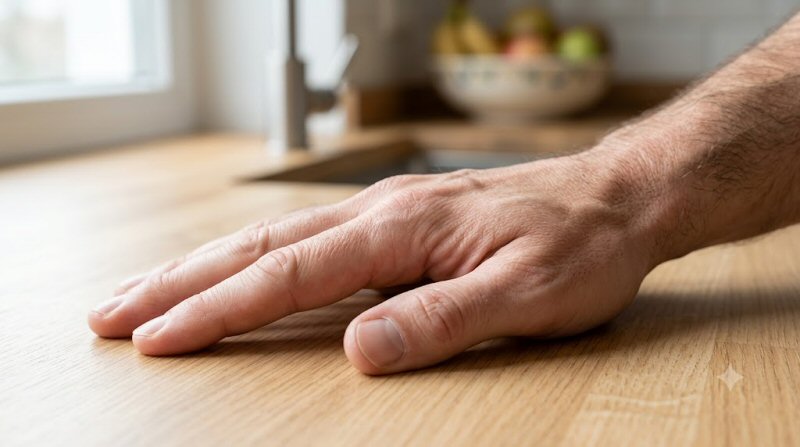
Your thumb spends most of the day either pinching a phone or hovering over a keyboard. The muscle that is supposed to pull it away from the palm — the abductor pollicis longus — barely gets asked to work in pure abduction. After a few hours of closed-grip work the base of the thumb can feel stiff or the radial side of the wrist can ache for no obvious reason. That is the muscle noticing it has not spread the thumb in a long time.
What This Muscle Actually Does
The abductor pollicis longus (APL) is an extrinsic thumb muscle that lives in the deep posterior forearm. It originates from the posterior surfaces of the radius and ulna plus the interosseous membrane, then travels under the extensor retinaculum in the first dorsal compartment (alongside the extensor pollicis brevis) and inserts mainly on the base of the first metacarpal. Its primary job is to abduct and extend the thumb at the carpometacarpal joint — moving the thumb radially away from the palm in the plane of the hand. It also assists with radial deviation of the wrist.
Functional anatomists such as Kapandji have long noted that this abduction is not just “opening the hand.” It sets the first metacarpal into a position from which thenar muscles can then oppose or pinch efficiently. When the thumb stays adducted for hours, the APL tendon and its sheath see little of the lengthening–shortening cycle they were built for. The related thenar muscles, by contrast, stay busy; the thenar group still expects occasional opposition, but the pure spreading action is the missing half of the story.
Why Modern Hands Underuse It
Ancestral hands dealt with varied grips: wrapping around branches, cradling large fruits or tools, stabilizing a wide grasp, or simply resting with the thumb clear of the palm. Climbing and tool use required the thumb to move freely between full radial abduction and opposition. Modern life collapses that range. Phones, mice, and keyboards keep the thumb in a relatively adducted or mid-opposition posture for long stretches. Swiping and typing use fine flexion and some extension, but almost never the full “spread the thumb away from the index finger” motion that loads the APL through a useful range.
Evolutionary work by researchers such as Diogo on primate hand musculature shows that humans have a particularly rich set of extrinsic thumb movers. The APL is part of that toolkit. When the only daily demand is sustained pinch or light key strikes, the muscle and its tendon sheath experience under-loading rather than the occasional full excursions they still expect. The result is not dramatic weakness so much as a quiet loss of easy mobility at the base of the thumb and a higher chance of irritation in the first dorsal compartment when the same tendons are later asked to work hard.
Common Everyday Triggers
- Hours of phone scrolling or texting with the thumb mostly adducted
- Prolonged mouse use or trackpad work without thumb breaks
- Carrying bags or gripping tools that keep the thumb closed against the palm
- Keyboard sessions where the thumb rests on the space bar or stays tucked
- Sleeping with the hand clenched or the thumb folded under
Any of these can leave the radial wrist or the base of the thumb feeling tight by evening. The sensation is usually mild stiffness or a dull ache rather than sharp pain. It often eases once the hand is opened and the thumb is deliberately spread a few times.
When the Same Area Becomes a Problem
Repetitive thumb use in the opposite direction — constant pinching or lifting — can irritate the APL and EPB tendons where they share the first dorsal compartment. That is the classic location of de Quervain’s tenosynovitis: pain on the radial side of the wrist that worsens with thumb movement or when the thumb is tucked into the palm and the wrist is ulnarly deviated (the Finkelstein test). The underuse of pure spreading does not cause de Quervain’s by itself, but a hand that rarely opens fully can become less tolerant of the loads that do occur.
Most people who simply feel stiff after a desk day do not have tenosynovitis. The stiffness improves with movement and rest. True inflammatory irritation tends to be more localized, can swell, and persists or worsens with ordinary use.
How to Give the Muscle What It Still Expects
The goal is occasional full radial abduction, not a strengthening program. Simple habits restore the missing motion:
- Every hour or so, spread the thumb fully away from the index finger and hold for a few seconds. Repeat 5–8 times. This is pure APL work.
- Open the whole hand wide, then let the thumb drift outward as if you are about to grasp a large jar. The related finger extensors still expect occasional full opening as well; doing both together is efficient.
- When using a phone, periodically set it down and rest the hand palm-up with the thumb relaxed outward rather than tucked.
- During keyboard or mouse work, take a brief break to place the hand flat on the desk and slide the thumb sideways away from the fingers.
- If the radial wrist feels tight after a long day of gripping, a few gentle thumb circles in both directions often help more than rest alone.
These are low-load, high-frequency movements. They match the occasional spreading the muscle evolved to perform rather than adding more pinching volume. People who already do a lot of fine hand work often notice less end-of-day stiffness once the spreading habit is in place. If typing already leaves the hands warm or tense, the same breaks that cool the hands after typing can double as APL mobility time.
When to Pay Closer Attention
Ordinary stiffness that improves with opening the hand is common and usually harmless. See a clinician if:
- Pain is sharp, localized to the radial wrist, and worsens with thumb movement or the Finkelstein maneuver
- There is visible swelling, redness, or a catching sensation along the first dorsal compartment
- Grip strength drops or the thumb feels unstable at its base
- Symptoms persist for more than a couple of weeks despite simple movement breaks
- Numbness or tingling appears in the thumb or radial fingers (possible median or radial nerve involvement)
Most cases of simple underuse stiffness respond to the habits above. Persistent or inflammatory pain may need activity modification, splinting, or further assessment.
FAQs
Is it normal for the base of my thumb to feel stiff after a day on my phone?
Yes. Hours of adducted or opposed thumb positions leave the abductor pollicis longus under-loaded. Deliberate spreading usually restores easy motion within minutes.
Does spreading the thumb help prevent de Quervain’s?
It does not guarantee prevention, but keeping the first dorsal compartment tendons moving through their full range reduces the chance that sudden pinching loads will irritate them. Balanced movement is better than either total rest or constant pinch.
How is this different from the thenar muscles?
Thenar muscles (abductor pollicis brevis, opponens, flexor pollicis brevis) live in the palm and mainly oppose and flex the thumb. The APL is a forearm muscle that primarily radially abducts and extends the first metacarpal. Both are needed; modern devices tend to underuse the radial-abduction half.
Can I strengthen the abductor pollicis longus with bands or weights?
Light resistance is possible, but most desk workers benefit more from frequent unloaded spreading than from added load. The mismatch is usually missing motion, not missing strength.
Why does my radial wrist sometimes ache when I open a jar?
Opening a jar often combines wrist radial deviation with thumb stabilization — exactly the secondary actions of the APL. If the muscle and its sheath have been quiet all day, that sudden demand can feel uncomfortable until the tendons have moved a few times.
Conclusion
The abductor pollicis longus still expects the thumb to spread away from the palm now and then. Phones, keyboards, and closed grips quietly remove that motion. A few deliberate spreads each hour restore the lengthening–shortening cycle the muscle and its tendon sheath were built for, and they often clear the mild end-of-day stiffness that many people simply accept as normal. The hand was designed for a wider range of thumb positions than modern screens usually allow; giving it the occasional full abduction is a small, practical way to meet that older expectation.


