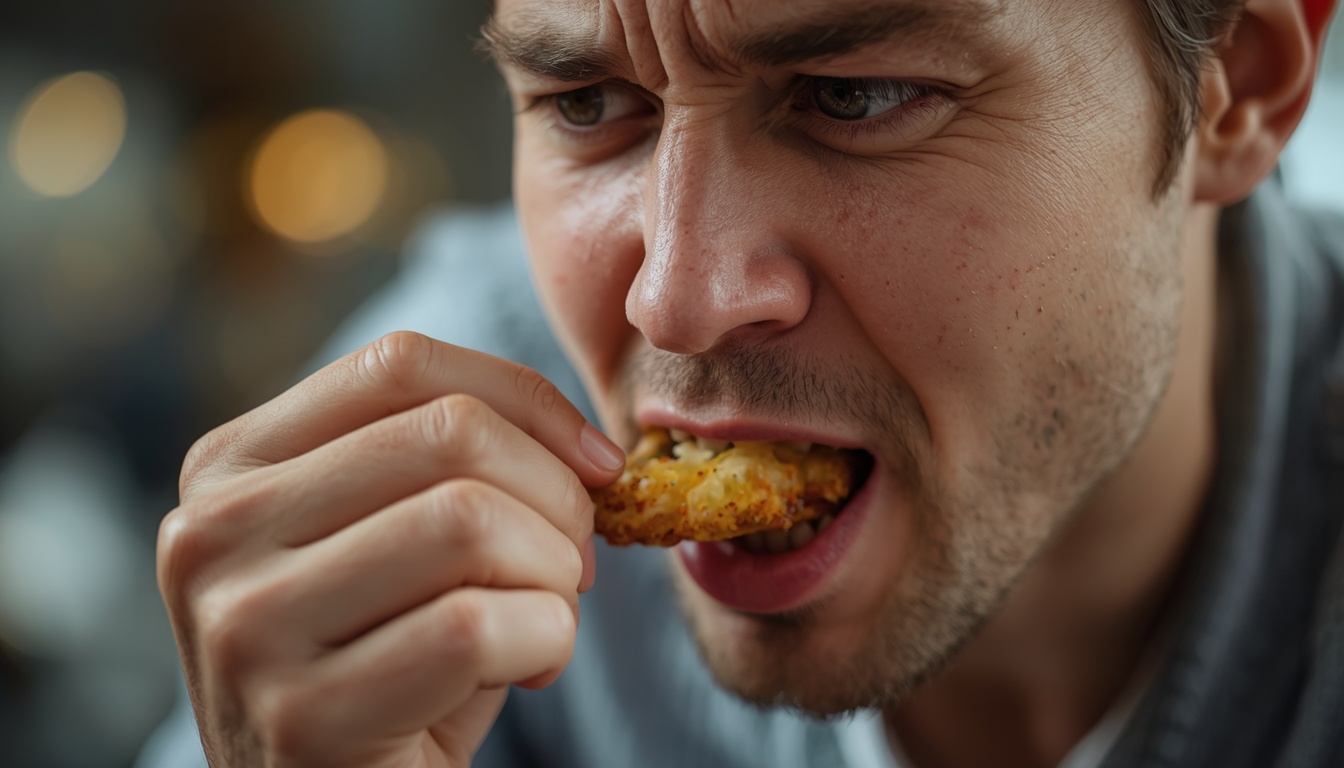
That sudden forehead stab after a slushy or ice cream is a cold-stimulus headache — common, brief, and usually harmless. Learn what the trigeminal nerve is doing, who feels it more, and how to stop it.
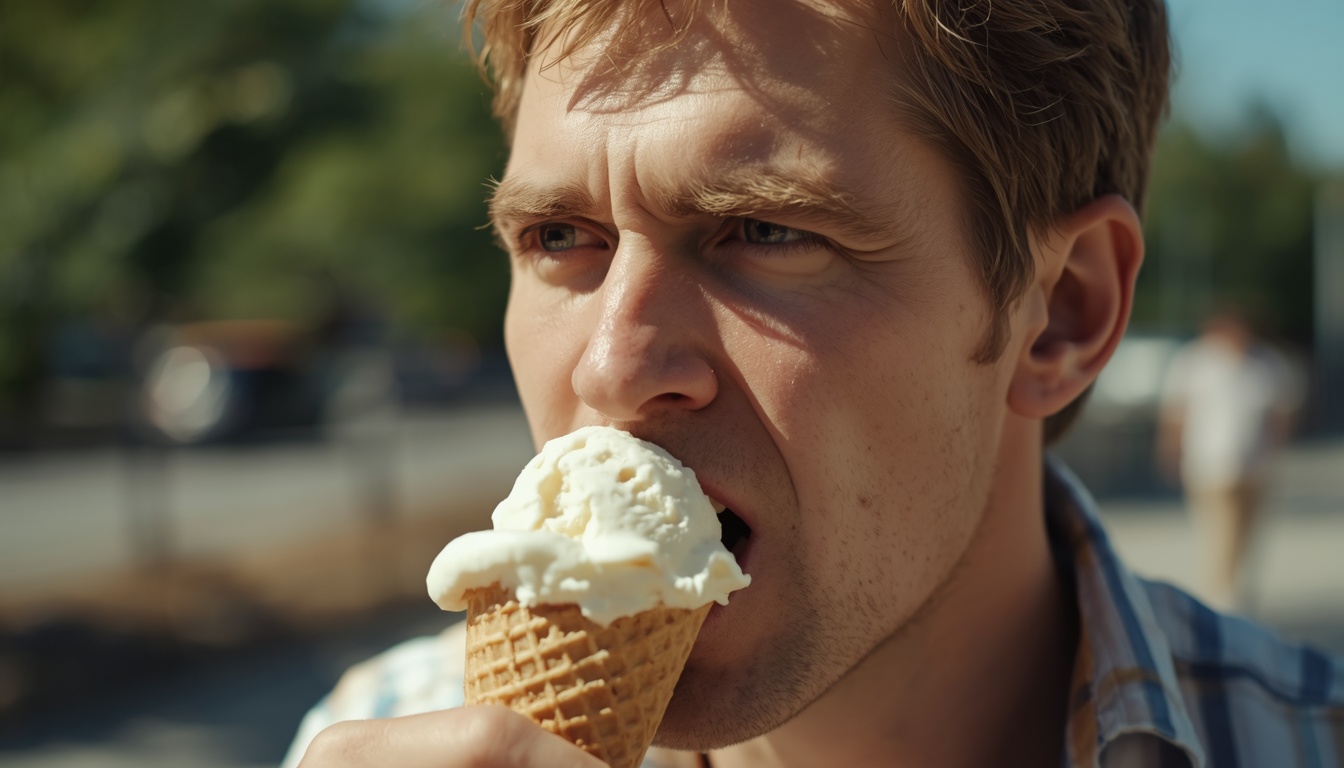
You take a fast bite of ice cream or a long pull on a frozen drink. A second later a sharp, cold-seeming pain blooms in the forehead, behind the eyes, or at the temples. It feels dramatic. Then it is gone.
That is brain freeze — the everyday name for a cold-stimulus headache (also called an ice-cream headache, or, more formally, sphenopalatine ganglioneuralgia). It is common, short-lived, and not a sign that your brain is actually freezing. The cold never reaches the brain. A nerve pathway in the mouth simply misfiles the signal as pain in the head.
What Brain Freeze Feels Like
A typical episode is stereotyped:
- Pain starts within seconds of cold food or drink hitting the roof of the mouth or the back of the throat
- It is sharp, stabbing, or pressing rather than a long, dull ache
- Most people feel it in the forehead or temples; some feel it behind the eyes or, less often, toward the back of the head
- It usually lasts a few seconds to under a minute; most surveys find it is gone well before 30 seconds
- It fades as the palate warms, even if you keep the same frozen treat nearby
It is the speed and location of the cold that matter. A slow lick of ice cream on the front of the tongue often does nothing. A slushy pulled through a straw against the soft palate is a classic trigger.
How Common Is It?
Very. In a questionnaire study of 618 adults published in Cephalalgia, researchers Philipp Burow, Stefan Watzke, and Stephan Zierz found that just over half of people reported at least one cold-stimulus headache. In a large Taiwanese survey of more than 8,000 adolescents led by neurologist Jong-Ling Fuh, about 40 percent reported ice-cream headache. A German school study found even higher rates in 10- to 14-year-olds, with a clear family pattern: children were more likely to get it if a parent did.
So if you get brain freeze and your friend never does, neither of you is odd. Sensitivity varies, and it often runs in families.
Why Cold in the Mouth Becomes Pain in the Head
The roof of the mouth is richly supplied by branches of the trigeminal nerve, the large cranial nerve that also carries sensation from the face, teeth, and forehead. Nearby sits the sphenopalatine ganglion, a cluster of nerve cells that helps explain the old medical name.
When something very cold hits the palate quickly, two things appear to happen together:
- A nerve alarm. Cold receptors fire hard. The trigeminal pathway that serves the palate also serves the forehead, so the brain can “refer” the signal upward. That is the same kind of mis-mapping that can make a heart problem feel like arm pain.
- A brief blood-flow change. In 2012, work presented by Dr. Jorge Serrador and colleagues in The FASEB Journal used transcranial Doppler ultrasound while volunteers sipped ice water through a straw aimed at the soft palate. During the pain, blood-flow velocity rose in the anterior cerebral artery; as the vessel response settled, the pain faded. Warm water could ease the episode.
The brain tissue itself has no pain receptors. What you feel is a protective covering and a facial nerve reacting to a sudden temperature drop in the mouth — then labeling that reaction as a forehead stab.
People who already live with migraine often describe more intense brain freeze. That does not mean ice cream causes migraine. It means a trigeminal system that is already jumpy may shout louder when the palate is chilled. Some surveys find a link with migraine; the Cephalalgia adult study did not find migraine as a strong risk factor for having brain freeze at all, though pain scores were higher when other headache types were also present. Both findings can be true: you can get the reflex without migraine, and migraine can make the seconds feel worse.
Weather-sensitive headaches work on different triggers — pressure, sleep, and hydration rather than a cold palate — but they share the same family of pain pathways. If barometric swings bother you, the same general headache hygiene still helps on hot days when slushies appear. Read more in Why Weather Changes Give You a Headache.
What Makes an Episode More Likely
Triggers are mechanical more than mysterious:
- Eating or drinking the cold item fast
- Direct contact with the soft palate (straws, big spoonfuls, ice chips held against the roof of the mouth)
- Very low temperature (frozen drinks more than cool yogurt)
- A warm mouth meeting a sudden freeze — the contrast, not the outdoor weather
- A personal or family tendency toward ice-cream headache
- In some people, a current migraine-prone stretch of days
A 2002 BMJ study in Canadian middle-school students made the speed point concrete. Children who ate a portion of ice cream in under five seconds got brain freeze more than twice as often as those who took more than 30 seconds.
You can also get a cold-stimulus headache from inhaling cold air hard on a winter run, or from a dental procedure that chills the mouth. The ice-cream version is simply the one people notice.
How to Stop It When It Starts
Once the cascade has begun, you cannot rewind the last sip. You can warm the trigger zone and wait out a very short clock:
- Press your tongue firmly against the roof of the mouth
- Sip a room-temperature drink
- Cover your mouth and nose and breathe warm air onto the palate
- Pause the frozen treat for a minute
Most episodes end on their own as soon as the palate is no longer iced. There is no need for pain medicine for a 20-second stab.
To prevent the next one, slow down. Let the first bites melt a little. Keep the cold off the soft palate. Use a spoon instead of a straw for slushies if you are prone.
Screen-day headaches are a different problem — near work, neck angle, and dry indoor air — but they also reward small pacing changes rather than panic. If your forehead pain usually follows hours at a laptop rather than a cone, see Why Screen Days Give You a Headache.
Myths vs Facts
Myth: Brain freeze means your brain temperature actually dropped.
Fact: The cold stays in the mouth and throat. The brain is insulated and continuously warmed by blood.
Myth: Only children get it.
Fact: Adults get it too. Rates are often higher in younger people, but surveys still find it in roughly half of adults who are asked.
Myth: It is an allergy to dairy or sugar.
Fact: Water ice, frozen fruit, and cold air can do the same thing. Dairy is not required.
Myth: If you get brain freeze you must have a serious vascular problem.
Fact: In healthy people it is a brief nerve-and-vessel reflex. It is not a stroke warning.
Myth: You should never eat frozen food if you get it.
Fact: Slowing down and avoiding the soft palate is usually enough. Many people still enjoy ice cream without drama.
Odd, inherited, or “wired that way” reflexes show up elsewhere in the body too — a sneeze when you step into sun, a jerk as you fall asleep. They are usually curiosities, not diagnoses. The photic sneeze is a good example of a harmless inherited quirk: Is It Normal to Sneeze in Bright Sunlight?.
When It Is Not “Just Brain Freeze”
See a clinician if:
- Head pain after cold food lasts many minutes to hours, not seconds
- The pain is always one-sided with tearing, a drooping lid, or a red eye
- You have new, severe headaches unlike anything before, especially with fever, neck stiffness, weakness, confusion, or a sudden “worst ever” onset
- Cold food triggers fainting, vision loss, or speech changes
- You avoid eating because you fear the pain, and the fear is taking over meals
Those patterns are not typical ice-cream headache. They need a proper history, not another cone experiment.
How to Enjoy Cold Food Without the Stab
- Take smaller bites and let them warm on the tongue first
- Keep straws away from the soft palate, or skip the straw
- Alternate a cold bite with a room-temperature sip
- On very hot days, start with a smaller portion so you are not gulping
- If you are in a migraine-prone week, treat frozen drinks as optional, not urgent
None of this requires giving up summer food. It is pacing, the same way you would not sprint the first hill after a month of sitting.
Frequently Asked Questions
Is brain freeze dangerous?
In its usual form, no. It is brief referred pain from a cold palate. It does not freeze brain tissue and does not, by itself, signal a clot or bleed.
Why do I feel it in my forehead if the ice cream is in my mouth?
The trigeminal nerve serves both places. The brain often files a sudden palate signal as forehead or temple pain — classic referred pain.
Does getting brain freeze mean I am prone to migraine?
Not necessarily. Many people without migraine get it. People with migraine may feel a stronger version. A single ice-cream stab is not a migraine diagnosis.
Can I train myself out of it?
You cannot delete the reflex, but you can reduce how often you trigger it by slowing down and keeping cold off the soft palate. Some people notice fewer episodes as they age.
Does holding a cold can to my forehead cause the same thing?
Skin cold on the forehead is a different stimulus. Classic brain freeze is from intra-oral cold. A cold pack on the brow may feel uncomfortable, but it is not the same palate-to-forehead mapping.
Should I take painkillers for it?
Almost never. The episode is over before a tablet could work. Warm the mouth and wait.
Conclusion
Brain freeze is a loud, short conversation between a cold palate, the trigeminal nerve, and blood vessels that supply the front of the head. It is common across ages, often familial, and almost always over before you have finished explaining it.
Eat the ice cream. Just give the roof of your mouth a moment to keep up.