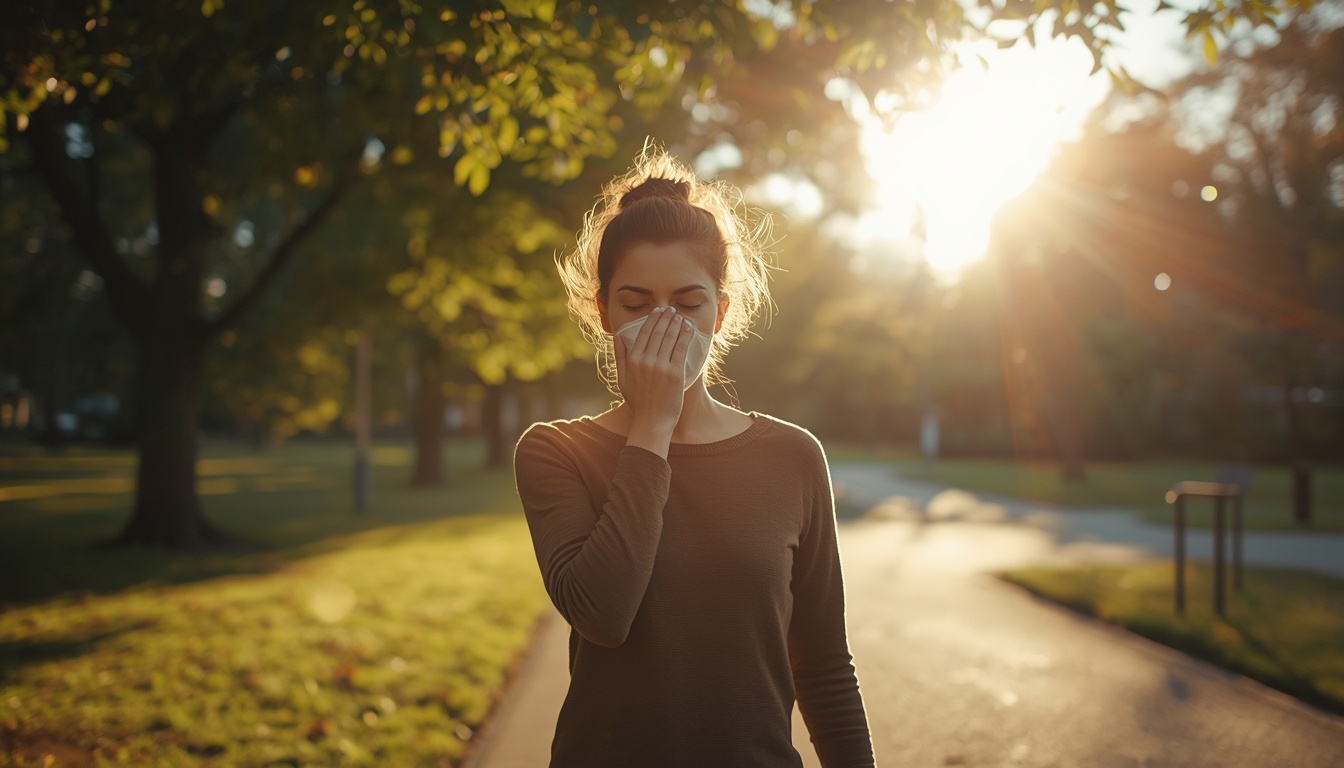
You leave a dim hallway. The sun hits your face. Before you can find your sunglasses, your nose fires one, two, sometimes three sneezes as if you had just walked into a cloud of pepper. There is no dust. There is no cold. There is only light — and a very old, slightly messy wiring trick in the brainstem.
That pattern has a name: the photic sneeze reflex, sometimes nicknamed the ACHOO reflex (autosomal dominant compelling helio-ophthalmic outburst). It is common, inherited in many families, and usually harmless. It is not an allergy to sunshine. It is a short-circuit between the pathway that shrinks the pupil and the pathway that tells the nose to sneeze.
This article explains what that reflex actually is, how common it is, what makes a burst more likely, simple ways to stay comfortable and safe, and the few situations that are not “just the sun.”
What a Sun Sneeze Actually Is
A sneeze is a protective burst. Sensory nerves in the lining of the nose — mainly the trigeminal nerve — detect irritation and trigger a coordinated explosion of air to clear the passage. Bright light is not supposed to be on that list. In people with the photic sneeze reflex, it sneaks onto the list anyway.
When light floods the retina, the brain sends a signal through the oculomotor system to constrict the pupils. Those fibers travel close to trigeminal pathways that serve the face and nose. In some people the two circuits talk to each other more than they should. A sudden jump in brightness is misread, briefly, as nasal irritation. The sneeze motor program runs. Then it stops.
The trigger is usually a change in light, not steady brightness. Walking out of a building, looking up from a phone into a bright sky, or turning toward a window after a dark room are classic setups. Once the pupils have adapted, the reflex often quiets even if you stay outside.
How Common Is This
Estimates vary because many people never mention it to a clinician. Surveys and genetic studies often place the trait in roughly one in four to one in three people, with higher rates in some families. It tends to follow an autosomal dominant pattern — one copy of the tendency from a parent is often enough — though more than one genetic contributor has been proposed.
It can appear in childhood. Many adults only notice it when they start driving, working under bright studio lights, or spending more time moving between indoor shade and midday sun. It is more often reported with sudden outdoor light than with indoor lamps, though very bright flashes can do the same thing.
Having the reflex does not mean your immune system is overreacting to UV light. People with seasonal allergies can have both a photic sneeze and a true allergic sneeze. The timing usually tells them apart: allergy sneezes cluster with pollen, pets, or dust and often come with itch and congestion. A photic sneeze clusters with the first seconds of glare.
Why Bright Light Hits the Nose Circuit
The leading explanation is crossed talk in the brainstem, not a problem in the nose itself. Pupil constriction is fast. The trigeminal system is also fast. When those neighbors share a little too much electricity, a light-driven command leaks into a sneeze command.
Other theories add extra flavor without replacing that core idea. Some researchers have asked whether light-sensitive cells or nearby blood-flow changes play a supporting role. Others have noted that people who already have a “twitchy” trigeminal system — frequent sneezers for any reason — may notice photic bursts more easily. The inherited pattern still points first to wiring, not to a dirty environment.
The reflex is not a sign that your eyes are weak. Vision can be excellent. The pupils still do their job. The sneeze is an extra, unused output on a line that was never meant to carry it.
Common Triggers Besides Midday Sun
Sunlight is the celebrity cause. These quieter cousins show up often:
- Stepping from an underground station or parking garage into daylight
- Looking toward a bright overcast sky, which can be surprisingly intense
- Camera flashes, photography strobes, and some medical exam lights
- Oncoming headlights at night after a dark stretch of road
- Very bright snow or water glare
- Looking up suddenly after focusing on a dim screen
A stuffy nose, recent cold, or high pollen day can make any sneeze more likely, including a photic one. That does not convert the sun reflex into an allergy. It just lowers the threshold.
Hidden Triggers and Everyday Annoyances
The reflex is usually a curiosity until it happens at the wrong moment. Drivers notice it most. A burst of sneezes as you exit a tunnel or turn toward low sun can close the eyes for a fraction of a second you would rather keep. Photographers, welders with inadequate filters, and people who work under sudden stage lighting notice it too.
Fatigue and dry indoor air can make the first outdoor minutes feel sharper, because the nasal lining is already a little irritable. Strong fragrance and recent spicy food can do the same. Related nasal patterns — including nighttime stuffiness — are covered in our piece on why your nose gets stuffy at night.
Some people also sneeze when they pluck eyebrows or touch a particular spot on the face. That is another trigeminal quirk, not proof that sunlight is “irritating the sinuses.”
What Actually Helps
You cannot delete an inherited reflex, and you do not need to. You can make the burst smaller, rarer, or better timed.
- Pause in the doorway. Let your eyes adapt for a few seconds before you look up or start walking into full glare.
- Use sunglasses when you know you will step from dark to bright — garages, matinees, long indoor meetings.
- Keep a pair in the car. Putting them on before you leave a tunnel or parking structure is more useful than rummaging after the first sneeze.
- Avoid staring straight at the brightest patch of sky the moment you exit.
- If you drive toward low sun, lower the visor first, then glance.
- Treat obvious nasal irritability: gentle saline, humidity in dry rooms, and allergy care if you already know pollen is a separate problem.
Holding a sneeze on purpose is rarely necessary and not worth straining. If a burst starts while you are holding something hot or driving, the safer move is a planned pause — foot off the accelerator for a second, eyes on a less glaring line — rather than a clenched face.
Myths vs Facts
Myth: Sneezing in sunlight means you are allergic to the sun.
Fact: True solar allergy involves skin reactions. A photic sneeze is a nerve-crossing reflex. The skin does not have to be involved at all.
Myth: It means your retinas are damaged.
Fact: The reflex can exist with healthy eyes. Sudden light is the trigger, not proof of injury.
Myth: Everyone sneezes in the sun and people who do not are “suppressing it.”
Fact: A large share of people never do this. Families often notice the trait running through relatives.
Myth: Looking at the sun on purpose will “train it away.”
Fact: Staring at the sun is unsafe for the retina. Adaptation in shade-to-sun transitions is enough. Do not use the sun as therapy.
When It Is Not Just the Reflex
See a clinician if sneezing in light is new, violent, or bundled with other changes:
- Eye pain, sudden vision change, halos, or a new severe headache with light
- Sneezing that comes with facial swelling, wheeze, or hives — those point to allergy or another reaction, not photic wiring
- A sneeze that is followed by fainting, a very stiff neck, or neurologic symptoms
- Uncontrolled bursts that make driving or operating tools unsafe even after sunglasses and adaptation pauses
An eye exam is also reasonable if light sensitivity is constant, not just a two-sneeze greeting at the door. Constant photophobia is a different problem from a brief inherited reflex.
A Note for Drivers and Parents
If you sneeze in glare, treat it like any other brief visual interruption. Sunglasses ready, visor down before the bright stretch, extra gap to the car in front when you know a tunnel exit is coming. Teach older children who have the same family trait the same habit: shade first, then look up.
Infants do not need a diagnosis because they sneezed once in a sunny park. Watch the pattern over months. If light also seems to cause distress, tearing, or eye avoidance all day, that belongs with a pediatric or eye visit rather than a reflex label.
FAQs
Is it harmful to sneeze in the sun?
The sneeze itself is ordinary. The only practical risk is a moment of closed eyes in a place that needed them open. Plan the transition.
Can I pass this to my children?
Often yes. Many families share it. That is not a disease you are handing down. It is a quirk of wiring.
Do antihistamines stop photic sneezes?
They help allergic sneezes. They are not a reliable off-switch for a light reflex. Use them if you have allergies. Do not expect them to erase the doorway burst.
Why two or three sneezes instead of one?
The motor program often runs in a short series. Once the pupils adapt and the trigeminal “false alarm” fades, it usually stops.
Does this mean I should avoid outdoor light?
No. Outdoor light is still useful for mood, circadian timing, and general health, as we discussed in why your skin still expects the sun. Use sunglasses for the transition. Do not hide from day.
When to See a Doctor
Most sun sneezers never need a medical visit for the reflex alone. Make an appointment if the pattern is new in adulthood without a clear bright-light trigger, if vision or headache changes ride along, or if sneezing in glare has become a safety problem you cannot manage with glasses and timing. An eye-care professional can also sort photophobia from this brief reflex.
Conclusion
Sneezing when you walk into sunlight is a surprisingly ordinary human variant. The pupils clamp down. A nearby sneeze circuit overhears the message. You exhale a burst that has nothing to do with pollen and everything to do with inherited wiring. Meet the glare halfway — pause, shade the eyes, then look — and the reflex stays what it usually is: a strange little greeting from a brainstem that never learned to mind its own business.