A sharp side pain that hits during a hard laugh is usually the same peritoneal or diaphragmatic irritation that causes exercise stitches, not a problem with your organs.
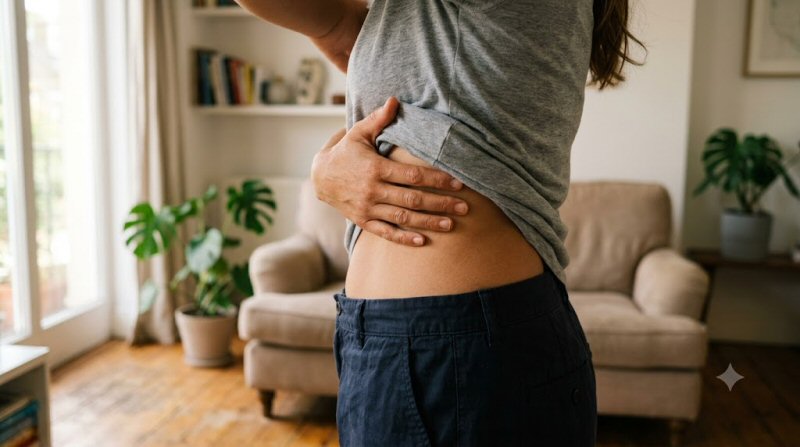
You are mid-story, the punchline lands, and the laugh comes out harder than you expected. Halfway through the second or third burst a sharp pinch grabs the side of your abdomen, just under the ribs. You have to pause, press a hand there, and wait for it to ease. The room is still laughing. You are trying not to look concerned.
This is common. The same mechanism that produces a classic side stitch during a run can fire when the diaphragm and abdominal wall are forced into rapid, irregular contractions by laughter. It is almost always benign and short-lived.
What This Symptom Feels Like
Most people describe a sudden, well-localized pain just below the rib cage on one side (more often the right). It can be sharp or stabbing at first, then settle into a dull ache or cramp. Some feel it more toward the flank or even refer a bit of discomfort up toward the shoulder tip. It usually builds during the laugh and fades within a minute or two once breathing returns to normal. You can still talk and move; you simply prefer not to take a deep breath for a moment.
It is the same character of pain many runners know as a stitch, only the trigger is a burst of laughter instead of footstrike and heavy breathing.
Common Causes
The leading explanation, drawn from work by Darren Morton and Robin Callister on exercise-related transient abdominal pain (ETAP), is irritation of the parietal peritoneum—the thin lining of the abdominal wall—plus mechanical tug on the ligaments that connect the diaphragm to the liver and other organs.
Hard laughter produces a series of forced exhalations. The abdominal muscles (rectus abdominis and the obliques) contract sharply while the diaphragm is jerked into rapid, uneven motion. That combination can:
- Create friction between the peritoneal surfaces
- Stretch the falciform and other visceral ligaments that attach to the diaphragm
- Momentarily reduce coordinated diaphragmatic excursion
A full stomach or recent large meal makes the organs sit higher and increases the chance of that tug. Sitting slumped or already breathing shallowly also leaves less room for the diaphragm to move cleanly. The result is the familiar stitch.
This is closely related to the side stitch that appears during running or other repetitive torso motion. The underlying tissue irritation is similar; only the trigger differs.
Why This Happens
The diaphragm is both a breathing muscle and a structural partition. It is tethered to the liver by the falciform ligament and to other organs by smaller peritoneal folds. When you laugh hard, the rhythm of breathing breaks. Instead of smooth up-and-down motion you get short, forceful pushes. Those pushes load the ligaments and can rub the parietal peritoneum against itself or against the visceral organs.
Morton and Callister’s surveys and reviews found that ETAP is most common in activities that combine torso extension with repetitive movement (running, horse riding, swimming). Laughter supplies the repetitive diaphragmatic and abdominal loading without the running. People who already carry more thoracic kyphosis (a rounded upper back) appear more susceptible, because the posture itself shortens the available space for diaphragmatic descent.
The pain is somatic, not visceral. That is why it is sharply localized and why pressing on the spot or changing posture often helps within seconds. Shoulder-tip referral, when it occurs, follows the phrenic nerve (C3–C5), the same nerve that supplies the diaphragm.
Less Common but Serious Causes
True organ problems can produce side or upper-abdominal pain, but they rarely appear only during a laugh and then vanish. Persistent pain that continues after you have stopped laughing, pain accompanied by fever, vomiting, blood in the stool or urine, or pain that worsens when you lie still and improves with movement is not a stitch. Gallbladder irritation, kidney stones, or (rarely) a musculoskeletal rib injury can coincide with a laugh, but they leave other signs.
A sudden, severe pain that does not ease with posture change and is paired with shortness of breath or chest pressure needs medical attention. Those are not features of ordinary laughter-related stitch.
Hidden Triggers
Several everyday factors raise the odds:
- Laughing soon after a meal, especially a large or fatty one
- Being already dehydrated or having had only sugary drinks
- Sitting with a rounded back or forward shoulders
- Shallow, upper-chest breathing before the laugh starts
- A recent bout of coughing or intense exercise that left the diaphragm and abdominal wall fatigued
People who experience frequent exercise stitches often notice the same pattern with laughter. The tissue is the same; the loading is simply delivered differently.
When to Worry
Most laughter stitches resolve in under two minutes and leave no residual tenderness. See a clinician if:
- The pain continues or returns for more than a day without any laughing or exercise
- You have fever, nausea, vomiting, or changes in bowel or bladder habits
- The pain is accompanied by shortness of breath, dizziness, or chest pressure
- You notice a lump, swelling, or significant bruising in the area
- The same spot hurts every time you take a deep breath, even at rest
A one-off stitch that eases when you stand, lean forward, or take a few slow breaths is the expected pattern.
Myths vs Facts
Myth: A side stitch means you are out of shape or your organs are “shifting.”
Fact: Well-trained athletes still get ETAP. The pain is more about momentary peritoneal or ligament loading than fitness level.
Myth: You should never laugh hard if you get stitches.
Fact: Occasional stitches are harmless. Improving posture, breathing, and meal timing reduces frequency for most people.
Myth: Pressing on the spot makes it worse.
Fact: Gentle pressure or leaning forward often shortens the episode by reducing ligament tension.
How to Manage
When the stitch hits:
- Slow the laugh and take a few controlled breaths, exhaling fully
- Lean forward slightly or gently press the painful spot with your fingertips while exhaling
- Stand and gently side-bend away from the pain if you are seated
To reduce future episodes:
- Leave a little more time after large meals before social events where hard laughter is likely
- Practice a few full diaphragmatic breaths each day—especially if you spend long hours seated
- Strengthen the core and improve thoracic mobility; better posture gives the diaphragm more room
- Stay normally hydrated and avoid large volumes of very sweet drinks right before prolonged talking or laughing
The same principles that help with rib or intercostal discomfort after a big sneeze also apply here: the sudden pressure is real, the tissue recovers quickly, and posture plus breathing mechanics make a difference.
If you already notice that long periods of sitting leave your breathing shallow, the mismatch described in the breath that was never meant for seated life is relevant. A diaphragm that spends most of the day in a shortened, quiet position is more likely to protest when suddenly asked to work hard and irregularly.
When to See a Doctor
Most people never need medical care for this. Make an appointment if the pain becomes frequent outside of laughing or exercise, if it is accompanied by other digestive or respiratory symptoms, or if you are simply unsure. A clinician can quickly distinguish a benign stitch from less common causes and, if needed, check posture or breathing patterns that may be contributing.
FAQs
Why does it usually hit on the right side?
The liver sits on the right and is suspended by the falciform ligament from the diaphragm. Mechanical loading is often greater on that side, so right-sided stitches are more common. Left-sided ones still occur.
Can children get this too?
Yes. Surveys of ETAP show higher rates in younger people. The same peritoneal and ligament mechanism operates; children simply laugh more freely and often have less stable core control.
Does it mean I have a weak core?
Not necessarily. Even people with strong abdominal muscles get stitches. Fatigue, recent meals, and posture play larger roles than absolute strength.
Is there any link to the phrenic nerve?
Yes. When the pain refers to the shoulder tip, it is following the phrenic nerve that innervates the diaphragm. That referral is well described in the ETAP literature and is not a sign of heart trouble in this context.
Will it go away if I just stop laughing so hard?
Usually within a minute or two. Continuing to force the laugh can prolong it, but once the rapid contractions stop the irritation settles quickly.
Should I avoid carbonated drinks?
Large volumes of any fluid, especially hypertonic or carbonated ones, can distend the stomach and increase ligament tension. Moderate amounts are rarely the sole cause, but timing matters more than the type of drink for most people.
Conclusion
A side stitch that arrives in the middle of a hard laugh is a normal, if inconvenient, consequence of how the diaphragm and peritoneal ligaments respond to sudden, forceful breathing. The same tissues that can protest during a run can protest during a joke. It almost always fades as soon as the laughter and the irregular breathing stop. Paying a little attention to posture, meal timing, and everyday diaphragmatic movement reduces how often it appears, while the occasional episode itself is simply a reminder that the body still expects its breathing muscles to be used in relatively smooth, upright patterns rather than in long stretches of stillness followed by explosive bursts.