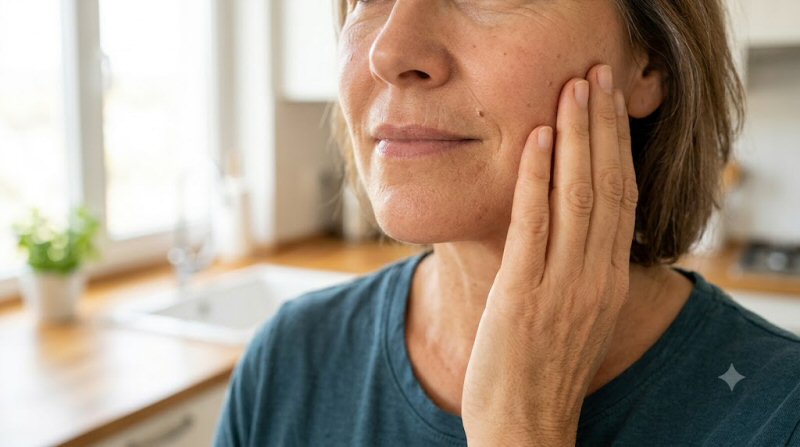
A sharp catch in the ribs during a sneeze is often a brief intercostal or cartilage flare from a sudden pressure spike, not a lung emergency.
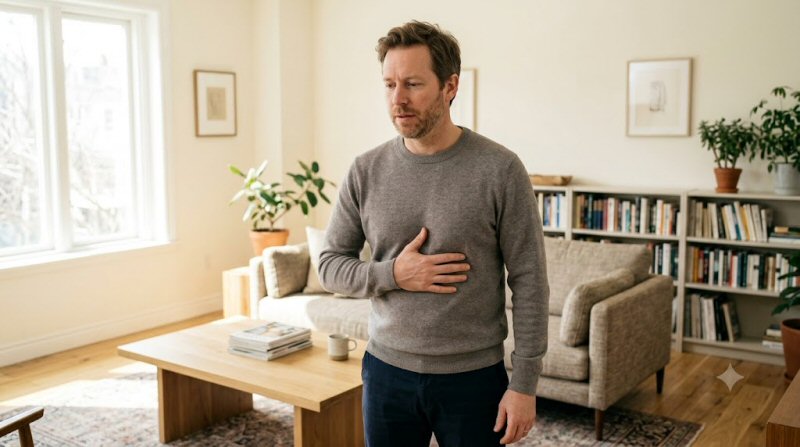
You feel the sneeze coming, you brace, and then a hot stitch grabs one side of the rib cage. For a few breaths it hurts to inhale fully, twist toward the sink, or laugh. The pain is so local you can almost put a fingertip on it. That pattern is common, and in most healthy people it is a chest-wall story, not a lung story.
A sneeze is a full-body pressure event. The same burst that clears the nose also yanks on the small muscles between the ribs and on the cartilage where ribs meet the breastbone. One awkward sneeze can leave a sore spot for days. A week of coughing can do the same thing more slowly.
What This Sensation Feels Like
People usually describe one of three versions.
The first is a single sharp catch at the moment of the sneeze, then a dull ache that fades over minutes to a day. The second is a tender band along one side, worse when you breathe deep, reach, or cough again. The third is a pinpoint sore spot just beside the breastbone that you can press and reproduce.
The pain is typically one-sided. It may travel a little toward the back or the upper belly, because the lower ribs and the abdominal wall share the same effort. Breathing can feel shallow, not because air cannot get in, but because a full inhale pulls on the sore muscle. Lying on the tender side often makes it worse. A pillow hug sometimes makes the next sneeze less brutal.
What it usually is not: a spreading pressure in the center of the chest, pain climbing into the jaw or arm, or breathlessness that does not match the rib tenderness.
Why a Sneeze Can Grab the Ribs
A sneeze is a reflex built to clear the airway. Work by physiologists such as John Widdicombe mapped it as a deep inspiration, a brief closure of the glottis, then an explosive expiration driven by the diaphragm, the intercostal muscles, and the abdominal wall. Air leaves the nose at high speed. Inside the chest, pressure spikes for a fraction of a second.
That spike is useful. It is also a load. The external and internal intercostals are thin sheets running between each pair of ribs. They stabilize the cage while you breathe and they contract hard when you cough or sneeze. A sudden, uneven contraction — especially if you were twisted, reaching, or already stiff from sitting — can strain a few fibers. The result feels out of proportion to the event because those muscles are used on every breath afterward.
Cartilage can complain too. The upper ribs meet the sternum through costochondral joints. Anne Proulx and Teresa Zryd, writing in American Family Physician, described costochondritis as chest-wall pain from those junctions, often worse with a deep breath, a cough, a sneeze, or a stretch. The second through fifth ribs are the usual sites. Pressing the sore junction reproduces the pain. The joint is not “out.” It is irritated.
Lower down, a less famous pattern is slipping rib, sometimes called Cyriax syndrome after the clinician who helped describe it. Ribs eight through ten do not always anchor as firmly to the sternum. A twist, a cough, or a sneeze can let a cartilage tip flick against the rib above and nip an intercostal nerve. People often report a pop, then a burning ache that can mimic a stomach problem.
None of this requires a dramatic injury. A dry indoor room, a lingering cold, and a week of desk posture are enough. The rib cage was built for walking, reaching, and occasional hard efforts, not for hours of a fixed slump followed by one violent reflex.
Common Causes
A brief intercostal strain. The most ordinary explanation. One sneeze, or a run of them, overloads a small muscle. The spot is tender between two ribs. It settles over several days if you do not keep provoking it.
Costochondritis. Inflammation or irritation at the front rib joints. Pain sits near the breastbone, may be on both sides, and flares with sneeze, cough, and torso twist. It is one of the more common non-cardiac reasons people seek care for chest-wall pain. Most cases are self-limited.
A cough or cold that never quite left. Repeated pressure events add up. The sneeze is only the moment you notice a cage that has been working overtime.
Slipping rib or a cartilage click. More often lower ribs, sometimes with a pop you can feel. Movement, sitting, and sneezing all set it off.
A stiff, flexed day. Hours of sitting leave the thoracic joints and intercostals under-moved. The first big pressure spike of the evening meets tissues that have not been loaded all day. A related pattern shows up as low-back ache after a long drive, where a still spine meets a sudden load.
Pregnancy or a recent growth spurt. A changing rib angle and a higher resting tension in the abdominal wall can make an ordinary sneeze feel sharper. This is usually mechanical, not dangerous, but new chest pain in pregnancy still deserves a clinician’s ear.
Less Common but Serious Causes
Most sneeze-related rib pain is benign. A few patterns are not, and they are worth knowing because the trigger looks the same.
Cough-induced rib fracture is uncommon but real. Case series, including work reviewed in thoracic clinics, find it more often in older adults, people with low bone density, chronic cough, or prolonged steroid use. The sixth through ninth ribs, often on the side and toward the front, are frequent sites. Focal pain that keeps worsening, pain that stops you taking a breath, or a crack you felt, belongs in a clinic. Imaging, not guesswork, separates a strain from a crack.
A violent sneeze can, rarely, contribute to a small pneumothorax or to a muscle hernia in someone with prior chest trauma or severe lung disease. Those events are exceptional. Sudden one-sided chest pain plus shortness of breath is the reason to get checked, not the ordinary tender spot.
Chest pain that is cardiac, a clot, or a lung infection can be noticed during a sneeze because the sneeze is when you paid attention. The company it keeps matters more than the sneeze itself: pressure or squeezing, sweating, nausea, pain into the arm or jaw, coughing blood, a swollen calf, fever, or breathlessness at rest.
Shingles can announce itself as a band of rib pain a day or two before the rash. Burning, one-sided pain in a strip, especially in an older adult, is a reason to be seen early.
Hidden Triggers
A few ordinary habits make the next sneeze more likely to hurt.
Mouth breathing in dry indoor air dries the nose and throat, so irritants trigger harder sneezes. The same dry air shows up as a scratchy indoor throat.
Holding the sneeze in, or stifling it against a closed mouth and pinched nose, raises pressure further. Letting the sneeze out into an elbow is both kinder to the room and easier on the rib cage.
Twisting to reach a tissue at the exact moment of the burst loads one side. Sitting slumped, then exploding upright, does the same.
A long bout of laughter, singing, or hard exercise on the same day stacks abdominal and intercostal fatigue. The sneeze is the last straw.
Acid reflux and post-nasal drip can drive extra throat clearing and cough, so the cage never gets a quiet hour. Treating the drip sometimes treats the rib.
When to Worry
Get urgent care if rib pain arrives with any of these:
- Pressure, squeezing, or heaviness in the chest, especially with sweating, nausea, or pain into the jaw, arm, or back
- New shortness of breath, fainting, or a racing heart that does not settle
- Coughing up blood, or one calf that is suddenly swollen and tender
- Pain after a fall, a car jolt, or a direct blow
- Fever with a productive cough, or pain that stops you breathing
- A visible bulge, a pop followed by a lump, or pain that is rapidly worsening
- Burning pain in a band, with or without a new rash
See a clinician in the next day or two if a focal spot is still sharply worse after several days, if you have osteoporosis or take steroids, or if the pain wakes you and is not clearly tied to movement. Reproducible tenderness on the chest wall is reassuring. Pain you cannot press, that appears with exertion and eases with rest, is a different conversation.
A sneeze can also fire a brief headache from the same pressure surge. That pattern is covered in why a cough can trigger a headache. Headache plus rib pain together is still usually mechanical. Headache with neck stiffness, confusion, or the worst pain of your life is not.
Myths vs Facts
Myth: Rib pain during a sneeze means a cracked rib. Fact: A strain or irritated cartilage is far more common. A fracture is the exception, mostly when bone is already vulnerable or the cough has been violent for days.
Myth: If you can point to the spot, it cannot be serious. Fact: Point tenderness favors the chest wall, which is reassuring, but it does not rule out a small fracture or an early shingles band. The rest of the picture still counts.
Myth: You should breathe as shallowly as possible until it vanishes. Fact: Very shallow breathing invites more stiffness. Gentle, comfortable breaths, with a hand or pillow splinting the sore side during the next cough, protect the spot without freezing the cage.
Myth: Costochondritis is a heart condition that was missed. Fact: It is a chest-wall diagnosis. Clinicians still exclude heart and lung causes when the story is unclear, because location alone is not proof.
Myth: Cracking your back will put the rib back in. Fact: A single pop is usually gas in a joint or a tendon flick, not a rib that left home. Forced twisting on an already angry cage often prolongs the ache.
How to Manage It
For a straightforward, movement-linked catch, simple care is enough.
Splint the next sneeze. Hug a pillow or press a flat hand over the sore side so the ribs do not have to stabilize alone. Turn your face into an elbow and let the sneeze finish. Do not pinch the nose and clamp the mouth shut.
Keep breathing. Short walks and easy nasal breaths stop the intercostals from locking into a guard. Heat on the tender band for ten or fifteen minutes can ease the muscle. Ice is reasonable in the first day if the spot feels freshly strained.
Ease the triggers. A humidifier, saline nose spray, and less throat clearing reduce the number of pressure events. If reflux is part of the week, smaller evening meals and not lying flat right after dinner help the cough that keeps restarting the pain.
Move the upper back, not just the sore rib. Gentle thoracic rotation in a chair, shoulder circles, and a few reaches overhead, stopped before sharp pain, restore the motion the cage missed during a sitting day. Side-stitch research on the diaphragm and abdominal wall, discussed in why a side stitch hits during exercise, is a reminder that trunk muscles hate a sudden demand after stillness.
Pain relief such as acetaminophen or an anti-inflammatory, if those are safe for you, can make normal breathing possible. Persistent pain is a reason to ask a clinician rather than to keep layering doses.
Expect a simple strain to fade over several days to two weeks. Cartilage irritation can linger longer, often a few weeks, and still be ordinary if it is slowly improving and tied to movement.
When to See a Doctor
Book a visit if the pain is new and you are unsure, if it has not clearly improved after a week, if you can feel a step or a click in a lower rib, or if night pain and morning stiffness are spreading beyond one spot. People with asthma, osteoporosis, cancer history, or recent chest surgery should have a lower threshold.
A clinician can reproduce chest-wall pain with palpation, check breath sounds, and decide whether a film or further tests are useful. Most of the time the exam is the test. That is a feature of this problem, not a dismissal of it.
FAQs
Why does only one side hurt? The sneeze is brief, and you are rarely square to it. A twist, a reach, or a slightly tighter intercostal on one side takes the load. Costochondritis can be one-sided or both.
Can a sneeze actually crack a rib? It can, but it is uncommon. Repeated hard coughing is the more typical trigger in published series, especially when bone density is low. A single sore sneeze in a healthy adult is much more often a muscle or cartilage flare.
How long should sneeze-related rib pain last? A mild strain often eases in a few days. Irritated cartilage may take a few weeks. Pain that is worsening, stopping sleep, or arriving with breathlessness should not be waited out.
Does holding a sneeze in protect the ribs? No. Stifling a sneeze against a closed airway raises pressure further. Supporting the sore side and letting the sneeze out is the gentler option.
Why does it hurt more when I laugh or bend to tie a shoe? Laughing, bending, and twisting use the same intercostals and abdominal muscles the sneeze just loaded. The tissue is irritated, not failing. Those moves should soften as the spot settles.
Is this the same as a side stitch? Not quite. A side stitch is a temporary diaphragm or abdominal-wall cramp during hard breathing in exercise. Sneeze rib pain is usually the cage itself, and it lingers after the breath has calmed.
Conclusion
A rib that complains when you sneeze is usually doing ordinary mechanical work. A pressure spike met a thin muscle or a front-rib joint that was already a little under-moved, dry-air irritated, or tired from coughing. Support the next sneeze, keep the cage breathing, and give the spot a few quiet days.
Chest pain still deserves respect. If the pain is pressure rather than a point, if breath is hard to find, or if the story includes fever, a clot risk, or a crack you felt, get it checked. For the common version, the rib cage is sore because it just did its job too hard, not because it is about to fail.