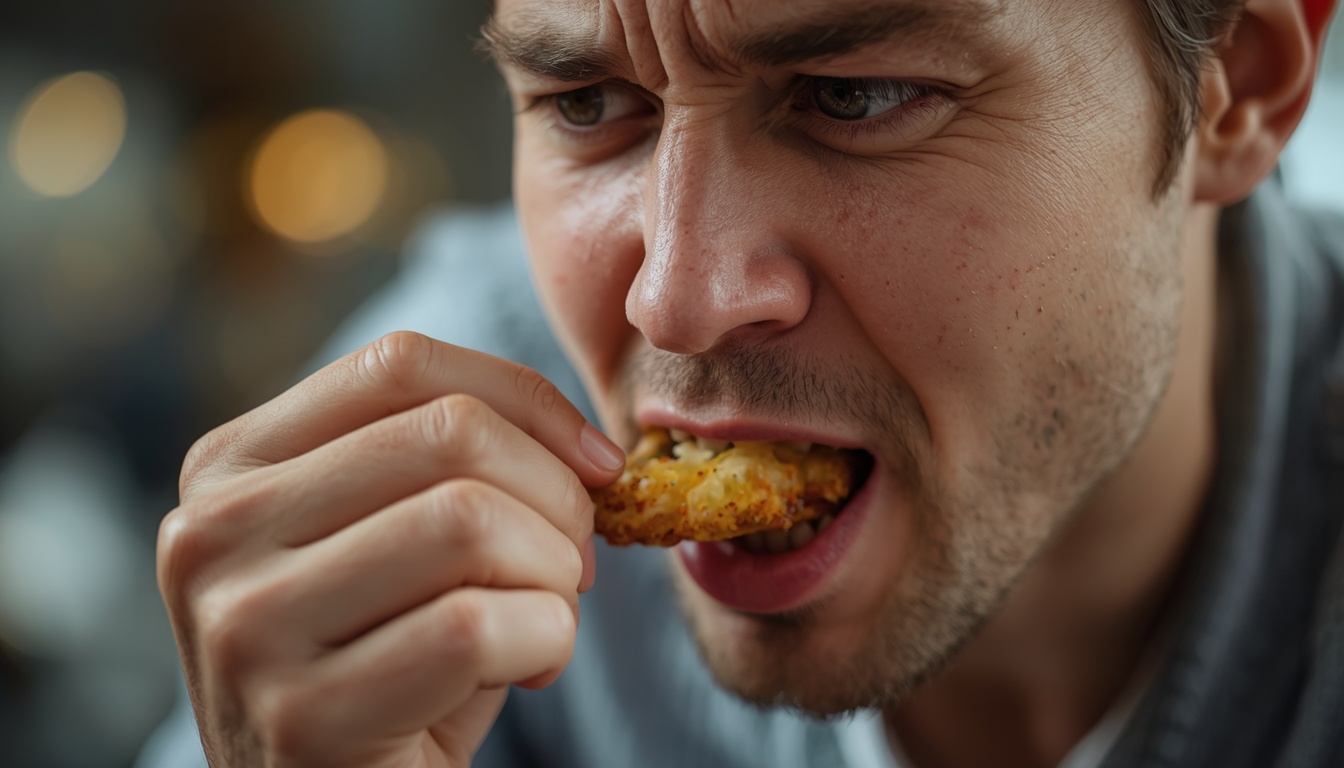

The first bite of chili is still on your tongue when your nose starts to drip. Eyes water a little. You reach for a napkin that was meant for the food, not your face. There is no sneeze storm, no itch, no sense that you just walked into pollen.
That pattern has a name: gustatory rhinitis. It is a food-triggered, watery runny nose driven by nerves, not by an immune attack on dinner. Classic challenge work by Gordon Raphael, Mindy Hauptschein Raphael, and Michael Kaliner at the National Institutes of Health showed that spicy foods raise watery nasal secretions and that the drip can be blocked by atropine — a clue that the pathway is cholinergic, not allergic.
If this happens only with hot, sharp, or steamy food and settles when the meal ends, it is usually a quirk of wiring, not a warning that you have developed a new food allergy.
What a Spicy-Food Runny Nose Feels Like
A typical episode is boringly predictable:
- Watery drip starts within a minute or two of the first spicy or steaming bite
- Both sides of the nose may run, or one side more than the other
- Eyes may water; the mouth may water too
- Little or no itching, little or no sneezing fit
- The tap slows when you stop eating the trigger
Raphael’s food-challenge lists still look familiar: hot chili peppers, horseradish, hot-and-sour soup, cayenne, Tabasco, black pepper, onion, vinegar, and mustard. Heat itself can add a vote. A steaming bowl can start the drip even when the spice is mild.
This is different from hay fever at the table. Allergic rhinitis usually brings itch, repeated sneezing, and a blocked, swollen feeling that does not clock out with the last dumpling.
Why Capsaicin Turns On the Tap
Chili “heat” is mostly capsaicin. It is not a taste in the sweet-salt-bitter sense. It binds TRPV1, the same ion channel that warns you about real heat and certain irritants. Those receptors live on sensory fibers in the mouth, throat, and nasal lining.
When capsaicin (or a close cousin in black pepper, mustard, or horseradish) lights those fibers, two things happen:
- A brainstem reflex fires parasympathetic, cholinergic nerves that tell nasal glands to secrete.
- Local sensory fibers can release neuropeptides such as substance P and CGRP, which add a little extra watery leak and vessel widening.
Reviews by Christos Georgalas and Ljiljana Jovancevic, and later summaries of non-allergic rhinitis from groups including Wytske Fokkens and Peter Hellings, place gustatory rhinitis in the neurogenic family — next to some forms of idiopathic rhinitis and “old age” watery drip — rather than in the allergy column.
Laura Blom’s early capsaicin trials and later work by Laura Van Gerven and colleagues showed that people with extra-reactive nasal nerves can have higher TRPV1 expression and more substance P in nasal fluid. Repeated, controlled capsaicin exposure can quiet that pathway. That is why the same chemical that starts the dinner drip is also studied as a nasal treatment for some non-allergic rhinitides.
Hot soup can recruit temperature-sensitive fibers even without much chili. Sour and pungent foods add their own irritant channels. Your nose is not “confused about dinner.” It is running a protective rinse that evolution never updated for restaurants.
How Common Is It?
Very. Many people notice it and never name it. It does not clearly favor one sex, and it is not tightly tied to having hay fever. Reviews of rhinitis classification note that gustatory rhinitis can appear from young adulthood through later life.
Some people only drip with the hottest curry. Others drip with warm broth. Neither pattern proves you are “weak” or “allergic to spice.” It mostly tracks how jumpy those oral-to-nasal reflex loops are — and how often you eat the triggers.
If one nostril always leads the drip, that can overlap with the ordinary nasal cycle, in which the two sides take turns being more open. The reflex still fires; the plumbing just looks lopsided for a few hours.
Common Triggers Beyond Chili
Capsaicin is the celebrity, not the only actor:
- Chili, cayenne, hot sauce, and many curries
- Horseradish, wasabi, and strong mustard
- Black pepper and large amounts of raw onion or garlic
- Vinegar-heavy or very sour dishes
- Steaming soups, tea, and coffee — heat plus aroma
- Sometimes simply a large, fast, hot meal
Your taste system was built to notice intensity. Modern kitchens deliver that intensity on purpose. The nasal reflex is part of the same alarm set that makes you salivate and tear up.
When It Is Not “Just Spice”
Most food-triggered drip is harmless. Pause if the story changes:
- Itch, hives, swelling of lips or tongue, wheeze, or dizziness with a specific food — that is not gustatory rhinitis; that needs urgent allergy care
- Thick, colored mucus, facial pain, or fever — think infection or sinus inflammation, not dinner nerves
- A constant watery drip that is worse when you bend forward, tastes salty, and is not tied to meals — that pattern can be cerebrospinal fluid leak and needs prompt medical review
- New, one-sided blockage with reduced smell or nosebleeds
- Symptoms that last all day, not just through the meal
A spicy-food drip that vanishes with the plate is almost never an emergency. A drip that does not care what you ate deserves a different checklist.
Myths vs Facts
Myth: A runny nose from chili means you are allergic to the food.
Fact: Raphael’s group found no histamine spike of the allergic type. Atropine blocked the drip. That is a nerve-and-gland reflex.
Myth: If you were tough enough, your nose would stay dry.
Fact: Tolerance to burn on the tongue and the nasal reflex are related but not identical. Regular chili eaters often drip less over time because TRPV1 pathways can desensitize — not because they “mind over matter” the mucus.
Myth: Dairy “coats” the spice and is the only fix.
Fact: Fat and casein in milk can help the mouth feel less fiery. They do not shut the nasal reflex as cleanly as time, cooler bites, or (when a clinician suggests it) an anticholinergic spray.
Myth: The drip means the spice is damaging your sinuses.
Fact: Brief watery secretion is a rinse, not an injury. Pain, fever, or lasting blockage is a different problem.
How to Make Meals Less Drippy
You do not have to give up flavor.
- Slow down. Smaller, cooler bites give the reflex less of a sudden punch.
- Mix heat with starch, fat, or yogurt-style sides so capsaicin hits in waves, not a wall.
- Keep a napkin ready and breathe through the nose between bites; mouth breathing can make the drip feel messier.
- If meals are wrecked by the drip, ask a clinician about a short-acting anticholinergic nasal spray used before known trigger foods. That approach follows the same muscarinic logic Raphael tested with atropine.
- For stubborn non-allergic drip in general, supervised nasal capsaicin protocols studied by Fokkens, Van Gerven, and others can reduce nerve reactivity over weeks. That is a clinic plan, not a kitchen experiment with raw chili oil.
- Simple saline rinses help if the nose already feels reactive from dry air or a cold, which can stack on top of a food reflex.
People who also sneeze in bright light sometimes have generally chatty trigeminal wiring. The two reflexes are not the same condition. They just share a neighborhood.
When to See a Doctor
Book a visit if food-triggered drip is new and severe, if you have allergy-like swelling or breathing symptoms, if the nose runs constantly away from meals, or if smell drops on one side. An ENT or allergy clinician can separate gustatory rhinitis from allergic rhinitis, chronic sinus disease, medication effects, and the rare leak that is not mucus at all.
Bring a short list of trigger foods and timing. That history is more useful than a random panel of food IgE tests for this particular story.
Frequently Asked Questions
Is a runny nose from spicy food an allergy?
Usually no. Gustatory rhinitis is a nerve reflex. Allergy more often adds itch, sneezing fits, hives, or systemic symptoms. Testing is for the second pattern, not for every chili drip.
Why do my eyes water too?
The same irritant fibers that serve the mouth and nose talk to tear pathways. Capsaicin and pungent vapors are good at recruiting both. Watery eyes at the table are common and short-lived.
Can I train my nose to stop doing this?
Many regular spice eaters notice a milder drip over time as TRPV1-bearing fibers become less dramatic. That is desensitization, not willpower. Jumping straight to the hottest sauce is a rough way to get there.
Does hot soup count if it is not spicy?
Yes. Temperature-sensitive fibers can start the same cholinergic gland reflex. Steam plus salt plus a little pepper is a classic mild trigger.
Will antihistamines stop it?
Oral antihistamines help histamine-driven allergy. They are often disappointing for a pure gustatory drip. Anticholinergic nasal sprays, timing, and cooler bites are closer to the mechanism.
Is it the same as a runny nose in cold air?
Related family, different trigger. Cold-air rhinitis also leans on sensory nerves and glands. Some people have both. The meal version is tied to food and heat; the outdoor version is tied to cold, dry air.
Conclusion
A napkin during chili night is usually a sign that your trigeminal and parasympathetic wiring still take “hot” and “pungent” seriously. Capsaicin on TRPV1, a cholinergic gland reflex, and a little neuropeptide splash explain the drip better than a new allergy.
Enjoy the food. Slow the bites if you want a drier face. Save the workup for drips that itch, swell, persist all day, or have nothing to do with what is on the plate.