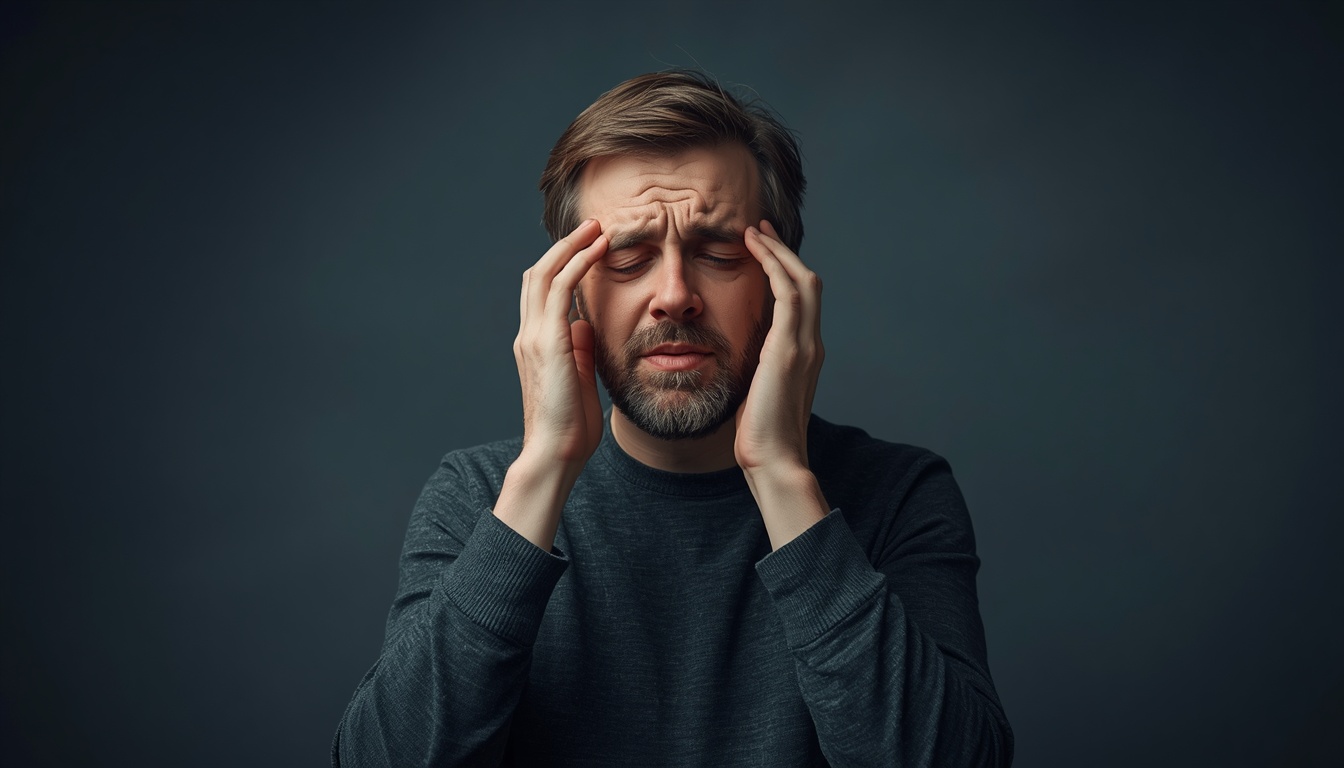
A headache after perfume, smoke, or cleaner is often trigeminal irritation or a migraine-prone brain. Most episodes fade once the air clears.

Someone walks past wearing a heavy fragrance, or you open a bottle of cleaner, and within a minute there is pressure behind the eyes. Sometimes it is only a tight band. Sometimes the light looks brighter, the stomach turns, and you need to step outside. The smell itself may already be gone. The ache is not.
That sequence is common enough that people treat it as a personal quirk. In most cases it is a real sensory reflex, not imagination and not a sinus infection that appeared in the aisle of a shop. The nose does two jobs at once. One nerve reports what the odor is. Another reports that the air is sharp, solvent-like, or simply too much. A headache-prone brain can turn that second signal into pain.
What This Sensation Feels Like
People describe a few familiar versions.
The first is a short frontal pressure that starts while you are still in the scented room and eases within half an hour of fresh air. The second is a one-sided, throbbing ache that arrives ten to thirty minutes after perfume, cigarette smoke, cooking fumes, or a scented candle, sometimes with nausea or a wish to lie down in a dim room. The third is a stuffy, heavy face that feels worse when you bend forward, more like a congested afternoon than a classic migraine.
You can often change the first kind. Leaving the room, opening a window, or rinsing the nose with plain saline softens it. The second kind may outlast the smell, because the attack has already started. Pain that is sudden and maximal, paired with confusion, weakness, a fever, or trouble breathing, is a different story.
What it usually is not: a carbon monoxide leak. That gas has no odor. A headache that tracks a specific fragrance, cleaner, or food smell is pointing at the scent, not at an invisible gas.
Common Causes
Most smell-linked headaches come from a short list.
Trigeminal irritation. Strong odors are not only smelled. Solvents, smoke, ammonia, bleach, and many fragrance ingredients also tickle trigeminal nerve endings in the nose and eyes. Richard Doty and other smell researchers separate this chemesthesis from true olfaction. The result can be burning, watering, and a tight headache without any infection.
A migraine-prone nervous system. Leslie Kelman, studying a large clinic series, found osmophobia — an aversion to smells during attacks — in roughly a quarter of people with migraine. Other groups, including work reviewed by Giorgio Zanchin and by Raimundo Pereira Silva-Néto, have reported higher rates once patients are asked about attacks specifically. Perfume, smoke, and food odors are the usual offenders. In the International Classification of Headache Disorders, osmophobia sits with light and sound sensitivity as a migraine-associated feature.
A smell that starts an attack, not just accompanies it. Some people notice the odor first and the headache later. That can be a trigger, or it can be the early phase of an attack in which ordinary smells already feel harsh. Both patterns are reported. Either way, the smell is a clue, not proof that the fragrance “poisoned” you.
A congested nose that has less room. If you already have a cold, allergies, or a bend-over headache from sinus pressure, a sharp odor lands on swollen lining. The same cleaner that is fine on a clear day feels punishing on a stuffy one.
Habit and setting. Poor ventilation, a closed car, a salon, and a newly cleaned office pack odor molecules into a small volume of air. The dose, not a rare allergy, is often what crosses the line.
Why This Happens
Swallow the science in three steps.
First, odor molecules reach the olfactory cleft high in the nose. The olfactory nerve reports identity: coffee, citrus, smoke. Alongside it, trigeminal fibers report intensity and irritation. That is why ammonia makes you pull back even before you “recognize” it.
Second, those signals converge in brainstem and thalamic relays that also handle pain. In a migraine-capable brain, the threshold is lower. Work associated with Zanchin and with Silva-Néto suggests smell aversion is more specific to migraine than to ordinary tension-type headache, though it is not a perfect divider. Kelman’s clinic figure was conservative. Later attack-based surveys often find osmophobia in a majority of migraine attacks. The range is wide because people are asked different questions.
Third, an attack, once started, sensitizes the system. Light hurts. Sound hurts. A mild leftover scent hurts. That is why stepping outside helps most when you leave early, and less once nausea and one-sided throbbing are established. The same logic shows up in a cough headache: a brief pressure spike can be harmless, but a full attack has its own timetable.
Indoor life makes the mismatch sharper. Human smell was built for a changing outdoor mix — plants, smoke from a fire, other people at a distance — not for a continuous cloud of fragrance in recirculated air. That broader story is the one in why your sense of smell still expects a living world.
Less Common but Serious Causes
A smell headache is usually benign. A few patterns deserve a clinician rather than another open window.
A sudden, worst-ever headache, even if a strong odor was nearby, needs urgent care. Odor does not protect you from other causes of thunderclap pain.
Headache with wheeze, throat tightness, hives, or swelling after a chemical exposure is an airway problem first. Leave the air and get help.
New headaches plus neurological signs — weakness, double vision, trouble speaking, a seizure — are not an osmophobia story.
True chemical overexposure, such as a spill in a closed room, can injure more than the head. Irritation plus confusion, chest pain, or vomiting after a solvent leak is an emergency, not a sensitivity.
Chronic daily pain blamed on every ordinary odor, with marked avoidance of shops, transit, and other people, can overlap with migraine, anxiety, and what some clinics call sensory hyperreactivity. It still deserves a proper headache history rather than a self-diagnosis of permanent chemical injury.
Hidden Triggers
The labeled bottle is not always the only driver.
Sleep debt and a skipped meal lower the migraine threshold, so the same cologne that was fine last week starts an attack today. Dehydration does the same.
Hormonal shifts, especially around menstruation, make smell triggers louder for many women.
Alcohol, bright light, and a long screen day stack with odor. The fragrance gets the blame because it was the last thing you noticed.
Scented detergent on a pillow puts the odor inches from the nose for hours. People call it a morning headache and never connect it to the wash.
Smoke from cooking, especially oil at high heat, is a trigeminal irritant even when the food smells appealing.
When to Worry
Seek urgent care if the pain is sudden and extreme, if you are confused, faint, weak on one side, or short of breath, or if a chemical exposure is ongoing.
Book a routine visit if smell headaches are new after age fifty, are becoming weekly, wake you from sleep, or arrive with fever, weight loss, or a change in smell that does not recover after a cold. Also get checked if every attack needs you to leave work, or if painkillers are creeping past a couple of days a week. Frequent acute medicine can itself feed headache.
A single episode that fades outdoors, in someone who already knows they are migraine-prone, can be watched.
Myths vs Facts
Myth: If a smell gives you a headache, you are allergic to it.
Fact: Allergy is an immune reaction, often with itching, hives, or wheeze. Most perfume and cleaner headaches are nerve irritation or migraine triggering, not an IgE allergy.
Myth: A smell headache means your sinuses are infected.
Fact: Infection usually brings fever, colored discharge, and facial pain that lasts days. A headache that tracks a fragrance and eases in clean air is a different mechanism.
Myth: Only people with migraine notice this.
Fact: Anyone can get a brief irritant ache from ammonia or dense smoke. Migraine-prone people are more likely to have the pain outlast the odor and bring nausea or light sensitivity. Kelman’s work and later osmophobia studies describe that second group.
Myth: Pushing through the smell will desensitize you today.
Fact: Staying in the trigger often lengthens the attack. Leaving early is the practical move. Long-term migraine care is a separate project, not a test of toughness in a candle shop.
How to Manage It
Step out of the air first. A few minutes by an open window or outdoors is both treatment and a test. If the ache softens, irritant load was doing much of the work.
Rinse irritant off the face and, if you tolerate it, use a plain saline nasal rinse. Do not add essential oils to the rinse. That is another odor load.
Keep the next hour quiet: dimmer light, no second fragrance, water, and a normal meal if you skipped one. For people who already have a migraine plan, use it early rather than waiting to see if the smell “wears off.”
At home, cut continuous sources. Unscented detergent, fewer plug-in fresheners, and a cracked window while cleaning change the daily dose more than a new supplement will.
If attacks are frequent, a clinician can treat the migraine pattern itself. Reducing attack frequency usually reduces odor vulnerability. That is more reliable than trying to avoid every smell on earth.
Track three columns for two weeks: the odor, how long you stayed, and whether you had slept and eaten. Patterns show up quickly.
When to See a Doctor
See a doctor if the headaches are new, worsening, or paired with neurological symptoms. See one if you are using pain medicine more than two days a week, if nausea is severe, or if odor triggers are limiting work and travel. Mention osmophobia specifically. It is a useful clue in the headache history that Kelman, Zanchin, and Silva-Néto have all argued should not be ignored.
Bring a short list of the worst odors and whether light or sound sensitivity came with them. That saves a vague visit about “sinuses.”
FAQs
Is a perfume headache the same as a migraine?
Not always. A brief tight ache that ends when you leave the room is often trigeminal irritation. One-sided throbbing with nausea, light sensitivity, or a need to lie down fits migraine, and perfume is a common trigger in that group.
Why do cleaning products bother me more than food smells?
Many cleaners contain irritant solvents that stimulate trigeminal endings as well as smell receptors. Food odors can still trigger migraine, but bleach and ammonia are harsher on contact.
Can this be a sign of a sinus infection?
A single smell-locked headache usually is not. Infection tends to last longer and bring congestion, facial pressure, and sometimes fever. Pressure that also spikes when you bend is covered in the bend-over headache article, and it still is not automatically an infection.
Will I always react to that scent?
No. Thresholds move with sleep, hormones, meals, and how many headaches you have had lately. The same fragrance can be irrelevant on a rested day and provocative on a depleted one.
Should I wear a mask around strong smells?
A well-fitted mask can lower the dose in a short exposure, such as cleaning or a crowded transit car. It is a tool, not a cure. If you need it every day in ordinary rooms, get the headache pattern assessed.
Are essential oils safer than perfume?
Not for this problem. Concentrated plant oils are still potent odorants and can be trigeminal irritants. “Natural” does not mean the migraine circuit will ignore them.
Conclusion
A headache from a strong smell is usually your nose reporting irritation, your migraine circuitry joining in, or both. Fresh air, less continuous fragrance at home, and early care of a known migraine pattern solve most episodes. Pain that is sudden and severe, paired with breathing trouble, or newly frequent deserves a clinician. The smell is a clue. It is rarely the whole diagnosis.