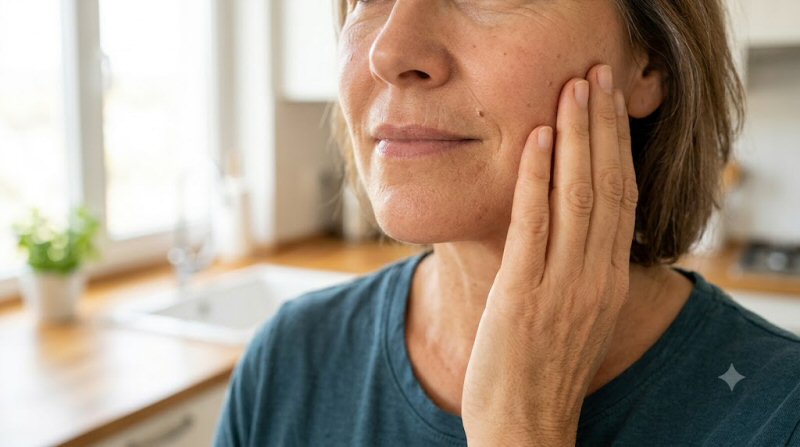
A sudden headache after a big laugh is more common than it seems. Most cases come from brief pressure changes inside the head and fade within minutes.
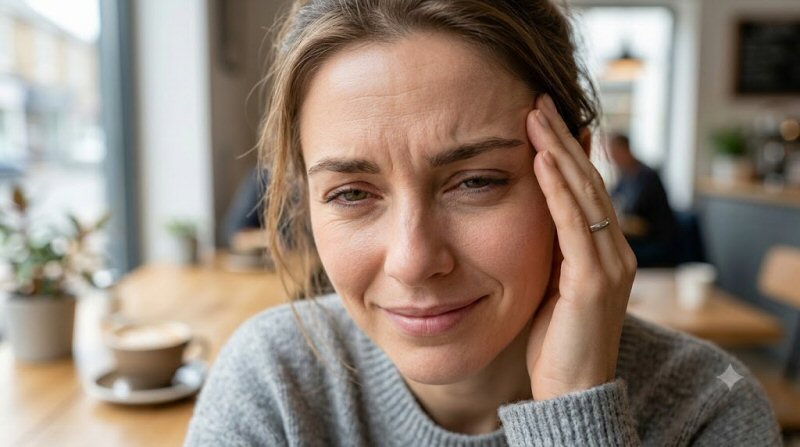
You are mid-conversation, something funny lands, and you laugh until your sides ache. Then a sharp or dull throb hits the back of your head or temples for a few seconds. It feels odd—laughter is supposed to feel good—so the headache is surprising. For most people this is a short, harmless reaction rather than a warning sign.
What This Headache Feels Like
The pain usually arrives suddenly, right as the laugh peaks or in the few seconds after. It is often bilateral, sitting at the back of the head or across the top, and it can feel sharp, stabbing, or like a brief pressure wave. In many cases it lasts only seconds to a couple of minutes and then disappears completely. Some people notice it only after a particularly deep or prolonged laugh, while ordinary chuckles leave them fine. The rest of the body feels normal—no nausea, no vision change, no weakness.
Why Laughing Can Trigger a Headache
Hard laughter is a form of straining. You hold your breath briefly, tighten the abdominal muscles, and push against a closed glottis—the same basic maneuver that happens when you cough hard or bear down. This Valsalva-type action briefly raises pressure in the chest and, by extension, in the veins and cerebrospinal fluid spaces around the brain. The International Classification of Headache Disorders recognizes “primary cough headache” as a syndrome triggered by coughing, straining, or other Valsalva maneuvers; laughing is frequently listed among those triggers. Julio Pascual and colleagues who helped refine the criteria have noted that the pain is typically sudden, peaks immediately, and resolves within minutes to two hours.
A second contributor is simple muscle tension. Prolonged laughing recruits the muscles of the face, jaw, neck, and upper back. If those muscles are already tight from a long day of screens or poor posture, the extra contraction can tip them into a short tension-type ache. In either case the mechanism is mechanical and temporary rather than a sign of damage.
Common Everyday Triggers
People most often notice the headache when laughter is especially vigorous—watching a comedy with friends, telling a story that gets the whole table going, or even a bout of contagious giggles. Dehydration, skipped meals, or already-tight neck and shoulder muscles make the same pressure change more noticeable. Sitting in a slumped posture for hours before the laugh can also leave the upper neck less able to absorb the brief surge. Related everyday reactions include the side stitch some people get when they laugh hard, or the hiccups that sometimes follow; both share the same sudden diaphragmatic and pressure shifts. You can read more about those patterns in our pieces on side stitches from laughing and hiccups that arrive with laughter.
Less Common but Important Causes
In a minority of people the same Valsalva trigger unmasks a structural issue, most often Chiari malformation type I, in which the lower part of the cerebellum sits a little lower than usual and can obstruct cerebrospinal-fluid flow during pressure spikes. Other rare secondary causes include spontaneous intracranial hypotension or certain posterior-fossa lesions. These situations are uncommon, but they are the reason new-onset cough or laugh headaches that begin after age 40, or that come with other neurological symptoms, are usually imaged. The majority of people who experience an occasional brief headache with hard laughter never have any of these findings.
When to Worry
See a clinician promptly if the headache is the worst you have ever felt, comes with vision changes, double vision, weakness, numbness, confusion, or vomiting, or if it lasts longer than a couple of hours. New headaches triggered only by laughing, coughing, or straining that start in middle age or later also deserve evaluation, even if they are brief. A headache that is progressively worsening or that appears after a recent head injury needs attention as well. Occasional, short-lived pain that resolves completely and leaves you feeling normal is almost always benign.
Myths vs Facts
Myth: A headache after laughing means you have a serious brain problem.
Fact: Most cases are primary and self-limited; imaging is reserved for new, persistent, or neurologically accompanied episodes.
Myth: Only older people get this.
Fact: While primary cough-type headaches are more often described after 40, younger adults can experience the same brief pressure-related ache, especially if they laugh extremely hard or are dehydrated.
Myth: You should avoid laughing to protect your head.
Fact: Laughter itself is not harmful. Managing the few modifiable factors (hydration, posture, neck tension) is enough for almost everyone.
How to Manage It
Most people need nothing more than time. Sitting upright, taking a few slow breaths, and letting the neck muscles relax usually clears the sensation within a minute. Staying reasonably hydrated and avoiding long periods of slumped sitting reduces how often the same laugh produces pain. Gentle neck and shoulder mobility—shoulder rolls, a slow chin tuck, or a short walk—can keep the supporting muscles from starting the day already tight. If the headache is frequent and bothersome, a clinician may discuss whether it fits the primary cough-headache pattern and, rarely, whether a short trial of medication used for that syndrome is appropriate. For the everyday version, simple habits are usually sufficient.
When to See a Doctor
Book a routine visit if the headaches are becoming more frequent, lasting longer, or starting to appear with ordinary coughs and sneezes as well. Seek same-day or emergency care for thunderclap-level pain, neurological symptoms, or any headache that feels distinctly different from previous ones. Mentioning the exact trigger (laughing hard) helps the clinician decide whether imaging is needed; many people with classic brief episodes never require it.
FAQs
Does this mean I have a cough headache even if I do not cough?
The same diagnostic category covers laughing, straining, and other Valsalva maneuvers. If your only trigger is hard laughter and the pain is brief, it is still considered part of that spectrum.
Why does it sometimes hit only the back of my head?
The pressure change is transmitted through the venous and cerebrospinal-fluid spaces; many people feel it most where those spaces are constrained near the base of the skull.
Can poor posture make it worse?
Yes. Hours of forward head position leave the suboccipital and upper cervical muscles tighter, so the same brief pressure surge is more likely to be perceived as pain.
Is it related to the headache some people get when they cough?
Very closely. Both are triggered by the same pressure spike. Our article on headaches that arrive with coughing covers the overlapping mechanisms.
Should I stop watching comedies?
No. The occasional brief headache is not a reason to avoid laughter. If it happens often, address hydration and neck tension first; most people find the episodes become rare.
Conclusion
A headache that appears in the middle of a hard laugh is usually the nervous system registering a momentary pressure change or a brief muscle squeeze. For the large majority of people it is short-lived, leaves no residue, and does not signal underlying disease. Paying attention to the rare red-flag features—sudden severe pain with other symptoms, new onset later in life, or progressive change—keeps the reassurance accurate. Otherwise, the safest response is to finish the laugh, take a breath, and let the sensation pass.