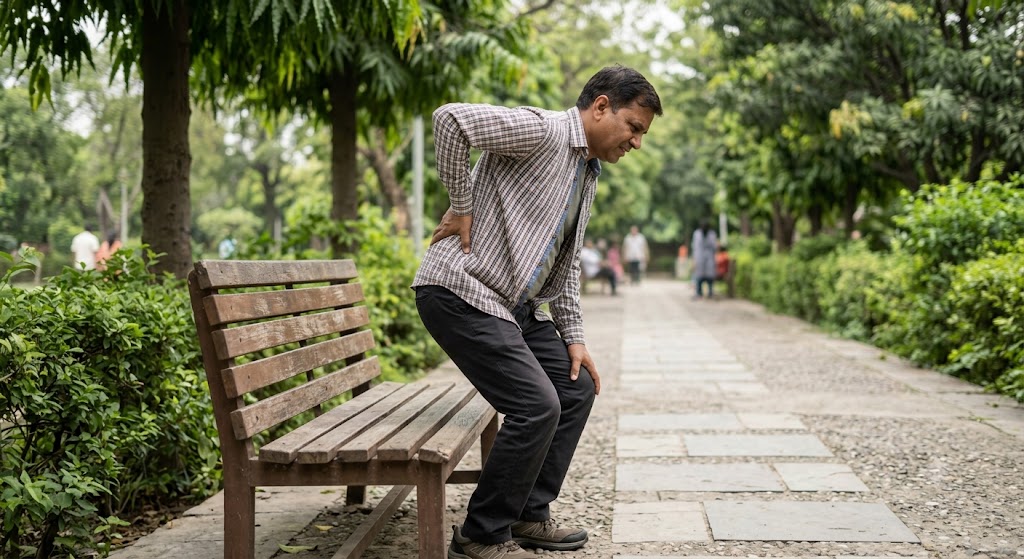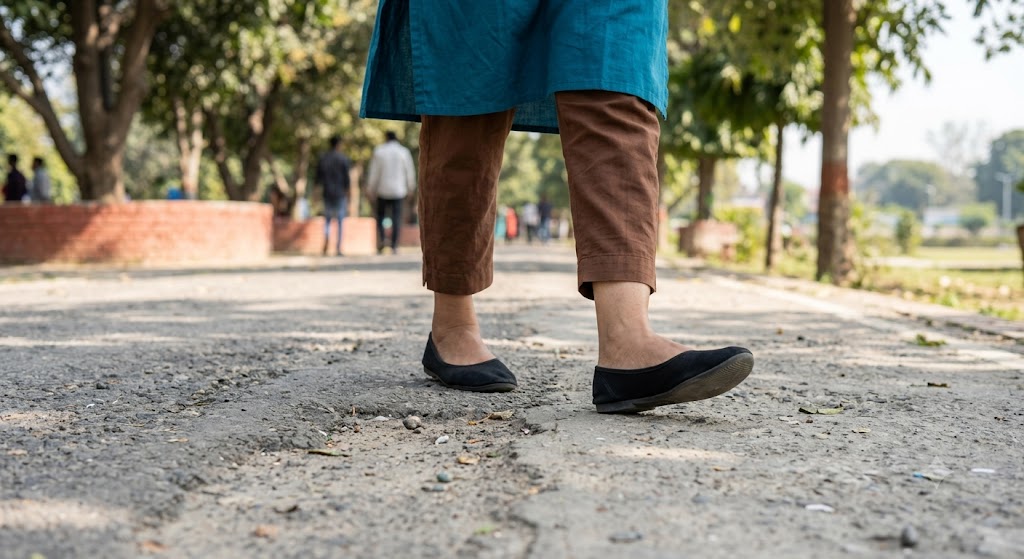
Toe numbness in tight shoes is often digital-nerve squeeze from a narrow toe box — not instant neuroma. Learn why fashion lasts pinch nerves, when tingling is a red flag, and how to give toes room to recover.
You slip into dress shoes, pointed flats, or last year’s sneakers that “almost” fit, and by mid-afternoon the third and fourth toes feel like they belong to someone else. The sensation is pins and needles, a cotton-ball pad, or a hot pebble between two toes. Kick the shoes off and feeling often floods back in a minute. The question is whether you damaged a nerve, or whether a narrow toe box simply borrowed space your toes need to stay awake.
Toe numbness in tight shoes is extremely common. The small digital nerves that run between the metatarsal heads live in a tight corridor. A pointed last, a stiff upper, or a size that ignores afternoon swell pinches that corridor. For most people the result is a reversible compression paresthesia — the same family of “asleep” feeling you get when a wrist or elbow is bent too long. What matters is whether feeling returns when the shoe comes off, whether one web space stays burning at night, and whether the numbness is paired with a spreading rash, weakness, or back and calf symptoms that do not care about footwear.
What This Numbness Feels Like
A typical benign tight-shoe toe story is:
- Tingling, buzzing, or a “sock bunched under the toes” feeling after an hour or more in narrow shoes
- Loudest in the third and fourth toes, or in the two toes the pointed last squeezes together
- Better within minutes of going barefoot or switching to a wide, soft pair
- Worse late in the day when feet have swollen a little
- Not accompanied by a cold, pale, or blue toe, an open sore, or a foot that will not lift
Some people feel a sharp zap between two toes when they push off. Others feel only dull cotton. The ache can travel into the ball of the foot without meaning the joint is destroyed. A true interdigital neuroma story often keeps a burning pebble between the third and fourth toes even in roomy shoes and may click when the metatarsal heads are squeezed. A simple squeeze story usually shuts off when the last stops pinching.
Common Causes
A toe box narrower than your forefoot. Fashion lasts are often built for a tapered look, not for five toes that want to splay. The digital nerves and the fat under the ball of the foot share a small space. When the upper clamps that space, sensory fibers fire first.
Afternoon swell in a morning size. Feet gain a little volume with heat, salt, standing, and a day’s walking. A shoe that felt snug at 8 a.m. can become a tourniquet at 4 p.m. Tight laces or a stiff vamp add the same effect.
Pointed or shallow lasts. Pointed toes shove the third and fourth digits together over the interdigital nerve. Shallow toe boxes squash the top of the toes against the upper. Both are mechanical, not mysterious.
A stiff midsole plus a long stride. When the shoe cannot flex where the toes need to bend, the forefoot jams forward into the box on every step. Downhill walking and sudden stops make it louder.
A preexisting web-space irritation. A small thickening around an interdigital nerve — historically described by Thomas G. Morton and later mapped by surgeons such as Coughlin and Mann — makes the same squeeze less tolerable. The shoe did not invent the anatomy. It advertised it.
Why This Happens
Digital nerves in the forefoot travel in tunnels between the metatarsal heads, just under the deep transverse metatarsal ligament. They are sensory first. Compression, stretch, and ischemia of those fibers produce tingling long before the nerve is structurally ruined. Classic nerve-entrapment physiology — the same logic Gelberman and Lundborg described in other tunnels — applies in miniature under the ball of the foot.
Thomas Morton’s 1876 description of pain in the fourth metatarsophalangeal region gave the common web-space problem its name. Later work by Betts, Nissen, Gauthier, Coughlin, and Mann framed many of these cases as perineural thickening in the third web space, where the medial and lateral plantar nerves can form a slightly larger communicating branch. A tight toe box does not have to create a full neuroma to make that branch complain. It only has to reduce the corridor for an afternoon.
The human forefoot also expects splay. Barefoot and wide-last walking let the toes spread and grip, a theme explored in why your toes still expect to spread and grip. A pointed dress last is the opposite brief: five digits forced into a triangle. Combine that with standing on unforgiving floors — the same world as heel pain after standing on hard floors — and the fat pad and the nerves share the complaint.
Hidden Triggers
- New shoes worn for a full workday instead of a short indoor test
- Fashion sneakers with a sleek last that looks wide in photos and is not
- Socks that bunch at the toes or run a thick seam under a web space
- Laces yanked tight over the midfoot, shoving the foot forward into the box
- Heat, long flights, or a salty lunch that add a little forefoot volume
- A sudden jump in step count in the same narrow pair
- High heels that dump weight onto the ball of the foot and crowd the toes further
- A second-toe length that sits longer than the hallux and hits the end of the shoe first
None of these prove a tumor or a dying nerve. They prove the corridor was smaller than the day’s load.
Less Common but Serious
Most tight-shoe numbness is local and reversible. Take the feeling seriously when:
- One toe stays white, blue, or icy after the shoe is off
- Numbness does not ease after days in wide, soft shoes
- Burning in one web space wakes you at night
- You cannot spread or lift the toes, or the foot slaps when you walk
- An ulcer, red streak, or spreading heat appears
- The same pins and needles climb from the toes into the calf and back
- You have diabetes, known neuropathy, or poor pulses in the feet
Those patterns can reflect ischemia, a true neuroma that needs a different plan, lumbar or tarsal-tunnel nerve issues, or skin breakdown. They are not the default story of a Saturday in pointed shoes.
When to Worry
Book a visit if numbness lasts at rest in roomy footwear, if one toe changes color, if an open spot appears, or if weakness joins the tingling. A clinician can often tell simple compression from a web-space neuroma, metatarsalgia, or a more proximal nerve problem with a history, a squeeze test between the metatarsal heads, and a look at the shoe. Imaging and nerve tests are for red flags or pain that refuses a mechanical script — not for every afternoon buzz that vanished when the pumps came off.
Myths vs Facts
Myth: Numb toes mean you already have Morton’s neuroma.
Fact: Many people have reversible squeeze. A neuroma is a specific irritated nerve in a web space that often stays loud even in wide shoes.
Myth: If the shoe is your size on the box, it cannot be tight.
Fact: Length is not width. A correct heel-to-toe number can still crush a wide forefoot. Afternoon swell changes the fit again.
Myth: Breaking in a painful pointed pair will train the toes.
Fact: Soft leather may give a little. Bone and nerve corridors do not remodel to a fashion last in two weeks. You are more likely to grow a blister and a louder nerve.
Myth: Only high heels do this.
Fact: Flat pointed shoes, tight cleats, ski boots, and sleek sneakers do the same job if the box is narrow.
Myth: Numbness that comes and goes is always dangerous.
Fact: Position- and shoe-dependent tingling that resolves quickly is the common pattern. Constant one-sided night pain is the pattern that deserves a closer look.
How to Manage It
Give the toes a wider box. Look for a last that is rounded or square at the end, not a wedge. There should be a little daylight around the toes when you stand. If the upper shows a bump over the fifth toe, the shoe already lost.
Fit later in the day. Try shoes when the foot is at its largest. Stand, walk, and climb a stair in the shop — sitting size lies.
Loosen the midfoot so the heel can stay back. A snug heel and a free toe box beat laces cranked over the arch that shove you forward.
Rotate pairs. A dress shoe for two hours plus a wide trainer for the commute is kinder than eight hours in the same pointed last.
Use a thin, wide sock. Thick socks in a marginal shoe steal the last millimeters the nerves wanted.
Unload the ball of the foot when you can. Shorter standing bouts, a slight heel drop instead of a sharp stiletto, and walking breaks help the same forefoot that aches after flat shoes.
Do not stretch a numb toe by force. Wiggle and splay on the floor after the shoe is off. Yanking a tingling digit does not open the corridor faster.
If a web space stays hot after a week of roomy shoes, a metatarsal pad that lifts and separates the heads — a tactic Gauthier and others used in conservative neuroma care — can be worth a short trial under guidance. Surgery is a last resort for a true neuroma that has failed unloading, not a first step for fashion-last tingling.
When to See a Doctor
See a clinician if:
- Color change, coldness, or an ulcer appears on a toe
- Numbness is one-sided, night-loud, and ignores wide shoes
- The foot is weak, slaps, or will not clear the ground
- Back pain, calf wasting, or saddle numbness joins the toes
- You have diabetes or known arterial disease
- A lump or click in one web space keeps growing
Bring the offending shoe. The last is often the most useful “scan” in the room.
FAQs
Why is it always the third and fourth toes?
That web space is a common traffic jam. A communicating nerve branch can be a little thicker there, and a pointed last pinches those two toes together first.
Can this become permanent?
Sustained, severe compression can irritate a nerve for a long time. Brief, shoe-dependent tingling that resolves the same day almost never writes a permanent sentence. Do not test the theory by living in the tight pair.
Do toe spacers help?
They can remind the toes to splay after the shoe is off. Inside a narrow box they become one more object competing for space. Use them as recovery, not as a way to make a pointed last honest.
Is this the same as my foot falling asleep when I sit?
Related family, different site. Sitting compression often involves a larger nerve near the knee or hip. Tight-shoe numbness is local digital-nerve squeeze under the forefoot.
Should I buy a full size up?
Length without width just lets the foot slide and jam the toes into the end. A wider last in your length is usually smarter than a longer narrow one.
Do I need an MRI?
Not for numbness that tracks a tight shoe and fades when you go barefoot. Imaging is for atypical, progressive, or one-sided night pain that has already failed a roomy-shoe trial.
Conclusion
Toes that go numb in tight shoes are usually digital nerves working in a corridor a fashion last refused to fund. The third and fourth toes complain first because that is where the box and the anatomy meet. Feeling that returns when the shoe comes off is a mechanical message, not a verdict. Choose a last that lets the toes splay, fit later in the day, and keep pointed pairs for short appearances. If a toe stays pale, a web space burns at night, or numbness ignores wide shoes, get it checked. For everyone else, the shoe was tight. Your toes are allowed to say so.