A painless toe click or snap while walking is often tendon glide, joint cavitation, or a sesamoid skip — not automatically arthritis. Learn when the sound is benign and when to get it checked.
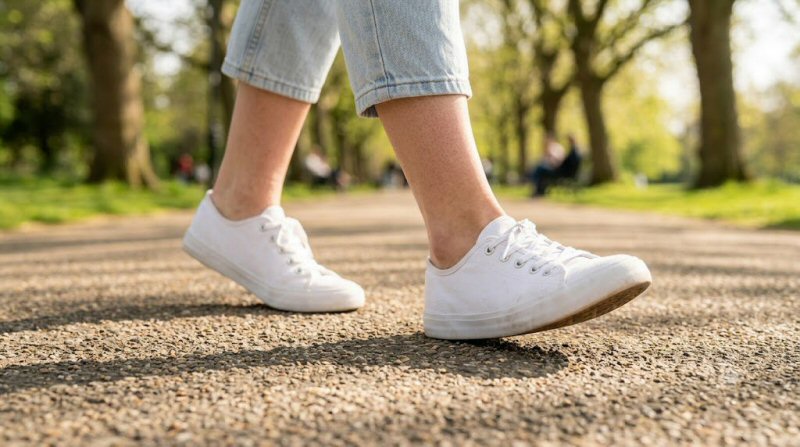
You take a step on a quiet floor and hear it from the front of the foot: a small click, pop, or snap under a toe. Sometimes it is the big toe as you push off. Sometimes a lesser toe flicks as you roll through. There is no sharp pain, no swelling, and the next step feels fine. Still, the sound is hard to ignore.
A painless toe click during ordinary walking is common. Each toe is a short stack of joints wrapped in tendons that must lengthen and then snap back into line as the foot leaves the ground. When those parts slide, seat, or briefly cavitate, they can make noise. The sound is not, by itself, a diagnosis of arthritis or a torn ligament. What matters is whether the click comes with pain, locking, swelling, or a toe that no longer lies flat.
What This Symptom Feels Like
People describe it in a few overlapping ways:
- A single click under the big toe as the heel lifts and you push off
- A snap in a second or third toe when you roll onto the ball of the foot
- A soft pop when you first stand and take a few steps after sitting
- A click that is louder in thin shoes, flip-flops, or on hard floors
- A sensation that a tendon is skipping over a knuckle on the top or bottom of the toe
The click may be louder in the morning, after sitting, or when you walk after a stretch of stillness. It often fades once the foot is warm. Many people can reproduce it on purpose by pointing and then pulling the toes up, and then cannot find it again after a few minutes of walking.
That pattern already argues against a fresh fracture or a major tendon tear. Those injuries usually announce themselves with pain, bruising, and a clear moment of trauma.
Common Causes
Most everyday toe clicks fall into a short list.
Tendon glide over a knuckle. Extensor tendons ride across the top of the toes. Flexor tendons, including the flexor hallucis longus under the big toe, run through tight tunnels and around sesamoid bones. If a tendon is a little tight after sitting, or a pulley is slightly thickened, it can catch and then flick. Classic descriptions of “trigger toe” and FHL catching come from surgical series associated with G. James Sammarco and William Hamilton. The skip can be painless at first.
Joint cavitation. The small joints of the toes — metatarsophalangeal and interphalangeal — can pop the same way knuckles do. Surfaces separate for a moment, a gas bubble forms and collapses in synovial fluid, and you hear a click. Joint-crack work by A. Unsworth and later imaging associated with Gregory Kawchuk applies to these small joints too: one pop, a short refractory period, no tissue tearing required.
Sesamoid skip under the big toe. Two small sesamoid bones sit under the first metatarsal head and act like pulleys for the big-toe flexor. As you push off, the tendon can slide a millimeter off a ridge and snap back. That skip is louder on a hard floor or in a thin-soled shoe.
Stiff fascia and a cold start. After a long sit, the plantar fascia, toe flexors, and intrinsic foot muscles are less compliant. The first few strides ask those tissues to lengthen quickly. A click at that moment is often the system finding its glide path, similar to the first-step heel tug people feel with a tight plantar fascia.
Footwear and surface. A narrow toe box, a stiff sole that blocks natural toe bend, or a very floppy flip-flop can change how the metatarsal heads roll. The same gait in a shoe that lets the toes spread and bend often sounds quieter. Work on toe-box squeeze and metatarsal loading associated with Michael Coughlin and Roger Mann helps explain why cramped shoes change both sensation and sound.
Why This Happens
Toes are not decorative. They complete the windlass of the foot: as the big toe extends at push-off, the plantar fascia tightens and the arch rises. That sequence needs clean tendon glide and joints that can fold and then reopen in a fraction of a second.
Modern walking often interrupts that sequence. Hours of sitting leave the toes still. Tight shoes hold them together. Hard indoor floors send a sharp load through the ball of the foot instead of spreading it across varied ground. When you finally walk, a tendon that has been parked in one position has to climb a small ridge. The flick is the catch releasing.
Cavitation is the quieter cousin. Synovial fluid in a small toe joint thickens a little with stillness. The first full roll-through separates the joint surfaces just enough for a pop. After that, the joint usually stays quiet until it sits still again.
None of this requires damaged cartilage. Noise is a mechanical event. Pain, locking, and swelling are the signals that the event is no longer just mechanical noise.
Less Common but Serious Causes
A minority of clicking toes have a structural problem that deserves a look:
- True trigger toe, in which the flexor tendon locks and then releases with a painful snap
- Sesamoiditis or a stress reaction under the big toe after a jump in mileage or a switch to thinner shoes
- A stiff or drifting big toe (hallux rigidus or hallux valgus) that clicks as the joint jams at the end of its range
- A plantar plate strain under a lesser toe, sometimes with a toe that starts to lift or crossover
- Rarely, a loose body or advanced arthritis in a toe joint after old trauma
These patterns usually add pain, swelling, a toe that will not lie flat, or a click you can feel as a lump jumping.
Hidden Triggers
Everyday habits make a quiet foot louder:
- Narrow or pointed shoes that squeeze the toes together
- Very thin soles on hard indoor floors
- Sudden jump in walking or running volume
- Long sits that leave the toes flexed in shoes under a desk
- Tight calves that force the foot to roll more through the toes
- Old sprains or a prior turf-toe style jam that left a slightly thicker pulley
Related walking noises from nearby joints can confuse the picture. A painless ankle click while walking or a knee click on the same stride can feel as if it started in the toes. Location matters: put a finger on the knuckle that actually jumps.
When to Worry
Get the foot checked if any of these show up:
- Pain with the click, especially under the ball of the foot or at a toe knuckle
- A toe that locks, stays bent, or will not lie flat
- Swelling, warmth, or redness around a toe joint
- Numbness or burning into the toes that does not fade when shoes come off
- A click that started after a clear twist, jump, or impact
- Progressive drifting of the big toe or a second toe that starts to crossover
- Night pain or pain that makes you limp
Painless, occasional clicking that warms out with walking is the pattern that usually stays benign.
Myths vs Facts
Myth: A clicking toe means the cartilage is wearing out.
Fact: Most everyday clicks are tendon glide or cavitation. Wear can cause noise, but noise alone does not prove wear.
Myth: You should stop walking until the sound disappears.
Fact: Gentle walking often quiets a stiffness-related click. Stopping movement can make the first-step skip worse.
Myth: Cracking toes will give you arthritis.
Fact: The same evidence that cleared knuckle cracking applies here. Repeated painless cavitation has not been shown to destroy toe joints.
Myth: Only old feet click.
Fact: Young walkers in stiff or narrow shoes click too. Age changes tissue stiffness; it is not a requirement.
How to Manage It
You do not need a special gadget for a painless click. You need the toes to move through their full range on a regular schedule.
- Walk more, sit less. The tendons stay better oiled when they work through the day, not only on a weekend hike.
- Choose a toe box that lets the toes spread. Related work on cramped toes is covered in tight-shoe numbness.
- After sitting, circle the ankle and gently pull the toes up and down before the first long walk.
- Barefoot or minimal time on a safe indoor surface can remind the toes to grip. Build that time slowly if your soles are used to thick shoes.
- Calf stretches and short hill or stair walking restore the push-off the big toe expects.
- If a specific shoe always brings the click, change that pair first.
If the click is new after a training jump, cut volume for a week and keep easy walking. Pain plus click is the cue to see a clinician rather than stretch harder.
When to See a Doctor
See a clinician — often a physical therapist or a foot and ankle specialist first — if the click is painful, the toe locks, or the shape of the toe is changing. They can tell tendon skip from joint jam, check the sesamoids, and decide whether imaging is useful. Most painless walkers leave with shoe and loading advice, not a procedure.
Urgent care is for a toe that will not move after trauma, sudden severe swelling, or signs of infection.
FAQs
Is it normal for only one toe to click?
Yes. The big toe and the second toe take most of the push-off load, so they are the usual noisemakers. A single noisy toe is common.
Why is the click louder in the morning?
Overnight stillness thickens synovial fluid a little and lets tendons rest in one position. The first roll-through is when a skip or cavitation is most likely.
Can wide shoes stop the clicking?
Often they help. A cramped toe box changes tendon line-of-pull and joint tracking. Space does not fix every click, but it removes a common irritant.
Does the click mean I have a bunion forming?
Not by itself. A bunion is a visible drift of the big toe with a bump at the base. A painless click without drift is usually tendon or joint noise.
Should I tape or splint a clicking toe?
Not for a painless, free-moving toe. Tape and rigid splints are for painful trigger patterns or unstable toes under guidance.
Can children have clicking toes?
Yes. Flexible young feet can click as tendons find their grooves. Pain, limp, or a toe that will not straighten still deserves a look.
Conclusion
A toe that clicks when you walk is usually a small mechanical story: a tendon skipping a ridge, a joint cavitating after stillness, or a sesamoid seating as you push off. The sound is common on hard floors and in shoes that pinch or freeze the toes. It is not automatically arthritis.
Treat the click as information. If it is painless and warms out, give the toes room, motion, and ordinary walking. If it hurts, locks, or changes the shape of the toe, get it examined. The goal is not a silent foot. The goal is a foot that still does the job it was built for — spreading, gripping, and pushing off — without pain.