Tailbone pain after a long sit is often pressure on a small, mobile last vertebra and its fat pad — not a broken spine. Learn why chairs load the coccyx, when pain is a red flag, and how to sit without aggravating it.
You stand up from a long meeting, a flight, or an evening on a hard dining chair and the first thing you notice is a bruise right at the bottom of the spine. Sitting back down is worse than standing. Leaning backward makes you wince. A soft couch is not always kinder than a firm seat. The ache can linger for a day or two after one long sit, which makes a small bone feel like a large problem.
Tailbone pain after sitting is common enough that clinics have a name for it: coccydynia. The coccyx is the last few fused or semi-fused vertebrae of the spine. It is small, slightly mobile, and sits under a modest fat pad. Chairs, car seats, and toilets load it in a way standing and walking rarely do. For most people the result is a pressure bruise and irritated ligaments, not a fracture or a damaged disc. What matters is whether the pain is only at the tip when you sit, how quickly it eases when you stand, and whether bowel, bladder, fever, or night pain join the story.
What This Ache Feels Like
A typical benign post-sit tailbone ache is:
- A deep bruise or “sitting on a pebble” feeling right at the tip of the spine
- Worse when you sit down, lean back, or slouch
- Easier when you stand, walk, or sit leaning slightly forward
- Louder on a hard chair, a wooden bench, or a thin airplane seat
- Sometimes tender to light touch at the very end of the spine
- Not accompanied by fever, unexplained weight loss, or trouble controlling bowel or bladder
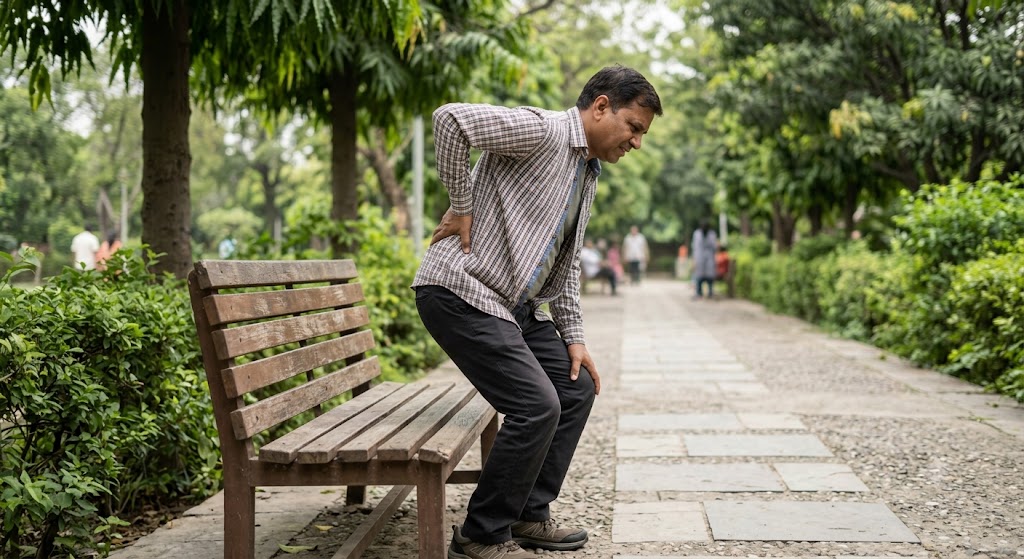
Some people feel a sharp poke the moment the pelvis hits the chair. Others feel a dull grind that builds through a two-hour film. The ache can travel a little into the glutes or the very lowest lumbar segments without meaning those discs have failed. Pain that is only in the low back after sitting, rather than at the tip, is a different mechanical story, covered in Is It Normal for Your Back to Hurt After Sitting All Day?.
A long drive can mix both: flattened lumbar curve plus a seat pan that tips the coccyx into the cushion. That combination is why post-drive backache is treated separately in Is It Normal for Your Low Back to Ache After a Long Drive?.
Why Sitting Loads a Bone That Walking Barely Touches
When you stand or walk, body weight travels through the hip joints and the sit bones — the ischial tuberosities — more than through the coccyx. When you sit, the pelvis rolls and a triangle of contact appears: two sit bones and the tailbone. How much of that triangle the coccyx takes depends on the chair, the slouch, and the shape of the last vertebrae.
Jean-Yves Maigne and colleagues who specialized in coccyx pain used sitting and standing X-rays to show that some tailbones flex or even sublux posteriorly under sitting load. The joint between the sacrum and coccyx, and the small joints between coccygeal segments, can move a few degrees. That motion is useful. It is also a place ligaments can get angry after hours of compression.
Franco Postacchini and Mauro Massobrio classified coccyx shapes. A straighter, more vertical coccyx or one that already hooks forward can take more of a sitting load than a gently curved one. Anatomy is not destiny. It does explain why two people can leave the same meeting with only one of them hunting for a doughnut cushion.
Patrick Fogel and later reviewers such as Lesley Lirette described the same clinical pattern again and again: pain on sitting, relief on standing, local tenderness at the tip, and a normal-looking lumbar spine. The problem is often local pressure and local ligaments, not a slipped disc two levels up.
Hard Chairs, Soft Couches, and a Thinning Cushion
The coccyx has a small fat pad over it. Rapid weight loss, a naturally lean build, or simply aging can thin that pad. A thinner pad means the bone meets the chair sooner. Hard wood, plastic classroom seats, bleachers, and some “ergonomic” stools with a cutout that is the wrong size all focus pressure on a few square centimeters.
Soft couches are not automatically kind. A deep sofa lets the pelvis roll backward. The lumbar curve flattens and the coccyx tucks under, increasing the angle at which it presses the cushion. Maigne’s imaging work is useful here: the sitting angle matters as much as the softness of the foam. Leaning slightly forward, or sitting more on the sit bones than on the tip, often drops the pressure even on a firm chair.
Other modern loads include:
- A wallet or phone in the back pocket that tilts one side of the pelvis
- Cycling on a narrow saddle that meets the perineum and coccyx
- Constipation or long straining on a toilet, which loads the same ligaments from the inside
- A recent fall onto ice or a missed chair that bruised the tip weeks earlier
- Pregnancy and the months after birth, when pelvic ligaments are more lax and sitting posture changes
Hip tightness after long sitting can change how the pelvis rests on the chair. That pattern is covered in Is It Normal for Your Hips to Feel Tight After Sitting?. A stiff hip flexor is not the same as a sore coccyx, but they often share the same afternoon.
Hidden Triggers That Make Sitting Worse
The same chair can feel fine on Tuesday and brutal on Saturday. Common amplifiers include:
- A sudden jump in sitting hours after a week of walking meetings
- New weight loss that thins the pad over the tip
- A hard dining chair after months of a well-padded office seat
- Slouching to see a laptop on a low table
- Crossing one leg for a whole film, which twists the pelvis on the seat
- A recent bout of diarrhea or constipation that leaves the pelvic floor guarded
- Cold, unpadded stadium seats
- Sitting immediately after a workout that already fatigued the glutes
Women report coccydynia more often than men in many clinic series. Pelvic shape, a slightly more posterior coccyx in some people, and pregnancy-related ligament change are the usual explanations — not a character difference. Men are not immune. A narrow bike saddle and a wallet are classic male-pattern loads.
When the Ache Is Usually Harmless
The reassuring pattern is pain at the tip that:
- Starts after a long sit or a known bump
- Eases within minutes of standing and walking
- Lets you sleep once you find a side-lying position
- Improves over days to a few weeks with less sitting load
- Has no fever, no saddle numbness, and no new bowel or bladder change
A bruise of the fat pad and a strained sacrococcygeal ligament behave like other small soft-tissue injuries. They dislike compression and like circulation and time. They do not require an MRI on day one.
Less Common but More Serious Causes
Tailbone pain is not always a chair problem. Seek prompt care if you notice:
- Pain after a high-energy fall, especially if you cannot sit at all or there is visible deformity
- Fever, redness, or a tender swelling that could be infection
- Unexplained weight loss, night pain that does not change with position, or a history of cancer
- Numbness in the saddle area, or new trouble with bowel or bladder control
- Pain that is mainly rectal, or bleeding with bowel movements
- Pain that steadily worsens for weeks despite standing more and sitting less
Rare local problems include fracture after a fall, an inflamed pilonidal area (usually a little higher and off-midline in the cleft), referred pain from the lowest lumbar or sacral segments, and, very uncommonly, a local tumor. Those are why a pain that ignores posture and time deserves an exam rather than another cushion.
Myths vs Facts
Myth: Tailbone pain means the bone is broken. Fact: Most sitting coccydynia is ligament and fat-pad irritation. Fractures happen after falls, not after a staff meeting.
Myth: You should never sit until it heals. Fact: Standing all day creates its own problems. Short sits with a forward lean or a wedge that unloads the tip are usually better than rigid avoidance.
Myth: A doughnut cushion fixes everyone. Fact: Some doughnuts drop the sit bones into a hole and leave the coccyx hanging under tension. A wedge that tips the pelvis forward, or a cutout aimed at the tip, works better for many people.
Myth: If an X-ray looks normal, the pain is imaginary. Fact: Standard standing films often miss sitting instability. Maigne’s dynamic sitting views were designed for that gap. Normal bone shape does not rule out angry ligaments.
Myth: Surgery is the usual next step. Fact: Most people improve with load management, pelvic-floor relaxation if they are guarding, and time. Coccygectomy is reserved for a small group with clear structural problems after conservative care fails.
How to Make Sitting Kinder to the Tailbone
You do not need a new spine. You need less peak pressure on a small tip.
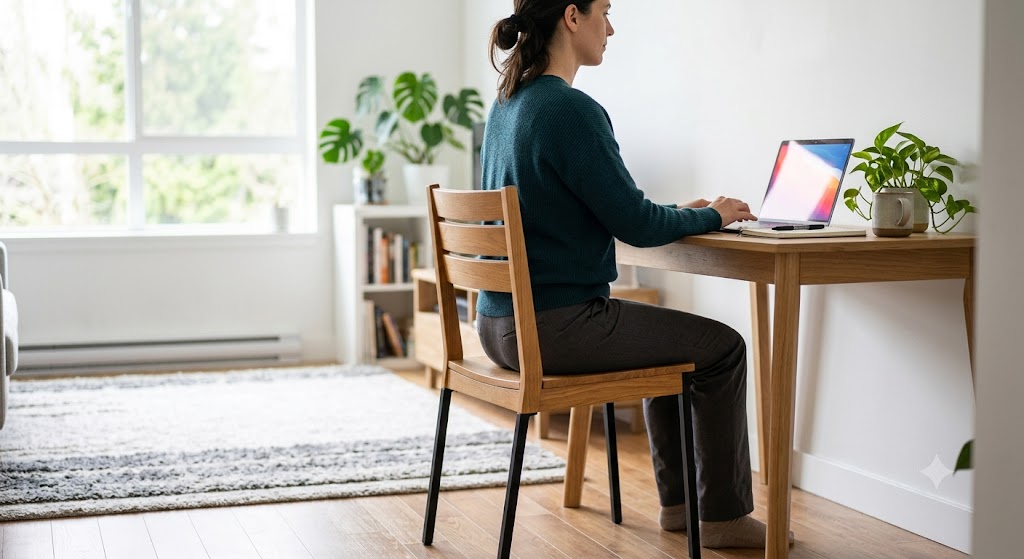
- Sit more on the sit bones. Tip the belt buckle slightly forward so the low back has a gentle curve.
- Use a firm wedge or a folded towel under the thighs, not a sagging pillow under the whole pelvis.
- If you try a cutout cushion, place the gap under the tip, not under the sit bones.
- Stand or walk for two minutes every half hour on long desk or travel days.
- Take the wallet and phone out of back pockets.
- On a plane or train, sit tall on the front half of the seat rather than slumping into the backrest for hours.
- Sleep on the side with a pillow between the knees if lying on the back loads the tip.
- After a known bump, ice briefly in the first day or two, then ordinary movement as pain allows.
Pelvic-floor clenching is a common extra. When the tip hurts, people guard. Gentle belly breathing and letting the sit bones widen on the chair can lower that extra squeeze. If pain lasts more than a few weeks, a clinician who treats coccydynia — often a physical therapist familiar with pelvic mechanics — can check sitting angle, local tenderness, and whether the pelvic floor is part of the loop.
When to See a Doctor
Book an appointment if tailbone pain lasts more than a few weeks, followed a fall, or stops you from sitting at work. Go sooner for fever, saddle numbness, bowel or bladder change, night pain that ignores position, or a lump in the cleft. Bring a simple timeline: when it started, which chairs are worst, and whether standing always helps. That story is more useful than a stack of unfocused scans.
FAQs
Is it normal for my tailbone to hurt after sitting on a hard chair? Yes. Hard seats raise peak pressure on a small bone and its fat pad. The ache is common and usually settles when you unload the tip and sit with a slight forward pelvic tilt.
Why does a soft couch sometimes feel worse than a firm chair? A deep sofa lets the pelvis roll backward, which tucks the coccyx under and can increase the sitting angle even though the foam feels kind. Firm and slightly forward often beats soft and slumped.
Can losing weight make tailbone pain worse? It can. The pad over the tip thins with rapid loss or a very lean build, so the bone meets the chair sooner. The answer is better sitting mechanics and a brief unloading cushion, not necessarily gaining the weight back.
Should I get an X-ray for tailbone pain after sitting? Not automatically. If there was no fall, if standing eases the pain, and if there are no red flags, a few weeks of load change is reasonable first. Imaging is more useful after trauma or when pain ignores posture.
Does a doughnut pillow help tailbone pain? Sometimes. It helps when it unloads the tip. It hurts when it drops the sit bones into a hole and leaves the coccyx hanging. A forward wedge or a well-placed cutout is a better first experiment for many people.
Can constipation make the tailbone hurt? Yes. Straining loads the same ligaments from inside the pelvis. Softer stool and less time hovering on the toilet often help the tip as well as the bowel.
Conclusion
A sore tailbone after sitting is usually a small bone doing a job chairs invented. Walking barely loads the coccyx. Sitting can park a large share of your weight on a few mobile segments and a thin pad. Hard seats, slouching, a missing wallet-shaped tilt, and a recently thinner cushion all raise the peak.
The useful response is mechanical, not catastrophic. Sit more on the sit bones, interrupt long sits, take objects out of back pockets, and give irritated ligaments a week or two of lower peak pressure. Worry less about a meeting breaking your spine. Worry more if the pain ignores standing, follows a hard fall, or arrives with fever, saddle numbness, or bowel and bladder change. Those are the moments a tailbone stops being a chair problem and becomes an exam.