A tight or full feeling in your stomach after a large meal is usually just normal stretch from the food itself. Learn the simple physiology, common triggers, and the few times it is worth a closer look.
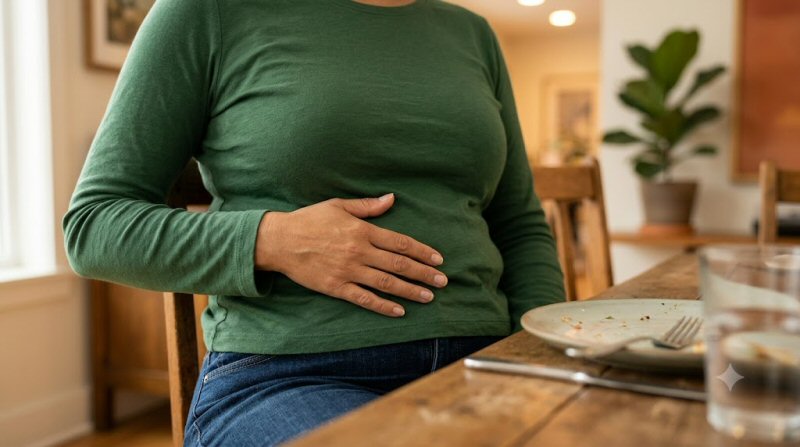
You finish a bigger-than-usual meal and, within minutes, your stomach feels tight, full, and a little stretched. The waistband that was comfortable an hour ago now presses. It is not sharp pain, just a firm, occupied sensation that makes you want to loosen a belt or sit still for a while. For most people this is ordinary stomach mechanics, not a warning sign.
What This Symptom Feels Like
The sensation is usually a diffuse tightness or pressure centered in the upper abdomen, just below the ribs. It can feel like the stomach is physically full of volume rather than like cramping or burning. Some people notice a slight outward push of the abdominal wall. The feeling tends to build during the meal and peak shortly afterward, then eases over one to three hours as the stomach empties. It is different from the gurgling of ongoing digestion or the sharp side stitch that can appear with sudden movement.
Common Causes
The most straightforward cause is simply the volume of the meal. A large plate of food, extra bread, a big portion of pasta, or several courses in one sitting can fill the stomach beyond its usual resting size. Eating quickly, talking while eating, or drinking a lot of fluid with the meal adds more volume. High-fat or high-fiber meals can slow emptying, so the tightness lasts longer. Carbonated drinks introduce gas that temporarily increases the sense of pressure. Stress or rushing through lunch can also make the same meal feel tighter because the stomach is less relaxed.
Why This Happens
The stomach is a muscular bag that normally holds roughly 1 liter but can stretch to accommodate several times that volume. Stretch receptors in the stomach wall send signals through the vagus nerve to the brain, producing the conscious feeling of fullness and tightness. This is the same system that tells you to stop eating. When a meal is larger or eaten faster than the stomach’s usual pace, those receptors fire more strongly and the sensation is more noticeable. Gastric emptying then gradually moves the food into the small intestine, relieving the stretch. Early observations of this process were made by William Beaumont in the 19th century while studying a patient with a permanent gastric fistula; modern work on functional dyspepsia and gastric accommodation by researchers such as Jan Tack has further mapped how the stomach relaxes (or fails to relax) to accept a meal.
If you regularly notice related sensations such as gurgling after meals or afternoon bloating, those articles explain the neighboring digestive rhythms that often appear alongside post-meal tightness.
Less Common but Serious Causes
Persistent tightness that does not ease after several hours, comes with severe pain, vomiting, inability to pass gas or stool, or unintended weight loss can occasionally point to delayed gastric emptying, a partial obstruction, or other less common conditions. These are far less frequent than ordinary meal-related stretch. A sudden, severe, constant pain rather than gradual tightness is a different pattern and should be evaluated promptly.
Hidden Triggers
Eating while distracted (scrolling, working, or driving) often leads to larger volumes before the fullness signal registers. Very cold or very hot foods, excessive caffeine, or alcohol with the meal can alter stomach tone. Tight clothing around the waist makes the same volume feel more constricting. For some people, a recent change in meal timing or a day of less movement slows the usual emptying rhythm, so the tightness lingers.
When to Worry
Seek medical advice if the tightness is accompanied by any of the following:
- Persistent vomiting or inability to keep food down
- Severe or worsening pain rather than simple pressure
- Black stools, vomiting blood, or signs of bleeding
- Unexplained weight loss or difficulty swallowing
- The sensation lasting most of the day, every day, for weeks
Occasional tightness after an unusually large meal that fades within a few hours is not a cause for concern.
Myths vs Facts
Myth: A tight stomach after eating always means you have a food intolerance or “weak digestion.”
Fact: Most of the time it simply means the meal was larger or faster than the stomach’s comfortable capacity that day.
Myth: You should never feel full or tight if you eat “healthy” food.
Fact: Volume and speed matter more than the moral quality of the food. Even nutrient-dense meals can produce temporary stretch.
Myth: Drinking water with meals always causes the tightness.
Fact: Moderate fluid is usually fine; large volumes of liquid or carbonated drinks on top of a big meal add measurable volume.
How to Manage It
Eat more slowly and put the fork down between bites so the fullness signal has time to arrive. Choose slightly smaller portions or pause halfway through a large meal. Limit carbonated drinks with the meal. A short, easy walk after eating can gently encourage gastric emptying for many people. Loosen tight clothing if it is adding external pressure. If the pattern is frequent, note whether it is linked to specific meal sizes, speeds, or times of day; small adjustments there often resolve it.
Related reading on meal-related digestive sensations includes why your stomach still expects acid before the meal and why many people feel bloated every afternoon—these pieces cover the neighboring timing and accommodation patterns.
When to See a Doctor
Make an appointment if the tightness is new, progressive, or paired with the red-flag symptoms listed above. A clinician can check for more common explanations such as constipation, reflux, or functional dyspepsia and, if needed, arrange simple tests. Most people with occasional post-meal tightness never need investigation.
FAQs
Is the tight feeling the same as bloating?
They overlap but are not identical. Tightness is more the sensation of stretch and pressure from the meal volume; bloating often includes a visible or gassy component that can appear later.
Does eating slower really help?
Yes. The brain’s fullness signals take roughly 15–20 minutes to register fully. Slower eating lets those signals catch up before the stomach is over-filled.
Can this happen even with healthy food?
Absolutely. A large salad with lots of fiber and volume, or a big bowl of oatmeal, can produce the same stretch as a denser meal.
Should I avoid drinking anything with meals?
Small amounts of water are usually fine and can aid swallowing. Very large volumes or fizzy drinks are the ones more likely to add noticeable pressure.
How long should the tightness last?
Most people feel it ease within one to three hours as the stomach empties. If it routinely lasts much longer, a clinician can help sort out the reason.
Is it normal to want to loosen my belt after a big meal?
Yes. That is the external expression of the same internal stretch the stomach is reporting.
Conclusion
A tight, full sensation after a larger meal is one of the most ordinary messages the stomach sends. It is the stretch receptors doing their job, not a malfunction. Slowing down, moderating volume, and giving the stomach a little time usually restores comfort. Only when the pattern changes, persists, or arrives with clearer warning signs does it move from everyday physiology into something worth checking. Most of the time, the waistband simply needs a temporary break.