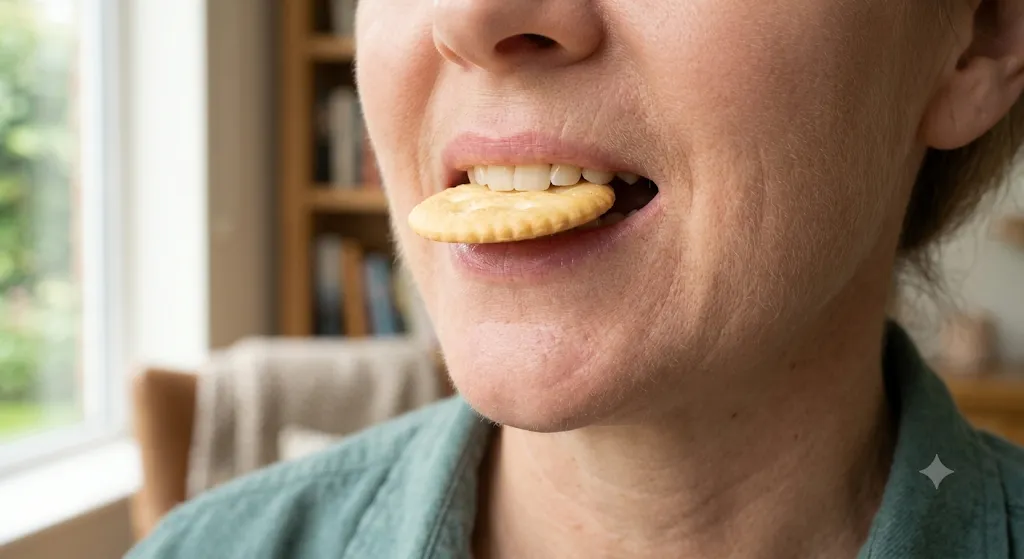
Feeling full after just a few bites is common and often benign. Learn why the stomach signals fullness early, everyday triggers, and when it needs a closer look.

You sit down to a normal meal, take a few bites, and suddenly the plate feels like more than enough. The sensation of fullness arrives earlier than it used to, even though the portion is ordinary. For many people this happens occasionally after a rushed day or a heavier meal the night before. In other cases it becomes a regular pattern that makes finishing a typical plate uncomfortable. The question that follows is straightforward: is this a normal variation in how the stomach works, or a signal that something has shifted?
Early fullness—sometimes called early satiety—is a recognized everyday experience. Most of the time it reflects temporary changes in how the upper stomach relaxes, how quickly food leaves, or how sensitive the stretch receptors are on a given day. It can also sit alongside other common digestive sensations such as mild bloating or a sense of pressure after meals. Understanding the usual mechanisms helps separate ordinary fluctuations from patterns that deserve attention.
What This Sensation Feels Like
The feeling is usually a clear sense that the stomach has reached capacity after only a modest amount of food. It is different from simple loss of appetite or from the heavy, distended sensation that can follow a large or fatty meal. People often describe stopping after half a plate because continued eating would produce discomfort, mild nausea, or the sense that there is simply no more room. The fullness may ease within an hour or two, or it may linger as a low-level pressure in the upper abdomen. It can appear with solid food, liquid meals, or both, and it sometimes travels with extra burping or a preference for softer textures.
Common Everyday Causes
Several ordinary factors can produce early fullness without any underlying disease:
- Eating faster than usual, so stretch signals arrive before hormones have fully registered the meal.
- Higher fat or fiber content that slows gastric emptying on that particular day.
- Carbonated drinks or swallowed air that occupy volume before solid food does.
- Mild constipation that raises pressure in the abdomen and reduces the room the stomach feels it has.
- Recent large meal, late dinner, or shorter overnight fast that leaves residual volume.
- Stress or poor sleep that heightens visceral sensitivity for a day or two.
These influences are usually self-limiting. Once the trigger is removed—slower eating, lighter textures, or a return to regular bowel habits—the capacity often feels normal again within a few days.
Why This Happens
The stomach is not a rigid bag. Its upper portion (the fundus) normally relaxes as food arrives, a reflex called gastric accommodation. This allows volume to increase with only a modest rise in pressure. When that relaxation is incomplete, pressure rises sooner and stretch receptors signal fullness after fewer bites. Research led by gastroenterologist Jan Tack and colleagues has shown that impaired accommodation is a measurable finding in a substantial subset of people who report early satiety, even when structural tests are normal.
A second mechanism is the rate of gastric emptying. If the stomach clears food more slowly than usual, residual volume accumulates and the next mouthful feels like more. Michael Camilleri and others studying gastric motor function have documented that both emptying rate and accommodation influence the point at which people report comfortable fullness. Visceral hypersensitivity can add a third layer: the same degree of stretch is interpreted as “full” or “uncomfortable” when the sensory pathways are more responsive, a pattern often seen with stress or after a gastrointestinal infection.
These processes are not fixed. They shift with meal composition, eating speed, autonomic tone, and recent digestive history. That is why the same person can finish a normal plate one day and stop early the next.
Less Common but Important Contributors
Persistent early fullness can accompany functional dyspepsia (particularly the postprandial distress pattern), delayed gastric emptying, or inflammation of the stomach lining. Certain medications that slow motility, including some opioids, anticholinergics, and high-dose GLP-1 receptor agonists, can produce the same sensation. In rarer cases structural issues such as an ulcer, scarring, or an obstruction reduce usable volume. These are less frequent than the everyday triggers listed above, but they become more relevant when the pattern is new, progressive, or accompanied by other symptoms.
Hidden Triggers
Several less obvious factors can amplify early fullness:
- Eating while distracted or under time pressure, which reduces the chance for accommodation reflexes to engage fully.
- High intake of artificial sweeteners or sugar alcohols that increase intestinal gas and pressure.
- Tight clothing or prolonged sitting that raises abdominal pressure during the meal.
- Recent antibiotic use or a mild viral illness that temporarily alters gastric motility.
- Low-grade dehydration that concentrates gastric contents and changes the sensory threshold.
Addressing these often restores a more familiar sense of capacity without any medical intervention.
When to Worry
Occasional early fullness after a hurried lunch or a rich dinner is common and rarely concerning. Seek medical advice if any of the following appear:
- Unintentional weight loss or inability to maintain usual intake over weeks.
- Persistent vomiting, especially if food returns hours after eating.
- Severe or progressive pain in the upper abdomen.
- Difficulty swallowing or food feeling stuck.
- Black stools, vomiting blood, or marked fatigue.
- Early fullness that began after starting a new medication or after a gastrointestinal infection and has not improved.
These features do not automatically indicate a serious condition, but they warrant evaluation to rule out treatable causes.
Myths vs Facts
Myth: Feeling full quickly always means the stomach has “shrunk.”
Fact: Stomach volume is dynamic. Accommodation and emptying change far more often than anatomical size.
Myth: You should force yourself to finish a normal plate every time.
Fact: Respecting early fullness on a given day prevents unnecessary discomfort. Consistent inability to meet nutritional needs is a different matter and should be discussed with a clinician.
Myth: Only people with diagnosed digestive disease experience this.
Fact: Temporary shifts in accommodation, emptying, or sensitivity occur in otherwise healthy individuals.
How to Manage It
Most people find relief with simple adjustments:
- Eat more slowly and pause between bites so accommodation reflexes can engage.
- Choose softer, lower-fat textures when the sensation is active (soups, yogurt, well-cooked vegetables, lean proteins).
- Separate liquids from solid meals if carbonation or volume is a factor.
- Maintain regular bowel habits; treating constipation often improves upper abdominal capacity.
- Avoid tight belts or prolonged slouching during meals.
- Give the stomach a short break after large or late meals before the next eating occasion.
These steps align with the physiology: they reduce the rate of volume challenge, lower residual content, and dampen unnecessary sensory input. Related experiences such as afternoon bloating or post-meal gurgling often improve with the same pattern of slower, more evenly spaced intake. See also discussions of afternoon bloating and stomach noises after eating for overlapping practical strategies.
When to See a Doctor
Contact a clinician if early fullness is new, lasts more than two to three weeks, interferes with maintaining weight or energy, or arrives with any of the warning signs listed earlier. Evaluation may include a review of medications, basic blood work, and, when indicated, tests of gastric emptying or endoscopy. Many cases turn out to be functional and respond to dietary pacing and stress-reduction measures; others have identifiable and treatable drivers.
FAQs
Is it normal to feel full after only a few bites some days but not others?
Yes. Day-to-day differences in meal composition, eating speed, residual volume from the previous meal, and stress level commonly produce this variability.
Can stress alone make the stomach feel full sooner?
Stress can heighten visceral sensitivity and alter autonomic control of accommodation, so the same volume registers as fuller. The effect is usually temporary.
Does drinking water with meals make early fullness worse? For some people, yes—especially if the water is carbonated or the meal is already large. Separating fluids can help on sensitive days.
Will smaller, more frequent meals fix it permanently?
They often reduce the immediate pressure and allow better nutritional intake while the underlying triggers settle. They are a practical bridge, not necessarily a lifelong requirement.
Is early fullness the same as bloating?
They overlap but are not identical. Early fullness is the sense that capacity has been reached; bloating is more often a feeling of distension or gas. Both can occur together.
Should I be concerned if this started after a stomach bug?
Post-infectious changes in motility or sensitivity can linger for weeks. If the pattern persists or is accompanied by weight loss, medical review is reasonable.
Conclusion
Feeling full quickly after starting to eat is a frequent and usually reversible experience. It most often reflects ordinary shifts in how the upper stomach relaxes, how fast it empties, or how intensely stretch is perceived on that day. Simple pacing, texture adjustments, and attention to constipation or stress restore familiar capacity for most people. When the pattern is persistent, progressive, or joined by weight loss or other red-flag symptoms, a clinician can help distinguish temporary physiology from conditions that benefit from targeted evaluation. The stomach’s signals are informative; learning which ones are everyday fluctuations and which ones call for a closer look keeps the response proportionate and effective.