Yes — a temporary tight or full feeling after sparkling water is common. The carbon dioxide gas expands in your stomach and usually leaves as a burp within minutes.
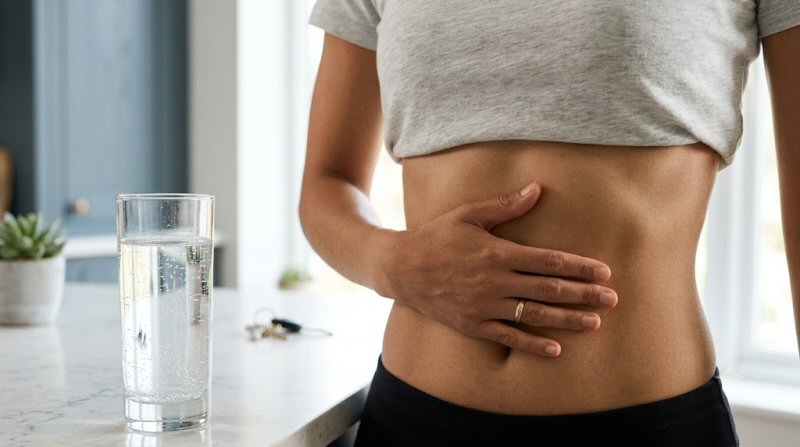
You open a can of sparkling water, take a few sips, and within a minute your stomach feels tighter than it did a moment ago. The sensation is familiar: a mild pressure just under the ribs, a sense of fullness that arrives faster than any meal, sometimes followed by a burp that brings relief. For most people this is completely ordinary.
Sparkling water is simply water with dissolved carbon dioxide. Once it reaches the warmer environment of your stomach, much of that gas comes out of solution. The result is a temporary increase in stomach volume — exactly the feeling many describe as bloating.
What This Sensation Actually Feels Like
Most people notice it high in the abdomen, just below the ribcage, rather than lower down. It can feel like a gentle stretch, a sudden sense of fullness, or a mild pressure that makes you want to loosen your waistband for a few minutes. Belching is common and usually brings quick relief. The feeling rarely lasts longer than 20–40 minutes if you stop drinking.
It is different from the heavier, longer-lasting bloating that can follow a large meal or certain foods. With plain sparkling water the timeline is short and tied directly to the bubbles.
Why the Gas Creates That Tight Feeling
When carbonated water warms inside the stomach, dissolved CO₂ leaves the liquid as free gas. Magnetic resonance imaging studies have shown that even 250–300 ml of carbonated water measurably increases total gastric volume compared with the same amount of still water. Researchers such as Cuomo and colleagues documented this expansion clearly; the stomach simply has more contents (liquid plus newly released gas) than it did before the sip.
The stretched stomach wall activates stretch receptors that signal fullness and the urge to belch. Most of the gas exits upward as a burp. A smaller portion may pass into the small intestine, where it is largely absorbed or moved along. Only a fraction typically reaches the colon.
Gastroenterologists including Aja McCutchen have noted that the majority of the carbon dioxide is belched before it travels far. The temporary distension is therefore real, but it is also self-limiting.
Common Everyday Reasons It Happens More Noticeably
Several ordinary factors make the sensation stronger:
- Drinking quickly or through a straw adds extra swallowed air on top of the carbonation.
- Larger volumes (a full can or bottle rather than a few sips) deliver more total gas.
- Drinking on an empty stomach means there is less food to buffer the gas, so the expansion is felt more acutely.
- People with a more sensitive gut — for example those who notice symptoms with irritable bowel syndrome — often register the same stretch more strongly.
- Some flavored or “functional” sparkling drinks contain additional ingredients (sweeteners, fiber additives, or acids) that can contribute separate effects beyond the bubbles.
Plain, unsweetened sparkling water tends to produce the mildest and shortest response.
Myths vs Facts
Myth: Sparkling water causes lasting bloating or water retention.
Fact: The fullness is gas, not retained fluid or fat. Once the gas is belched or absorbed, the sensation resolves. Plain sparkling water has no calories and does not alter fluid balance.
Myth: The bubbles damage the stomach lining.
Fact: Carbonation creates temporary pressure; it does not erode the protective mucus layer in healthy people. The same physical stretch can occur with any large volume of liquid or swallowed air.
Myth: Everyone reacts the same way.
Fact: Tolerance varies widely. Some people drink sparkling water all day with almost no awareness; others notice tightness after half a glass. Individual differences in gut sensitivity and drinking speed explain most of the variation.
When the Feeling Is Worth Paying Attention To
Occasional, brief fullness after sparkling water is not a concern. Seek medical advice if you notice any of the following:
- Painful or progressive bloating that lasts hours rather than minutes
- Persistent heartburn, regurgitation, or chest discomfort triggered by the bubbles
- Unexplained weight loss, vomiting, or difficulty swallowing
- New or worsening symptoms if you already have a diagnosis such as reflux or IBS
- Bloating accompanied by changes in bowel habits that do not resolve
These patterns suggest something beyond simple carbonation and deserve evaluation.
Practical Ways to Reduce the Sensation
Most people can continue enjoying sparkling water with small adjustments:
- Sip rather than gulp. Slower drinking gives the gas more time to escape as burps.
- Avoid straws, which increase swallowed air.
- Start with smaller servings and notice your personal threshold.
- Try still water for a day or two if you are already feeling gassy, then reintroduce sparkling water gradually.
- Pair it with a meal if the empty-stomach version feels too sharp.
- Choose plain varieties if flavored options seem to amplify symptoms.
A short walk after drinking can also help move residual gas along, much as it does after other meals.
Frequently Asked Questions
Does sparkling water cause more gas than still water?
Yes, temporarily. The extra carbon dioxide increases stomach volume until it is belched or absorbed. The difference is usually noticeable only for a short period.
Can it make reflux worse?
In some people, yes. The added pressure can push stomach contents toward the esophagus. If you notice heartburn specifically after sparkling drinks, reducing volume or switching to still water often helps.
Is it safe to drink every day?
For most healthy adults, plain sparkling water is safe and can contribute to daily fluid intake. The only common downside is the temporary fullness already described.
Why do some people feel it more than others?
Gut sensitivity, drinking speed, volume, and whether the stomach is empty all play roles. People with IBS or functional dyspepsia frequently report stronger responses to the same amount of gas.
Does the temperature of the water matter?
Very cold sparkling water may release gas slightly more slowly at first, but once it warms to body temperature the CO₂ still comes out of solution. The overall effect remains similar.
Bottom Line
A brief sense of tightness or fullness after sparkling water is a normal response to the carbon dioxide gas expanding inside the stomach. Imaging studies confirm the volume increase, and most of that gas leaves as a burp within minutes. For the majority of people it is a minor, self-resolving sensation rather than a sign of digestive trouble. If the feeling is intense, prolonged, or accompanied by other symptoms, it is reasonable to discuss it with a clinician — otherwise the bubbles can stay on the menu.