Dry mouth after exercise is common from mouth breathing, mild dehydration, and temporary shifts in saliva flow. Here’s why it happens and when it is worth checking.
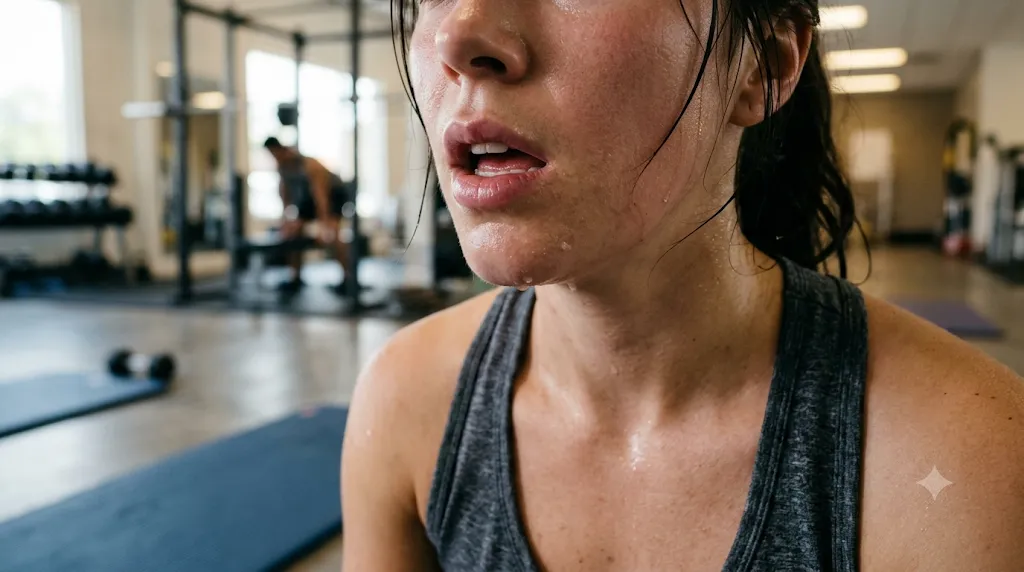
You finish a hard set or a long run, catch your breath, and notice your mouth feels sticky or dry. Your tongue sticks a little to the roof of your mouth. It is a small thing, yet common enough that many people wonder whether it is just part of exercise or a sign they should have drunk more water.
In most cases it is a normal short-term response. Exercise changes how you breathe, how much fluid you lose, and briefly how much saliva your glands produce. The feeling usually fades once you stop mouth-breathing and rehydrate. This article explains the everyday reasons, the less common ones worth noticing, and simple steps that help.
What This Feels Like
The sensation is usually a lack of moisture rather than true thirst alone. Your mouth may feel cottony, your tongue may look slightly less glossy, or swallowing may feel less smooth for a few minutes. Some people also notice a mild sticky coating or that their voice sounds a little husky until they drink. It is different from the deeper, persistent dryness some people feel first thing in the morning or after long periods of talking.
Common Reasons It Happens
Several ordinary factors line up during and right after a workout.
- Mouth breathing. When intensity rises, many people switch from nasal to oral breathing. Air moving across the tongue and cheeks evaporates the thin film of saliva faster than the glands replace it. Colin Dawes and other salivary researchers have long shown that even modest increases in airflow over the oral surfaces dry the mucosa quickly.
- Temporary drop in salivary flow. Exercise activates the sympathetic nervous system. While parasympathetic signals normally drive watery saliva, strong sympathetic drive can reduce flow or make the saliva thicker. The effect is usually brief and reverses once the heart rate settles.
- Fluid loss. Sweating removes body water. Even mild dehydration (around 1–2 % of body weight) can lower salivary output. You do not need to feel severely thirsty for this to occur; the mouth simply has less fluid available.
- Dry gym or outdoor air. Air-conditioned rooms, heated spaces, or windy outdoor runs lower the humidity of the air you are breathing, speeding evaporation.
Why the Body Responds This Way
Saliva is more than moisture. It buffers acids, starts digestion, and protects teeth and soft tissue. The glands are tuned to produce more when you chew or when parasympathetic (rest-and-digest) signals are high. During hard effort the body prioritizes blood flow to working muscle and cooling through sweat. Salivary glands are not high on that priority list for a few minutes. Once you stop and begin to recover, flow normally returns. This is the same general pattern seen in other short-term stressors; the mouth dries a little when the system is briefly in “performance” mode.
Hidden Triggers That Make It Worse
A few everyday habits amplify the effect:
- Caffeine or pre-workout stimulants, which can have a mild drying influence and increase heart rate further.
- Breathing only through the mouth for the entire session instead of using the nose when intensity allows.
- Starting the workout already a bit dehydrated from earlier coffee, limited water, or a long gap since the last drink.
- Medications that reduce saliva (certain antihistamines, some blood-pressure drugs, or others). If you take any of these regularly, the post-workout dryness can feel stronger.
- Very long or very intense sessions in hot conditions without planned fluid intake.
When to Pay Closer Attention
Most post-workout dryness is gone within 10–20 minutes of finishing, drinking, and resting. Check with a clinician if you notice any of the following:
- The dryness lasts for hours or is present even on non-exercise days.
- You also have extreme thirst, frequent urination, unexplained weight loss, or fatigue (possible signs of higher blood sugar or other metabolic issues).
- Dry eyes, joint pain, or swollen salivary glands accompany the mouth dryness (rare but can point to conditions such as Sjögren’s).
- You have difficulty swallowing, a persistent sore throat, or white patches that do not clear.
- The dryness started after a new medication and is bothersome.
Myths Versus Facts
Myth: A dry mouth after exercise always means you are badly dehydrated.
Fact: Mouth breathing alone can create the sensation even when overall hydration is reasonable. Still, drinking during and after is helpful.
Myth: You should force yourself to breathe only through the nose no matter the intensity.
Fact: Nasal breathing is useful at lower intensities and helps humidify air, but at high effort the body often needs the larger airflow of the mouth. The dryness is a trade-off, not a failure.
Myth: Chewing gum during the workout will completely prevent it.
Fact: Chewing can stimulate saliva, yet most people find it impractical or uncomfortable while breathing hard. It is more useful afterward.
How to Reduce It
Small changes usually make a clear difference:
- Sip water (or an electrolyte drink for long, sweaty sessions) during the workout rather than waiting until the end. Small, frequent sips are easier than large gulps.
- Use nasal breathing for warm-up, cool-down, and any lower-intensity portions. This keeps more moisture in the airway.
- After you finish, drink a normal amount of fluid, then wait a few minutes. The sticky feeling often fades as heart rate drops and parasympathetic tone returns.
- If you train in very dry air, a quick rinse with plain water or a sugar-free lozenge afterward can feel soothing while saliva recovers.
- Avoid stacking multiple drying factors (heavy caffeine + antihistamine + long hot session) on the same day when possible.
These steps also support the protective role of saliva for your teeth. Related reading on how saliva normally responds to chewing can be found in Why Your Saliva Still Expects Real Chewing.
When to See a Doctor
See a clinician if the dryness is frequent outside of exercise, interferes with eating or speaking, or comes with the warning signs listed earlier. A simple history, medication review, and sometimes basic blood work can rule out the less common causes. Most people never need this step for ordinary post-workout dryness.
FAQs
Is it normal for my mouth to feel dry only after hard workouts and not easy ones?
Yes. Higher intensity usually means more mouth breathing and a stronger sympathetic response, so the dryness is more noticeable.
Does this mean I am dehydrated even if I drank during the session?
Not necessarily. Mouth breathing can dry the surfaces faster than you replace fluid. If you also feel very thirsty, have dark urine, or feel unusually fatigued, increase intake next time.
Can breathing through my nose the whole time prevent it?
It reduces the effect at moderate efforts. At high intensities most people still need some mouth breathing; the goal is simply to use the nose whenever it is comfortable.
Will this harm my teeth if it happens regularly?
Short episodes are unlikely to cause problems. Persistent low saliva (from any cause) raises the risk of cavities and enamel wear, which is why addressing ongoing dryness matters. See also the discussion of saliva and enamel in related articles on this site.
I also get a dry mouth when I am nervous or after long conversations. Is that related?
Yes, the mechanisms overlap (sympathetic tone and reduced opportunity for saliva to coat the mouth). The post-workout version is usually more about breathing pattern and fluid loss. You can read more about the talking version in Is It Normal for Your Mouth to Feel Dry After Talking a Lot? and the nervous version in Is It Normal for Your Mouth to Go Dry When You’re Nervous.
Should I use a special mouth rinse after every workout?
Plain water is enough for most people. Alcohol-based rinses can feel more drying; if you use one, choose an alcohol-free option and do not overuse it.
Conclusion
A dry mouth after a workout is a common, usually harmless result of mouth breathing, a brief shift in salivary flow, and ordinary fluid loss. It tends to resolve quickly once you stop, drink, and let your system settle. Paying attention to hydration, using nasal breathing when intensity allows, and noticing whether the dryness stays only around exercise keeps it in the everyday category for most people. If it becomes constant or arrives with other symptoms, a short conversation with a clinician is the practical next step.