
Knees feel stiff and rusty after a long car ride? Learn why prolonged sitting thickens joint fluid, how the theater sign works, and when to pay attention.
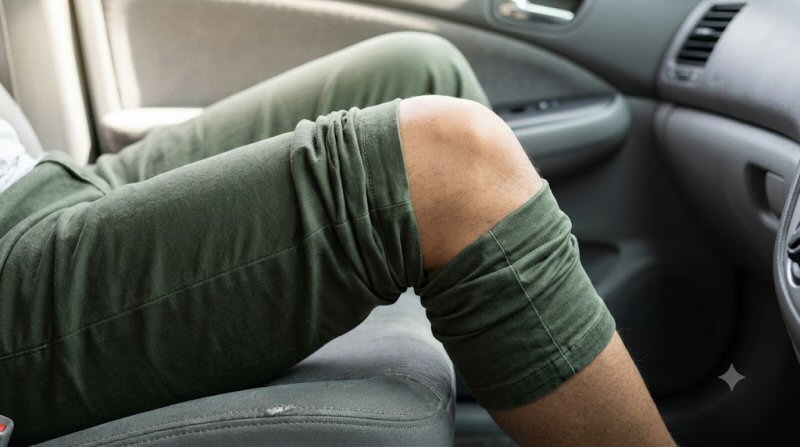
You pull into the rest stop, open the door, and the first step out of the car feels like your knees have forgotten how to straighten. That heavy, rusty stiffness is common after hours in a fixed bent position. Most of the time it eases within a minute or two of walking.
What This Symptom Feels Like
The sensation is usually a dull resistance rather than sharp pain. The knees may feel heavy or slow to unlock when you stand. Some people notice a brief ache behind or around the kneecap. The first few steps can feel awkward, then the joints loosen. Swelling is typically absent, and the stiffness does not lock the knee or make it give way.
Common Causes
Prolonged knee flexion is the main driver. In a car the joint stays bent near 90 degrees or more with little opportunity to fully straighten or shift. Synovial fluid, the joint’s natural lubricant, becomes less mobile. Muscles that cross the knee (quadriceps, hamstrings, and calf) stay relatively quiet. The patella presses more firmly against the femur. Tight surrounding tissues and reduced local circulation add to the temporary stiffness.
Why This Happens
Synovial fluid is thixotropic: it thickens when left still and thins again with movement. Researchers have long noted that joint fluid behaves more like a gel after rest and returns to a slippery state once the joint cycles through motion. In a car the lack of load and shear means cartilage receives less of its usual fluid exchange. The same pattern appears after long movies or flights and is sometimes called the theater sign in discussions of patellofemoral mechanics.
When the knee finally straightens, the thickened fluid and briefly shortened soft tissues create that initial resistance. A short walk warms the joint, circulates fluid, and restores normal glide. People with early cartilage changes may notice the effect more strongly, but the basic mechanism occurs in healthy knees too.
Less Common but Serious
Persistent stiffness that lasts well beyond a few minutes of walking, comes with swelling, warmth, redness, or locking, or is accompanied by calf pain and swelling needs prompt attention. These can point to inflammatory arthritis, meniscus irritation, or, rarely, a blood clot. Sudden inability to fully straighten the knee after a long sit is also worth evaluating.
Hidden Triggers
Seat height and angle matter. A low seat forces deeper flexion. Crossing the legs or tucking feet under the seat keeps the knees compressed. Dehydration and cool cabin air can make fluid feel thicker. Weak quadriceps or tight hip flexors from daily sitting make the transition to standing harder. Previous minor injuries or early osteoarthritis amplify the ordinary response to stillness.
When to Worry
Mild stiffness that clears quickly after you start walking is expected. Seek care if the stiffness lasts more than 15–20 minutes, worsens over weeks, appears with swelling or heat, or is paired with instability or sharp pain. One-sided calf swelling, chest pain, or sudden shortness of breath after a long drive requires urgent evaluation.
Myths vs Facts
Myth: Knee stiffness after driving means you already have arthritis.
Fact: Temporary stiffness from stillness is normal at any age; arthritis makes it more noticeable and longer-lasting, but is not required for the sensation.
Myth: You should keep the knees completely still so they “rest.”
Fact: Joints need intermittent motion to circulate fluid. Brief shifts and ankle pumps during the drive help more than total stillness.
Myth: The stiffness is only muscle tightness.
Fact: Muscle adaptation contributes, but the primary change is in the joint fluid and the contact pressure under the kneecap.
How to Manage
During the drive, shift your feet every 20–30 minutes and straighten the legs briefly when safe. Ankle pumps and gentle knee lifts in the seat keep fluid moving. After stopping, walk for a minute before loading bags or climbing stairs. Simple heel-to-toe rocking and slow partial squats restore glide quickly. Strengthening the quadriceps and hip muscles over time reduces the intensity of the stiffness. Staying hydrated and avoiding extreme cold on the legs also helps.
If you already notice similar stiffness after movies or long desk sessions, the same movement breaks apply. Related everyday patterns appear in articles such as Is It Normal for Your Knees to Feel Stiff After a Long Movie? and Why Your Knees Still Expect Frequent Full Extension.
When to See a Doctor
Contact a clinician if stiffness regularly lasts longer than a short walk, if you develop swelling, if the knee locks or buckles, or if symptoms limit ordinary activities. Imaging or examination is useful when the pattern changes or appears after an injury. Most cases improve with simple movement habits and do not require intervention.
FAQs
Why do my knees feel worse on the first few steps after a long drive?
The synovial fluid has thickened and the soft tissues have adapted to the bent position. Motion thins the fluid and lengthens the tissues, so the first steps feel the most resistant.
Is this the same as the theater sign?
Yes. The theater sign describes front-of-knee discomfort or stiffness that builds with prolonged sitting and eases with walking. Car seats create the same sustained flexion.
Can cracking or popping after the drive be related?
Occasional crepitus when you first stand is common and usually harmless once fluid starts moving again. Persistent painful cracking is different; see Is It Normal for Your Knees to Crack When You Stand Up?.
Does seat position make a difference?
Yes. A seat that allows the knees to stay closer to 90 degrees or less, with room to shift, reduces pressure under the kneecap compared with a very low or cramped seat.
Should I ice or heat my knees after a long ride?
Gentle walking is usually enough. If the area feels mildly achy, warmth can loosen tissues; ice is more useful if there is actual swelling.
Conclusion
Feeling stiff in the knees after hours in a car is a normal response to sustained flexion and reduced joint motion. The fluid thickens, the kneecap presses more firmly, and the first steps feel rusty until movement restores glide. Short position changes during the drive and a brief walk afterward clear the sensation for most people. Persistent swelling, locking, or stiffness that refuses to ease with walking is the signal to get it checked.


