Jaw soreness after hours of talking is usually simple muscle fatigue in the masseter and temporalis. Stress, posture, and clenching can amplify it. Here is when it is ordinary and when it needs attention.
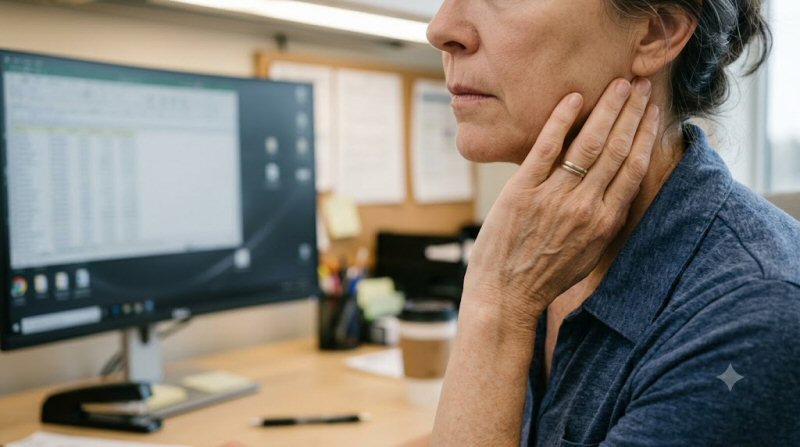
You finish a full day of meetings, teaching, customer calls, or family conversation and notice a dull ache along the sides of your face. Opening wide to yawn feels tighter than usual. Chewing dinner takes more effort. The sensation sits right in front of the ears or under the cheekbones and eases once you stop talking and rest the jaw. This is common. The muscles that move the jaw are built for short bursts of chewing and occasional speech, not continuous talking for hours.
What This Symptom Feels Like
Most people describe a heavy, tired, or mildly sore feeling in the jaw muscles rather than sharp joint pain. It often appears later in the day, after prolonged speaking, and improves with quiet time, soft food, or gentle rest. Some notice it more on one side, especially if they favor that side when chewing or hold the phone against that ear. Temple tightness or a mild headache can accompany it. The jaw does not usually lock or click solely from talking fatigue, though existing clicking can feel more noticeable when the muscles are tired.
Common Causes
The main driver is simple overuse of the masseter and temporalis muscles. These are the primary jaw-closing muscles. Talking requires repeated small movements of the mandible, tongue, and lips. When the session is long, the muscles accumulate fatigue the same way forearm muscles do after hours of typing.
Daytime clenching adds load. Many people unconsciously tighten the jaw while concentrating, driving, or listening intently. Stress keeps the resting tone higher, so ordinary speech becomes extra work. Poor head posture (forward head from screens) changes the mechanical relationship between the neck and jaw and can increase effort. Dehydration and low blood sugar make muscles feel more irritable. Existing mild temporomandibular joint (TMJ) sensitivity or an uneven bite can make the same talking load feel heavier.
Why This Happens
Speech is a coordinated act involving the jaw, tongue, soft palate, and larynx. The masseter (cheek) and temporalis (temple) keep the jaw stable and controlled while the tongue and lips form words. In ancestral settings, most speech occurred in shorter bursts interspersed with quiet tasks or physical work. Modern work often demands continuous verbal output—meetings, teaching, sales calls, podcasting—without natural pauses for the jaw to unload.
When the muscles stay active for long periods, metabolic byproducts build up and local circulation is relatively reduced during sustained contraction. The result is the familiar delayed-onset fatigue and mild soreness. Researchers studying orofacial pain, including those who developed the Diagnostic Criteria for Temporomandibular Disorders (DC/TMD), note that myalgia (muscle pain) is the most common TMD presentation and is frequently provoked by function or parafunction such as prolonged talking or clenching. Dental researchers such as Jeffrey Okeson have long described how masticatory muscle overuse produces exactly this pattern of end-of-day jaw tiredness.
Related everyday experiences appear in other articles: jaw clicking during chewing and nighttime teeth grinding.
Less Common but Serious Causes
True inflammatory TMJ arthritis, disc displacement that locks the jaw, dental infection, or referred pain from a heart or sinus source are far less common. Sudden inability to open or close the jaw, swelling, fever, or pain that radiates into the arm or chest needs prompt evaluation. Progressive locking, significant asymmetry, or pain that wakes you from sleep and does not ease with rest also falls outside ordinary talking fatigue.
Hidden Triggers
- Unconscious daytime clenching while focused or stressed
- Forward head posture from prolonged screen use
- Chewing gum or tough foods on the same long talking day
- Dehydration or skipping meals
- Side-sleeping that compresses one jaw
- Recent dental work that temporarily changes bite contact
- High caffeine intake that raises muscle tension
When to Worry
Seek care if the soreness is severe, lasts more than a few days despite rest, is accompanied by locking, significant clicking that started suddenly, swelling, fever, ear pain with hearing change, or any neurological symptoms. Also check if the pain is mainly in the joint itself (right in front of the ear) rather than the muscle belly, or if you cannot open your mouth more than two fingers’ width.
Myths vs Facts
Myth: Jaw soreness after talking means you have permanent TMJ damage.
Fact: Most cases are reversible muscle fatigue that settles with load management.
Myth: You should completely stop talking until it disappears.
Fact: Brief, natural speech is fine; the goal is reducing continuous overload and adding rest breaks.
Myth: Only people who grind their teeth at night get this.
Fact: Daytime talking load plus clenching is enough on its own.
How to Manage It
Give the muscles short recovery windows. After long meetings, rest the jaw in a relaxed position with the teeth slightly apart and the tongue lightly on the palate. Apply a warm compress for 10–15 minutes to increase local blood flow. Choose softer foods for the evening meal. Gentle self-massage along the masseter (from cheekbone down toward the jaw angle) and temporalis can help. Stay hydrated and take brief posture resets—chin tucked, shoulders relaxed—throughout the day.
If stress is a major driver, short breathing pauses that lengthen the exhale tend to lower resting jaw tone. Avoid gum chewing on high-talking days. Over-the-counter anti-inflammatory medication can be used short-term if you have no contraindications, but the core fix is load reduction rather than pills.
Voice-related fatigue often travels with jaw fatigue; see also hoarseness after talking all day.
When to See a Doctor
Contact a dentist or physician experienced with orofacial pain if symptoms persist beyond a week of self-care, recur frequently, or are joined by clicking, locking, or headaches that limit work. A simple examination can distinguish pure muscle fatigue from joint or bite issues. Most people improve with conservative steps; imaging or appliances are reserved for cases that do not settle.
FAQs
Why does only one side of my jaw get sore?
Most people have a preferred chewing side or hold tension more on one side. Prolonged talking simply amplifies an existing mild imbalance.
Can this cause headaches?
Yes. The temporalis muscle reaches the temples, so fatigue there commonly produces a mild tension-type headache by the end of the day.
Will it get worse if I keep talking for work?
Usually not if you add recovery breaks, improve posture, and reduce clenching. Continuous high load without rest can turn occasional soreness into more persistent myalgia.
Does stress make it worse?
Yes. Stress raises baseline muscle tone in the jaw. The same amount of talking feels heavier when the muscles start the day already partially contracted.
Is heat or ice better?
Warmth generally helps muscle fatigue by improving circulation. Ice is more useful if there is acute joint inflammation or recent injury.
Should I wear a night guard?
Only if a dentist confirms nighttime grinding or clenching is contributing. A guard addresses sleep parafunction; it does not fix daytime talking overload.
Conclusion
Jaw soreness after a long day of talking is usually ordinary muscle fatigue in the masseter and temporalis. Modern work often asks these muscles to stay active far longer than the short conversational bursts they handled for most of human history. Rest breaks, relaxed jaw posture, warmth, and attention to clenching and head position resolve it for most people. Persistent locking, severe pain, or swelling deserves professional evaluation, but the common end-of-day ache is a signal to unload the jaw, not a sign of lasting damage.