Cold hands fumble keys and buttons because finger skin cools, nerve signals slow, and fine muscles lose speed. Color that will not return is a different story.
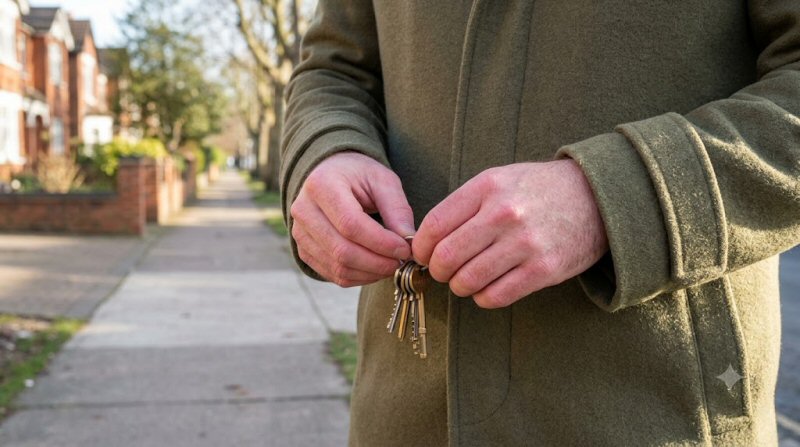
The key will not find the lock. The coat zipper misses the box. A coin slips between fingers that felt perfectly fine in the kitchen five minutes ago. It is a small, irritating clumsiness, and it shows up on the first cold errand of the season, not after an injury. The hands are not weak in a warm room. They are slow, stiff, and oddly numb at the tips until they warm up.
That pattern is ordinary. Fine finger work is one of the first skills cold takes away. The hands are built to trade blood flow for heat conservation, and the price is slower nerves, stiffer tendons, and a poorer sense of what the fingertips are touching. The fumble is the system doing its winter job, not a sign that coordination has failed.
What Cold Clumsiness Feels Like
People notice it on small tasks more than on a strong grip. Buttons, zippers, phone screens, a pen, a key ring, and picking a card from a wallet all get worse. The fingertips feel thick, as if they were wearing invisible gloves. Pinch feels unreliable. A jar lid may still turn, because power grip uses larger forearm muscles that stay warmer. The precision muscles in the hand do not.
The change is usually bilateral and tracks the weather. Both hands fumble on a windy platform. Both recover in a warm shop, sometimes with a prickly rewarming phase. One hand that stays clumsy indoors, or a hand that also goes white and numb in a fixed patch, is a different story from this cold-day fumble. Mottling that fades once you are inside fits the same cold-vessel picture as blotchy hands in the cold.
Why Fingers Lose Their Skill First
The hands are radiators. Arteries in the fingers connect to veins through arteriovenous anastomoses, small shortcuts that can flood the skin with warm blood or shut almost completely. In cold air the sympathetic nerves close those shortcuts so heat is not dumped from the extremities. Thomas Lewis described the back-and-forth of that shutdown and the occasional reopening, the hunting reaction, in cold fingers. Finger skin temperature can fall many degrees while the core stays steady.
George Havenith, Ronald Heus, and Hein Daanen mapped what that drop does to real tasks. Manual performance tracks finger skin temperature more closely than it tracks how cold the air feels. Dexterity tests worsen as the fingers cool, with a steep loss once skin temperature falls through the mid-teens Celsius. Tactile sensitivity declines even earlier than strength. You misjudge the edge of a key before you lose the force to turn it.
Ann Enander’s work on moderate cold and performance made the same point outside the laboratory extreme. You do not need frostbite weather. A cool commute, wet gloves, or wind on bare hands is enough to slow fine work. Stephen Cheung’s reviews of hand and foot cooling describe the same split: local tissue cooling, not a drop in core temperature, is what steals dexterity.
What Slows Down Inside the Hand
Three things change at once.
Nerve signals travel more slowly in cooled axons. Classic conduction studies, including work by P. V. de Jesus and colleagues, showed motor and sensory velocities falling as limb temperature fell, on the order of a couple of meters per second for each degree the nerve cooled. A fingertip that needs a fast correction for a slipping coin gets the message late.
Muscle itself slows. Cooled fibers take longer to twitch and to relax. The small intrinsic muscles that spread, pinch, and steady the fingers sit close to the skin and cool faster than the forearm. That is why a handshake can still feel strong while a zipper feels impossible.
Touch receptors dull. Meissner and Merkel endings in the fingertip pads need a warm, well-perfused bed to report texture and slip. Cold skin raises the threshold for what you can feel. You press harder, overshoot, and drop the object you were trying to be careful with. John Castellani and colleagues, reviewing cold-strain research for military and outdoor work, treat this loss of finger sensation and skill as an expected effect of peripheral cooling, not as a rare reaction.
There is also a mechanical piece. Synovial fluid in small joints thickens as it cools, and tendons glide less freely. The hand feels stiff as well as numb. Movement usually eases that stiffness before full warmth returns.
Why Wind and Wet Make It Worse
Still air at 8°C and windy air at 8°C are not the same load on a bare hand. Wind strips the thin warm layer on the skin. Damp gloves conduct heat off the fingers faster than dry ones. Havenith’s group showed that the practical predictor is local skin temperature, which is why a thin windproof layer can preserve skill better than a thick mitten you have to remove for every button.
Holding a cold steering wheel, a metal leash clip, or a chilled phone pulls heat by conduction even faster than air does. The fingertips blanch a little, sensation drops, and the same hand that typed easily indoors misses the screen target. Anxiety can add a second shutdown: emotional sweating and sympathetic constriction cool the palms even in a mild room, which is the overlap with cold hands when you are anxious.
When the Hunting Reaction Helps
If the fingers stay cold long enough, many people get brief pulses of rewarming. Lewis called this the hunting reaction; later writers call it cold-induced vasodilation. Daanen’s reviews describe it as an intermittent opening of those finger shortcuts, stronger in some people than others, and more reliable in people who are cold-accustomed. It is why a finger can ache, pink up, pale again, and still be usable on a long walk. It is not a sign of damage. It is the hand refusing to stay shut down forever.
People who already run a strong cold shutdown, including many with fingers that turn white in the cold, lose dexterity sooner and recover it later. The clumsiness and the color change are neighbors, not the same event. Clumsiness alone, with pink or mottled skin that returns indoors, is the everyday version.
Less Common but Serious Causes
Cold clumsiness that is only cold clumsiness fades with warmth. A few patterns should not be filed under weather.
A hand that is clumsy, weak, or numb on one side only, indoors as well as out, can be a nerve under pressure. Neck position, a tight strap, or elbow leaning can irritate a root or the ulnar nerve. The cold may make it louder, but the trigger is mechanical.
Fingers that go stark white, then blue, then red, with a clear demarcation and pain, fit Raynaud’s pattern. Primary Raynaud’s is common and often benign. New white attacks with sores, one-sided color change, or joint swelling deserve a clinical look.
Sudden clumsiness with face droop, speech change, confusion, or a weak arm is an emergency, cold weather or not. Cold does not cause a stroke. It can be the backdrop when one appears.
True frostbite is a tissue freeze: waxy, wooden skin that does not rebound, often after a longer extreme exposure. Ordinary key-fumbling on a city street is not frostbite.
Myths vs Facts
Myth: Cold clumsiness means poor circulation that needs a supplement.
Fact: In healthy people it is a fast, reversible shutdown of finger blood flow plus slower nerve and muscle function. It reverses with local warmth.
Myth: If you can still make a fist, your hands are fine for fine work.
Fact: Power grip outlasts pinch and touch. The tasks that fail first are buttons, keys, and screens.
Myth: Gloves always fix it.
Fact: Wet or removed gloves do not. A dry wind layer that keeps finger skin warmer preserves skill better than bulk you have to take off.
Myth: Clumsy cold fingers are an early nerve disease.
Fact: Temperature-linked, both-hands, gone-when-warm clumsiness is the expected physiology Enander, Havenith, Heus, and Daanen measured. Persistent one-sided weakness is the pattern that needs checking.
How to Keep More Skill in the Cold
Keep the fingers warm before the task, not after the fumble. A thin liner under a wind shell beats a thick mitten you remove to use a phone. Dry the liners. Metal and glass steal heat, so a pocket, a glove with a conductive patch, or a short bare-hand burst works better than a long bare grip on a cold rail.
Swing the arms and open and close the hands before you need precision. Local muscle work pushes a little blood back into cooled skin. Core warmth helps too: a cold torso drives a stronger finger shutdown. A scarf and a covered wrist do more for dexterity than people expect, because blood cools on its way down an exposed forearm.
Do not rub a white, wooden fingertip hard or rewarm it on a hot radiator. Ordinary pink cold hands can use warm water that feels comfortable on the inner wrist. If the skin is numb and firm, rewarm gently and get out of the wind.
People who work outdoors often adapt a little across a winter. Cold-induced vasodilation can become more brisk. That is acclimation, not a reason to skip gloves on the first icy week.
When to See a Doctor
Get prompt care for sudden one-sided clumsiness, face or speech change, a hand that stays pale and numb after rewarming, blisters, blackened skin, or severe pain out of proportion to the cold. Book a routine visit if white finger attacks are new or worsening, if sores appear on the fingertips, if one hand is clumsy in a warm room, or if neck or elbow pain travels with the numbness. Bring a note of which fingers, how long the color lasts, and whether warmth fixes the skill. That detail separates a cold day from a vessel or nerve problem.
FAQs
Why can I grip a bag but not zip my coat?
Power grip uses warmer forearm muscles. Zippers and buttons need cooled intrinsic hand muscles and fingertip sensation, which drop first as finger skin temperature falls.
How cold do fingers need to be before skill fades?
Havenith, Heus, and Daanen found dexterity falling as finger skin cooled, with a clear loss once skin temperature moved down through roughly the mid-teens Celsius. Air temperature matters less than how cold the skin actually is.
Does wind matter more than the thermometer?
Often yes. Wind and wet fabric pull heat off the fingers and lower skin temperature faster than still, dry air at the same reading.
Will this turn into Raynaud’s?
Ordinary fumble with pink or mottled skin that recovers indoors is not Raynaud’s. Repeated stark white attacks with a sharp color border are the pattern to mention to a clinician.
Should I swing my arms or just wait?
A short bout of arm swings and fist opens can restore a little flow before a fine task. Lasting skill comes from keeping the finger skin warmer in the first place.
Conclusion
Clumsy hands on a cold sidewalk are what finger blood flow, nerve speed, and small-muscle timing do when the skin cools. Lewis described the vessel shutdown. Havenith, Heus, Daanen, Enander, Cheung, and Castellani showed why keys and buttons fail while a simple grip still works. Warm, dry, covered fingers bring the skill back. Color that will not return, one hand that stays clumsy indoors, or a sudden change with face or speech symptoms is no longer a weather story.