
High heels shift weight onto the ball of the foot and change how your arches and calves work. Mild soreness is common; here is why it happens and when it deserves attention.
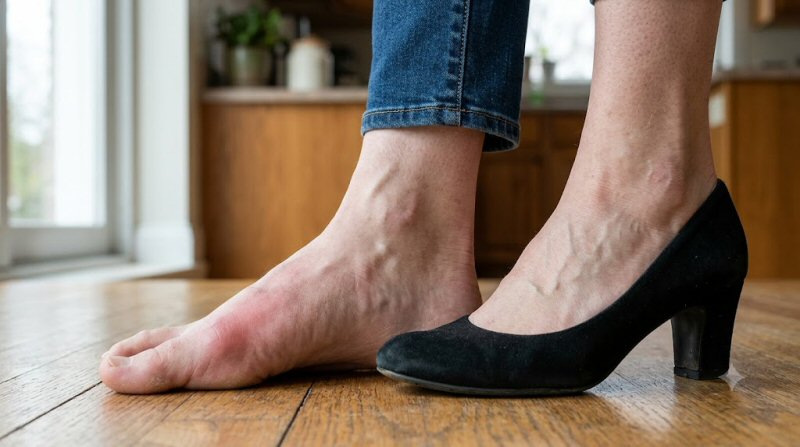
You slip off the heels at the end of the day and the first thing you notice is the ache under the balls of your feet, a tight pull in the calves, or a dull throb along the arches. It feels familiar if you wear elevated shoes regularly, and for most people it is a predictable response to hours spent on a raised, rigid platform rather than a sign that something is broken.
The human foot is built for a rolling, relatively flat step on varied ground. High heels interrupt that pattern by forcing the foot into a steep angle, concentrating pressure forward, and limiting the natural spring of the arches and the stretch of the Achilles. Researchers studying gait, including work associated with D. Casey Kerrigan and others examining elevated heels, have shown clear shifts in joint loading and muscle demand. The result is often temporary soreness that settles once you return to flatter shoes and move normally again.
What This Sensation Feels Like
The discomfort is usually described as a burning or bruised feeling under the metatarsal heads (the balls of the feet), tightness that runs up the back of the calves, or a low-level ache across the arches. Some people notice their toes feel cramped or that the skin on the ball of the foot looks slightly red after a long stretch in heels. The sensation tends to build gradually through the day and eases once the shoes come off and the feet can rest or stretch.
It is distinct from sharp, sudden pain that appears with a misstep, or from numbness and tingling that spreads into the toes. Most of the time it is a mechanical complaint rather than an acute injury.
Common Causes
Several straightforward factors explain why heels leave feet sore:
- Forward weight shift. Elevating the heel moves the body’s center of mass forward so more pressure lands on the forefoot. Studies of pressure distribution under the foot show substantially higher peak forces under the metatarsal heads compared with flat shoes.
- Reduced arch spring. The plantar fascia and the intrinsic foot muscles normally share load through a springy windlass mechanism. A steep heel angle limits that stretch-shorten cycle, so the tissues work harder in a shortened position.
- Calf and Achilles adaptation. The gastrocnemius and soleus stay in a shortened state for hours. When you finally stand flat, the sudden lengthening can feel tight or achy.
- Narrow toe boxes and rigid soles. Many heels crowd the toes and prevent natural spreading, adding friction and compression.
- Duration and surface. Standing or walking on hard floors for several hours multiplies the effect. Occasional short wear is usually better tolerated than all-day use.
These mechanisms are well described in biomechanical literature and match what podiatrists hear in routine practice.
Why This Happens
Your foot evolved for barefoot or minimally soled movement across uneven terrain, with the heel landing first, the arch flattening under load, and the toes gripping and pushing off. The plantar fascia, described in classic work by J.H. Hicks on the windlass mechanism, acts like a dynamic cable that stiffens the arch at the right moment. High heels largely bypass that sequence.
When the heel is elevated, the ankle stays in plantarflexion, the Achilles tendon shortens, and the forefoot becomes the primary weight-bearing surface. Over repeated exposures the tissues adapt by becoming tighter, which is why the first few steps after removing the shoes can feel stiff. This is not a disease process; it is a temporary mismatch between the shoe’s geometry and the foot’s preferred loading pattern. Related articles on the site explore similar ideas, such as why your plantar fascia still expects a springy first step and why your feet still expect a rolling step.
Less Common but Serious Possibilities
Most post-heel soreness is mechanical and resolves with rest and a change of footwear. Less often, the same pressure pattern can aggravate an existing condition:
- Plantar fasciitis or fat-pad atrophy under the ball of the foot.
- Morton’s neuroma (nerve irritation between the toes) if the toe box is especially narrow.
- Stress reactions in the metatarsals with very frequent, prolonged wear.
- Bursitis or joint irritation at the base of the big toe.
These usually produce more persistent, localized, or progressive symptoms rather than simple end-of-day ache.
Hidden Triggers
A few factors make the same pair of heels more troublesome on some days:
- Longer standing time than usual (events, retail, teaching).
- Harder flooring (tile, concrete) versus carpet.
- Shoes that are slightly too small or have a very narrow toe box.
- Recent increase in heel height or sudden return to heels after weeks in flats.
- Mild dehydration or general fatigue, which can make muscles feel tighter.
- Pre-existing tight calves or reduced ankle dorsiflexion.
Noticing these patterns helps you adjust before the ache becomes routine.
When to Worry
Seek a medical or podiatric evaluation if you notice any of the following:
- Pain that is sharp, sudden, or accompanied by swelling and bruising.
- Numbness, tingling, or burning that persists after the shoes are off.
- Pain that worsens over weeks rather than settling with rest.
- Visible deformity, redness that spreads, or warmth suggesting inflammation.
- Difficulty bearing weight the next morning.
- Symptoms that appear even in comfortable flat shoes.
These features move the picture away from ordinary mechanical fatigue and toward something that benefits from professional assessment.
Myths vs Facts
Myth: High heels permanently ruin your feet.
Fact: Occasional or moderate use rarely causes irreversible damage in healthy feet. Chronic daily wear of very high or poorly fitted heels can contribute to adaptive shortening and higher rates of certain forefoot complaints, but most people recover function when they vary their footwear.
Myth: Only cheap heels cause problems.
Fact: Even well-made heels alter biomechanics. Fit, height, and time worn matter more than price.
Myth: You should never wear heels if your feet hurt.
Fact: Many people tolerate shorter, wider-based heels for limited periods without lasting issues. The key is not ignoring progressive pain.
Myth: Stretching once will fix everything.
Fact: Stretching helps, but reducing cumulative time in the elevated position and restoring normal foot motion during the rest of the day are more important.
How to Manage It
Practical steps that consistently reduce the problem:
- Limit continuous wear. Aim for a few hours rather than a full workday when possible.
- Choose lower heels (under about 2 inches / 5 cm) and styles with a broader base or slight platform for more even pressure.
- Alternate with supportive flats or sneakers during the day so the calves and plantar fascia can lengthen.
- Perform gentle calf stretches and ankle circles after removing the shoes. A simple wall stretch or towel stretch for the plantar fascia can ease the tightness.
- Use a cushioned insole or metatarsal pad if the ball of the foot is the main complaint (ensure the shoe still fits).
- Soak the feet in warm water and gently massage the arches and calves in the evening.
- Strengthen the intrinsic foot muscles with short-foot exercises or towel scrunches a few times a week.
These approaches address the mechanical mismatch without requiring special equipment. People who also stand long hours on hard floors may find related advice in the article on heels that hurt after standing on hard floors.
When to See a Doctor
Make an appointment if the soreness lasts more than a couple of weeks despite reducing heel time and adding stretches, if you develop numbness or radiating pain, or if you have diabetes, circulation problems, or a history of foot injury. A podiatrist can assess gait, joint mobility, and whether orthotics or temporary activity changes would help. Imaging is rarely needed for straightforward post-heel ache.
FAQs
Is it normal for the balls of my feet to burn after a night in heels?
Yes. The forward shift of weight increases pressure under the metatarsal heads. The burning usually fades within hours of removing the shoes and elevating the feet.
Will my calves stay tight forever if I wear heels sometimes?
No. Occasional use produces temporary shortening that resolves with normal walking and stretching. Daily high-heel wear for years can lead to more lasting adaptive tightness, which is why variety in footwear matters.
Do platform heels or wedges cause less pain?
Often yes. A platform or wedge reduces the effective angle between heel and forefoot compared with a thin stiletto of the same listed height, so pressure is distributed a bit more evenly. Fit still matters.
Should I stretch before or after wearing heels?
Both help, but stretching the calves and plantar fascia after you take the shoes off is especially useful because the tissues have been held short. A brief warm-up stretch before putting them on can also reduce the initial tightness.
Can high heels cause long-term arthritis?
Current evidence does not show that moderate heel use directly causes widespread arthritis in healthy people. Prolonged extreme loading can contribute to localized joint stress, particularly at the big-toe joint, but many other factors (genetics, injury, overall activity) play larger roles.
Is there a heel height that is generally safer?
Heights under roughly 5 cm (about 2 inches) produce smaller biomechanical changes than very high stilettos. Individual tolerance varies with foot structure, strength, and how long the shoes are worn.
Conclusion
Mild foot and calf soreness after wearing high heels is a common, understandable response to altered loading and temporary tissue shortening. The foot prefers a rolling step and a springy arch; heels interrupt both. For most people the ache settles with rest, stretching, and a return to varied footwear. Paying attention to duration, fit, and early signs of persistent pain lets you enjoy occasional elevated shoes without turning a mechanical complaint into a longer-term problem. If symptoms linger or change character, a professional evaluation provides clarity and targeted options.


