
Your feet were built for a smooth heel-to-toe roll on every step. Modern shoes and flat surfaces interrupt that pattern—here’s why it matters and what helps.
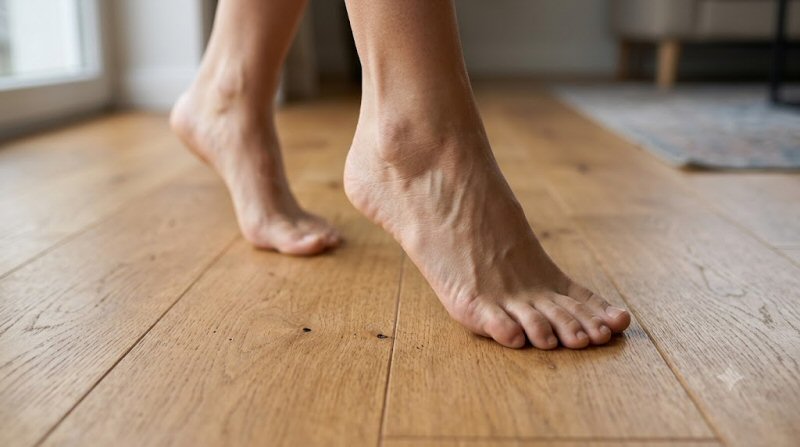
You take thousands of steps a day, yet most of them never finish the way your feet expect. Instead of a clean roll from heel through the arch to the toes, the motion gets shortened, stiffened, or skipped. The result is often a dull ache in the heel, a tight arch, or that sense that your feet feel “dead” after a day in shoes.
This is not a new problem. It is a mismatch between a body built for varied, springy ground and the hard, cushioned, nearly motionless surfaces we walk on now.
What a Natural Rolling Step Feels Like
A normal step has three rockers. First the heel rocker: the heel strikes and the foot controlled-rolls forward. Then the ankle rocker: the shin moves over the planted foot while the arch softens slightly. Finally the forefoot rocker: the heel lifts and the big toe pushes the body forward.
Jacquelin Perry’s classic gait studies mapped these phases in detail. In healthy walking the whole sequence is smooth and quiet. You feel the ground, the arch loads and then rebounds, and the toes finish the push. When that sequence is missing, people often describe feet that feel stiff, a sharp heel pain on first steps, or calves that stay tight no matter how much they stretch.
Why Modern Life Interrupts the Roll
Several everyday things break the pattern:
- Thick, cushioned soles absorb the heel strike so the foot never fully loads.
- Toe springs (the slight upward curve at the front of most shoes) keep the toes lifted and reduce the work the foot muscles must do to finish the step.
- Flat, hard floors and paved paths give no texture or give, so the arch never has to adapt.
- Hours of sitting leave the calves and intrinsic foot muscles under-used, so they are slow to engage when you stand.
Daniel Lieberman’s research on barefoot and minimally shod populations shows that people who grow up without conventional shoes tend to have stiffer arches and more varied foot placement. Freddy Sichting and colleagues later demonstrated that greater toe-spring curvature reduces the work done by the toes during push-off. Over thousands of steps the difference adds up.
The Evolutionary Mismatch
For most of human history feet met the ground directly or through thin, flexible coverings. The rolling step was how the foot stored and returned energy, how the plantar fascia and Achilles shared load, and how the small muscles of the foot stayed strong. That system expected uneven ground, occasional barefoot time, and a full heel-to-toe sequence on almost every step.
Modern shoes protect the skin and make walking more comfortable on concrete, but they also take over jobs the foot used to do. The result is a foot that is strong enough for daily life yet under-trained for the exact motion it evolved to perform. This is the same pattern seen in other mismatch topics on this site, such as why the big toe still expects a clear push-off and why the arches still expect a springy step.
Common Triggers That Make It Worse
- Long days in stiff work shoes or high heels that lock the foot.
- Sudden increase in walking or running on hard surfaces after weeks of sitting.
- Very cushioned “maximalist” shoes that further reduce sensory feedback.
- Standing still for hours (the foot never completes a roll).
- Cold weather that makes muscles stiffer and less willing to engage.
None of these are dangerous by themselves. Together they simply keep the foot from practicing the motion it is built for.
When to Worry
Most foot fatigue and mild morning stiffness improve with movement and better footwear variety. See a doctor or physiotherapist if you notice:
- Sharp, persistent heel pain that is worst with the first steps in the morning and does not ease after a few minutes.
- Swelling, redness, or warmth in one foot.
- Numbness or tingling that spreads into the toes.
- Pain that wakes you at night or stops you from walking normal distances.
- A sudden change in the shape of the foot or a visible collapse of the arch.
These can signal plantar fasciitis, stress reaction, nerve irritation, or other issues that benefit from early assessment.
Myths vs Facts
Myth: You need thick cushioning to protect your feet.
Fact: Cushioning reduces peak pressure but also reduces the sensory and muscular work the foot expects. Many people do better with a mix of cushioned and lower-profile shoes.
Myth: Flat feet are always a problem.
Fact: Flexible flat feet are common and often painless. The issue is usually how the foot loads and unloads, not the arch height alone.
Myth: Stretching the calves is enough.
Fact: Stretching helps, but the foot also needs the loading and unloading of a full roll to keep the plantar fascia and intrinsic muscles healthy.
How to Restore a More Natural Roll
Small, consistent changes work better than sudden barefoot marathons.
- Spend a few minutes a day walking barefoot or in thin, flexible shoes on safe, varied surfaces (grass, carpet, or a firm mat).
- Choose at least one pair of everyday shoes with a lower heel-to-toe drop and a flexible sole so the foot can still bend.
- Practice slow, deliberate heel-to-toe walks across the room, feeling each rocker.
- Add short foot-strength drills: towel scrunches, short-foot exercise, or simply rising onto the toes and lowering slowly.
- Break up long periods of sitting or standing still so the calves and feet get regular movement.
- If you run or walk long distances, vary the surfaces and gradually introduce lower-cushion shoes rather than switching overnight.
These steps let the foot practice the rolling sequence it still expects without forcing an abrupt change.
When to See a Doctor
If pain lasts more than a few weeks, limits daily walking, or is accompanied by swelling, numbness, or night pain, get it checked. A simple gait observation and foot exam can often identify whether the issue is mainly mechanical (the missing roll) or something that needs imaging or specific treatment.
FAQs
Is it bad to walk with a flat-footed, slapping gait?
A noisy or slapping foot often means the controlled heel rocker is missing. It is usually a habit or a strength issue rather than damage, but it can overload the heel and shin over time.
Do I need to go fully barefoot?
No. Occasional barefoot time and more flexible shoes are usually enough. Full-time barefoot on hard city streets can create new problems for feet that are not adapted.
Why do my feet feel better on grass than on pavement?
Grass allows a small amount of give and texture, so the arch and toes can still participate in the roll. Hard pavement forces a more rigid, abbreviated step.
Can shoe inserts replace a natural roll?
Inserts can reduce pain while the foot recovers, but they do not train the muscles and fascia. Most people do best with a combination of temporary support and gradual practice of the rolling step.
How long does it take for the feet to adapt?
Many people notice less stiffness within a few weeks of varied footwear and short barefoot sessions. Full strength changes in the small foot muscles take longer—often a couple of months of consistent practice.
Conclusion
Your feet still expect the rolling step they used for most of human history: heel contact, controlled loading through the arch, and a clear push from the toes. Modern shoes and hard floors make that sequence optional, so the foot gets less practice and more fatigue. Restoring even a portion of that natural roll—through varied surfaces, more flexible shoes, and short daily practice—gives the foot back the motion it was built for and often eases the everyday aches that come with the modern mismatch.


