
Mild foot aching after hours of standing is common due to muscle fatigue, compressed fat pads, and continuous load on the plantar fascia. Learn the usual causes, when it signals something more, and simple ways to ease the load.
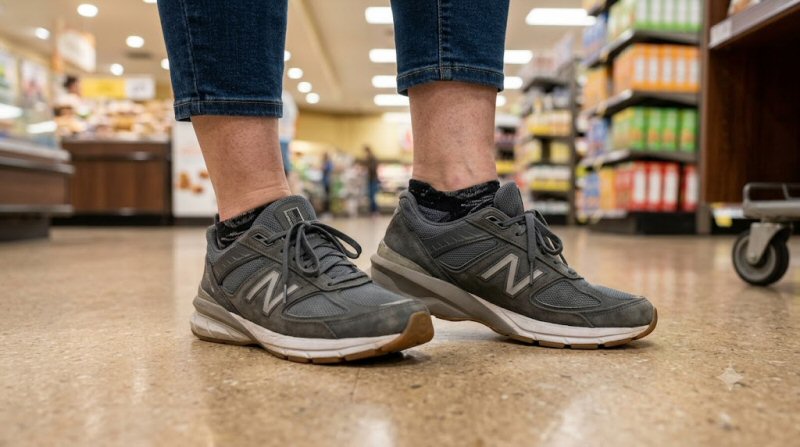
You finish a long shift, a day of teaching, cooking, or standing at a counter, and your feet feel heavy, sore, or dull-aching by the time you sit down. The sensation builds slowly rather than appearing all at once. For many people this is an ordinary response to hours of continuous load, not a sign of damage. The feet were built for walking and varied terrain more than for static standing on hard floors, so the tissues simply accumulate fatigue.
What This Symptom Feels Like
The ache is usually diffuse—across the arches, under the balls of the feet, or around the heels—rather than a sharp stab in one spot. It tends to worsen in the afternoon or evening and ease after you sit or elevate the feet. Some people also notice tightness in the calves or a feeling that the feet are swollen even if they do not look dramatically larger. The discomfort is typically worse on hard surfaces and better in more cushioned shoes or on carpet.
Common Causes
Simple muscle and tissue fatigue is the most frequent explanation. Standing keeps the small intrinsic muscles of the feet and the larger calf muscles under low-level contraction for hours. The fat pads under the heel and metatarsal heads stay compressed without the pressure relief that comes from walking and lifting the foot. The plantar fascia, the thick band that supports the arch, experiences continuous tensile load instead of the cyclic stretch-and-release of a normal gait cycle.
Unsupportive or worn shoes amplify the problem. Thin soles, collapsed cushioning, or shoes that are too narrow concentrate pressure. Hard floors (concrete, tile) transmit more force than softer surfaces. Body weight, age-related changes in fat-pad thickness, and individual foot posture (flatter or higher arches) also influence how quickly the ache appears.
Why This Happens
When you walk, the calf-muscle pump and the natural roll of the foot unload and reload the tissues with each step. Standing still quiets that pump. Fluid can pool slightly in the feet and ankles, and the same small areas of the plantar surface remain under pressure. Occupational studies, including work by Robert A. Werner and colleagues on assembly-plant workers, have linked longer time spent standing on hard surfaces with higher rates of foot discomfort and plantar-fascia symptoms. Laboratory research on anti-fatigue mats and shoe cushioning has shown that reducing peak plantar pressure lowers the rate of reported fatigue.
The evolutionary mismatch is straightforward: human feet evolved for walking long distances over uneven ground, not for remaining planted in one place for eight hours. The structures tolerate the load, but they do so with accumulating strain.
Less Common but Serious Causes
Persistent or one-sided pain can sometimes involve plantar fasciitis (irritation where the fascia attaches to the heel), metatarsalgia (overload under the forefoot), or irritation of the posterior tibial tendon that helps support the arch. Stress fractures or nerve irritation (such as a Morton neuroma) are less common but possible if the ache is sharp, localized, and progressive. Vascular issues or inflammatory conditions are rarer still and usually accompanied by other signs.
Hidden Triggers
Sudden increases in standing time (a new job, a long event, travel days) often unmask the symptom. Shoes that fit in the morning but feel tight by afternoon because of mild swelling, or orthotics that are too aggressive, can add pressure. Standing with locked knees or shifted weight onto one leg concentrates load. Dehydration and inadequate overall movement through the day reduce the natural pumping action that clears fluid.
When to Worry
Mild, bilateral aching that improves with rest and better footwear is usually benign. Seek medical advice if the pain is sudden and severe, affects only one foot, is accompanied by marked swelling, redness, warmth, or bruising, or if you cannot bear weight. Numbness, tingling that does not resolve, night pain that wakes you, or symptoms that steadily worsen over weeks despite simple changes also warrant evaluation. People with diabetes or circulation problems should be especially prompt about new foot discomfort.
Myths vs Facts
Myth: Feet that ache after standing mean you have flat feet or need custom orthotics immediately.
Fact: Many people with normal arches feel the same fatigue; the primary drivers are duration, surface hardness, and shoe quality. Orthotics help some individuals but are not required for ordinary end-of-day ache.
Myth: You should push through the pain to “toughen” the feet.
Fact: Continued overload without recovery can tip ordinary fatigue into plantar-fascia irritation or tendon strain. Brief movement breaks and better load management work better than endurance.
Myth: Only older adults experience this.
Fact: Younger workers in standing jobs commonly report the same pattern; age can thin fat pads and reduce recovery speed, but the basic mechanism is load and time.
How to Manage
Change shoes mid-day if possible, or rotate between two pairs so cushioning is not fully compressed. Look for shoes with adequate toe-box width, a supportive midsole, and a modest heel drop rather than completely flat or high-heeled styles. Anti-fatigue mats at workstations reduce peak pressure. Take short walking breaks every 30–60 minutes; even pacing in place restarts the calf pump. Elevating the feet for 10–15 minutes at the end of the day and doing simple toe curls or short-foot exercises can restore some muscle engagement.
Calf stretches and gentle plantar-fascia stretches (rolling a ball under the arch) often ease residual tightness. Maintaining a healthy body weight reduces absolute load, though even lighter people feel the effect of prolonged standing. If you stand for work, gradually increase total time rather than jumping from mostly sitting to full shifts.
Related everyday patterns include calves that ache after standing, feet that swell after standing, and the way your plantar fascia still expects a springy first step.
When to See a Doctor
See a clinician or podiatrist if the ache persists for more than a couple of weeks despite footwear and activity changes, if it localizes to the heel and is worst with the first steps after rest, or if you develop visible deformity, persistent swelling, or skin changes. Imaging is rarely needed for straightforward fatigue but may be considered when other diagnoses are possible.
FAQs
Is mild foot ache after an eight-hour standing shift normal?
Yes for many people. It reflects cumulative load and muscle fatigue rather than injury, especially if both feet are involved and the sensation eases with rest.
Why do my feet feel worse on hard floors?
Hard surfaces increase peak pressure under the heel and forefoot and reduce the small shock-absorbing effect that softer floors or mats provide. The same standing time on carpet or an anti-fatigue mat is usually more comfortable.
Can better shoes eliminate the ache completely?
Supportive, cushioned shoes and occasional movement breaks reduce it substantially for most people, but some residual fatigue after very long days is still common. Complete elimination is less realistic than meaningful improvement.
Does this mean I am developing plantar fasciitis?
Not necessarily. Plantar fasciitis more often produces sharper heel pain that is worst with the first steps in the morning or after sitting. Diffuse end-of-day ache is more often simple overload; the two can coexist if the load continues unchecked.
Should I ice or heat my feet?
Either can feel soothing. Ice may reduce residual irritation if the tissues feel hot or inflamed; gentle warmth or a warm foot bath often eases muscle tightness. Elevation and movement matter more than temperature for most people.
Is it different if I stand still versus walk all day?
Standing still tends to produce more localized pressure and fluid pooling because the calf pump stays quiet. Walking distributes load and provides cyclic unloading, so many people find mixed walking-and-standing days less fatiguing than pure static standing.
Conclusion
An ordinary ache in the feet after a long day of standing is a predictable response to continuous load, compressed fat pads, and quiet calf pumps on surfaces the feet were not primarily shaped for. Improving shoes, adding brief movement, and allowing recovery usually keep the symptom mild and manageable. When the pain becomes sharp, one-sided, or progressive, it is worth checking for more specific tissue irritation so the simple fatigue does not turn into a longer-term problem.


